If North Carolina is on your acquisition target list — and for us, it’s number one — you need to read this before you write another offer.
North Carolina’s Mobile Home Park Act (Senate Bill 518) is now in effect in 2026. It is the most significant shift in the state’s manufactured housing regulatory environment in decades. And based on what we’re seeing in deal flow, most mobile home park investors don’t fully understand what it means for acquisitions, operations, and exit strategy.
Let’s break it down clearly.
What the NC Mobile Home Park Act Does
The law introduces four major changes that directly affect how you buy, operate, and sell mobile home parks in North Carolina.
1. Right of First Refusal (ROFR)
Before you can close on a North Carolina mobile home park, residents or their organized association must be given the opportunity to purchase the community themselves. This is not a courtesy — it’s a legal requirement.
In practice, this means your deal timeline just got longer. Residents get a notification period to organize, secure financing, and submit a competing offer. If they can’t close or choose not to, you proceed. But the clock doesn’t start until proper notice is delivered, and any procedural errors reset the timeline.
We’ve already heard from brokers that deals have fallen apart under ROFR pressure — not because residents had the cash, but because organized opposition made the seller uncomfortable enough to walk. Understand this dynamic before you fall in love with a North Carolina asset.
2. Human Rights Commission Registration
All mobile home parks in North Carolina must now register with the NC Human Rights Commission. This is an ongoing compliance obligation, not a one-time filing. Noncompliant parks — or parks with open code violations — face penalties including the loss of the right to raise rents.
When you acquire a park, you’re acquiring its compliance status. If the seller is behind on registration or has open violations, you’re inheriting that problem.
3. Rent Increase Notice Requirements
You must provide 60 days’ written notice before implementing any rent increase. This isn’t unusual in the context of other states — but it’s new for North Carolina, and it has operational implications for parks transitioning from below-market rents.
If you’re buying a value-add deal that requires immediate rent normalization, your NOI ramp timeline just stretched by two months before you even serve the first notice.
4. Enhanced Eviction and Lease Standards
The law tightens the standards for evictions and requires landlords to clearly define lease terms, renewal rights, and tenant responsibilities in every agreement. Boilerplate leases that worked last year may not be compliant today.
If you’re taking over a park with month-to-month tenancies and informal lease arrangements — which is common in older North Carolina parks — you have compliance work to do before you can operate cleanly under the new law.
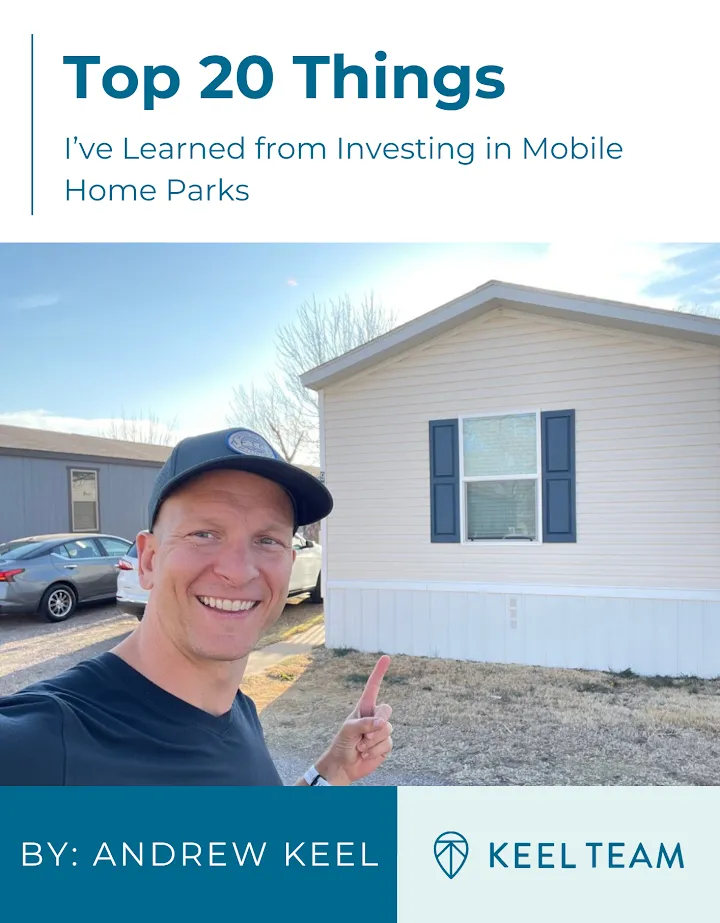
Two decades of hard-won lessons — including how to navigate new regulations and still close great mobile home park deals.
Download the Free eBook →
What This Means for Underwriting
We’ve adjusted how we underwrite North Carolina deals in three specific ways. For the complete acquisition framework we use across all target states, see the Mobile Home Park Due Diligence Playbook.
Timeline buffering: ROFR periods add 30–90 days to deal timelines. Rate locks need to accommodate this. Any lender who doesn’t understand North Carolina’s ROFR requirement is going to create closing problems. Talk to your lender before you’re under contract, not after.
Compliance cost line item: Legal fees for ROFR management, Human Rights Commission registration, and lease updates are now a legitimate acquisition cost. Budget $3,000–$8,000 per deal depending on the park’s current documentation state. Factor these into your mobile home park valuation from the start — don’t treat them as surprises.
Operational rent increase modeling: Value-add assumptions that model rent increases in year one need to account for the 60-day notice requirement. The first effective rent increase likely won’t land until month three post-close, not month one.
The ROFR Is Not Always a Deal Killer
We want to be clear: we are not pulling back from North Carolina. The demand for affordable housing is real, the tenant base is sticky, and the state has strong population growth. These fundamentals haven’t changed.
But ROFR laws favor operators who move thoughtfully, not quickly. The investor who understands the process, builds relationships with residents during due diligence, and communicates openly about their plans is less likely to face organized resident opposition than the corporate buyer who shows up with an aggressive rent increase playbook.
Your reputation in a deal matters more than it used to. North Carolina residents now have legal tools. Use that as a reminder to be the kind of operator they’d choose over the alternative.
The Bigger Picture
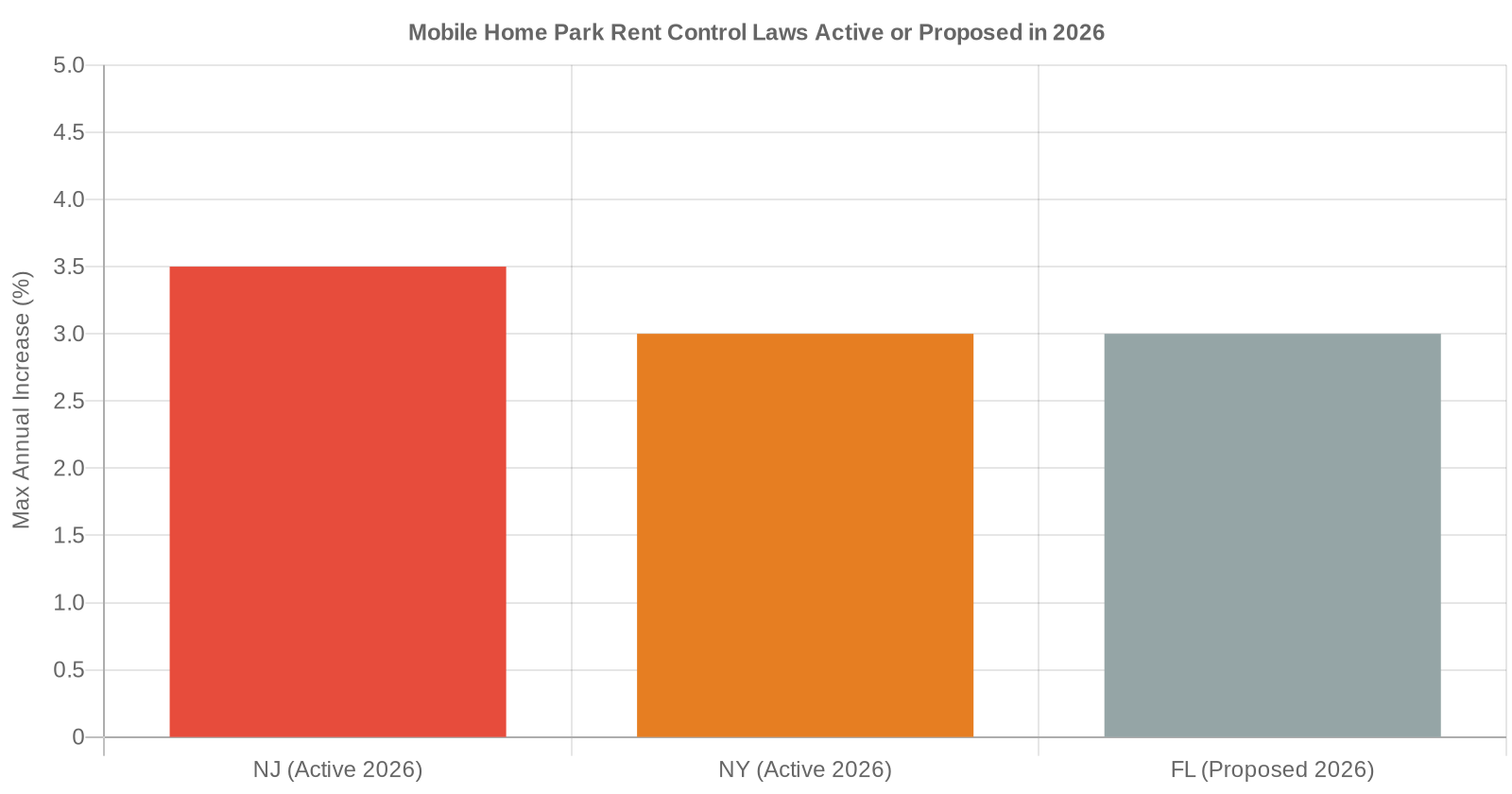
North Carolina isn’t alone. The full picture of mobile home park investing pros and cons has shifted materially as regulatory costs have entered the equation. New Jersey has a 3.5% annual rent cap now in effect. New York requires written justification for increases over 3%. Michigan just introduced new tenant protection bills in May 2026. Florida is debating rent justification requirements for later this year.
The regulatory tide in manufactured housing is coming in. The operators who adapt their acquisition process, their lease structures, and their resident relations approach will continue to build great portfolios. The ones who ignore these changes and keep operating like it’s 2021 are going to face expensive surprises.
At Keel Team, we’ve spent the last year building processes around this new legislative reality. We’re not complaining about it — we’re building systems for it. That’s the job in 2026.
For operators actively targeting North Carolina in 2026, the practical response is to develop fluency in ROFR management before you need it. Our complete guide to investing in North Carolina mobile home parks covers current market conditions, deal flow dynamics under the new law, and the creative financing structures that can provide timeline flexibility when ROFR periods are in play. Sellers increasingly prefer buyers who can navigate the process cleanly — being prepared is a competitive advantage.
Frequently Asked Questions
What is the NC Mobile Home Park Act (Senate Bill 518)?
The NC Mobile Home Park Act, enacted as Senate Bill 518, is North Carolina’s most significant manufactured housing legislation in decades. Now in effect in 2026, it introduces four major requirements: a Right of First Refusal giving residents the opportunity to purchase before a third-party sale closes; mandatory registration with the NC Human Rights Commission; 60 days’ written notice before any rent increase; and enhanced standards for eviction procedures and lease terms.
How does the Right of First Refusal affect deal timelines on North Carolina mobile home park acquisitions?
The ROFR adds 30–90 days to North Carolina deal timelines. Once a seller executes a purchase agreement, residents must receive formal notice and a defined window to submit a competing offer. If they decline or fail to close, the transaction proceeds. Procedural errors in notice delivery reset the clock entirely. Buyers and their lenders must plan rate locks and closing timelines around this requirement — it cannot be waived by agreement between buyer and seller.
What is the Human Rights Commission registration requirement for North Carolina mobile home parks?
Every mobile home park in North Carolina must register with the NC Human Rights Commission as an ongoing compliance obligation — not a one-time filing. Parks with open code violations or lapsed registration face penalties including the suspension of rent increase rights. Buyers inherit the seller’s compliance status, making registration verification a mandatory pre-close due diligence item.
Does the new law mean North Carolina is no longer a viable mobile home park market?
No. North Carolina remains one of the strongest mobile home park acquisition markets in the country, with genuine housing demand, strong population growth, and a tenant base that prioritizes affordability. The new law increases transaction complexity and compliance costs — it does not change the fundamental investment thesis. Operators who understand the ROFR process and maintain clean compliance records will continue to close deals in North Carolina.
How much should I budget for compliance costs on a North Carolina mobile home park deal in 2026?
Budget $3,000–$8,000 per deal for legal and compliance costs, covering ROFR management, Human Rights Commission registration verification, and lease audit and updates. The range depends on the park’s current documentation state and the complexity of existing tenancy arrangements. These costs belong in your acquisition model from day one — not discovered post-LOI. For a full framework, see the Mobile Home Park Due Diligence Playbook.
10 video modules, a 55-page master checklist, and 9 ready-to-use templates — including ROFR process guides, compliance checklists, and state-specific underwriting frameworks.
Get the Playbook →
Andrew Keel is the founder of Keel Team, a manufactured housing community operator active in the Southeast. For more on mobile home park investing in the current regulatory environment, visit keelteam.com/mhp-due-diligence-playbook.