Breaking into mobile home park investing often feels out of reach when you look at the price tag of a single community. However, syndication offers a proven path forward. By pooling capital from multiple investors, you can access deals that may otherwise sit beyond your individual reach. Below, we break down the fundamentals of raising capital through syndication so you can approach your first mobile home park investment with more clarity and confidence.
What Is a Mobile Home Park Syndication?
A mobile home park syndication brings together a group of investors who pool their capital to purchase a single mobile home park. In most cases, an experienced sponsor (the general partner) finds the deal, secures financing, and manages operations. Meanwhile, the limited partners contribute capital and receive a share of cash flow and profits in return.
This structure can open the door to an asset class that continues to attract serious attention. In fact, occupancy has climbed from approximately 86.5% ten years ago to nearly 94% nationally, which suggests resilient demand for affordable housing across the United States.
📋 The MHP Due Diligence Playbook — 10 video modules, a 55-page master checklist, and 9 ready-to-use templates that walk you through every step of evaluating a mobile home park deal. Get the Playbook →
Why Syndication May Make Sense for First-Time Investors
Access to Larger Deals
First, syndication allows you to participate in bigger, more stable mobile home parks. Rather than buying a small property on your own, you can invest alongside others in a community that may offer stronger economies of scale.
Shared Risk and Responsibility
In addition, you share both the risk and the day-to-day responsibilities with experienced operators. Therefore, you can benefit from the sponsor’s expertise without managing tenants, infrastructure, or city relations yourself.
Exposure to a Resilient Asset Class
Furthermore, mobile home parks continue to demonstrate durable demand. Average occupancy across professionally managed manufactured home communities is hovering around 95%, and limited new supply may help sustain pricing power over time.
How a Mobile Home Park Syndication Typically Works
Step 1: The Sponsor Sources the Deal
To begin, the sponsor identifies a mobile home park through brokers, direct outreach, or off-market channels. After that, they perform due diligence on infrastructure, utilities, rent rolls, and local market dynamics.
Step 2: The Sponsor Structures the Offering
Next, the sponsor creates a legal entity, often a limited liability company, to hold the asset. They also prepare offering documents that outline the business plan, projected returns, fees, and risks. Although every deal is different, most syndications include a preferred return for limited partners followed by a profit split with the sponsor.
Step 3: Investors Commit Capital
Then, accredited investors review the offering and commit capital. Minimum investments often range from $25,000 to $100,000, though this can vary widely by sponsor and deal size.
Step 4: The Sponsor Executes the Business Plan
Finally, the sponsor closes on the mobile home park and works to improve operations. Common value-add strategies include raising under-market lot rents responsibly, improving collections, infilling vacant lots, and submetering utilities.
Where Returns May Come From
Although nothing is guaranteed, returns in a mobile home park syndication generally come from a few sources:
- Ongoing cash flow distributed from net operating income
- Forced appreciation as the sponsor increases income and the property’s value
- Loan paydown over time, which can build equity
- Tax advantages such as depreciation, which a qualified tax professional should review with you
The combination of these drivers helps explain why mobile home parks have attracted growing institutional interest in recent years.
Key Risks to Consider Before Investing
Sponsor Risk
First and foremost, your outcome often depends on the sponsor’s skill and integrity. As a result, you should review their track record, references, and communication style carefully.
Operational Risk
Additionally, mobile home parks can carry hidden operational challenges. Aging infrastructure, private utilities, and deferred maintenance can all create unexpected costs.
Market and Regulatory Risk
Moreover, local rent control laws, zoning changes, and shifting market conditions can affect performance. Therefore, geographic diversification across multiple syndications may help reduce concentration risk.
Liquidity Risk
Finally, syndications are generally illiquid. In most cases, your capital remains tied up for the full hold period, which often spans five to ten years.
How to Evaluate a Sponsor
Because the sponsor drives so much of the outcome, you should ask thoughtful questions before committing capital. Specifically, consider the following:
- How many mobile home parks have they owned and operated?
- What is their full track record, including underperforming deals?
- How do they communicate with investors during the hold?
- What fees do they charge, and how is the profit split structured?
- Do they invest their own capital alongside limited partners?
A transparent sponsor should answer these questions openly and provide documentation to support their claims.
Getting Started With Your First Syndication
To take your first step, start by building relationships with operators whose values align with yours. Subscribe to their newsletters, attend webinars, and join investor calls. Over time, you’ll develop a better sense of which sponsors may be the right fit. Additionally, you should consult with a financial advisor, attorney, and CPA before investing. Each professional can help you evaluate whether a particular opportunity may align with your goals.
Final Thoughts
Mobile home park syndication offers a structured way to access an asset class that continues to play a meaningful role in America’s affordable housing landscape. By understanding how syndications work, identifying experienced sponsors, and asking the right questions, you can position yourself to make more informed decisions about your first investment. Although no investment outcome is certain, a thoughtful approach may help you participate in this growing sector with greater confidence.
10 video modules, a 55-page master checklist, and 9 ready-to-use templates that walk you through every step of evaluating a mobile home park deal — from the first site visit to closing day.
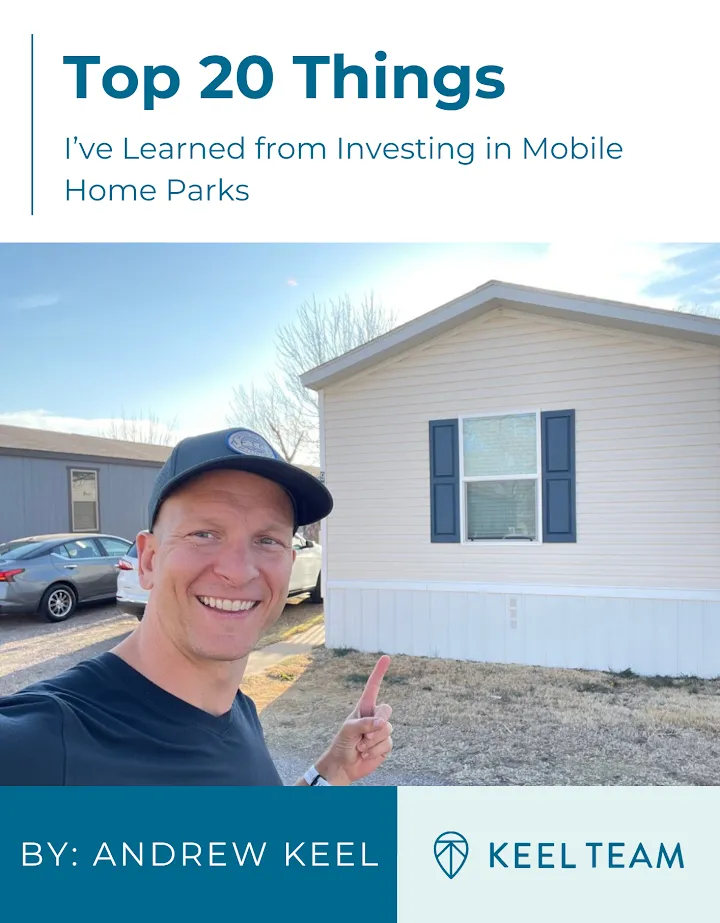
Get the top 20 lessons from two decades of mobile home park investing — free.
Disclaimer:
The information provided is for informational purposes only and is not investment advice or a guarantee of any kind. We do not guarantee profitability. Make investment decisions based on your research and consult registered financial and legal professionals. We are not registered financial or legal professionals and do not provide personalized investment recommendations. This article was written with the help of AI and reviewed by Andrew’s team. Always consult a licensed professional before investing.