If you have been watching the manufactured housing sector over the past few years, you already know the asset class is attracting serious attention. But what is driving investment in mobile home parks in 2026? The answer is not one thing — it is a convergence of structural, macroeconomic, and market forces that have aligned in a way that is hard to ignore.
Here are the seven most important trends fueling mobile home park investment demand right now.
1. The Affordable Housing Crisis Is Widening the Demand Gap
The United States is short roughly 7.3 million affordable housing units, according to the National Low Income Housing Coalition. As traditional rental costs have surged — average asking rents in many metro areas now exceed $2,000 per month — manufactured housing communities remain one of the few options where residents can live affordably without government subsidy.
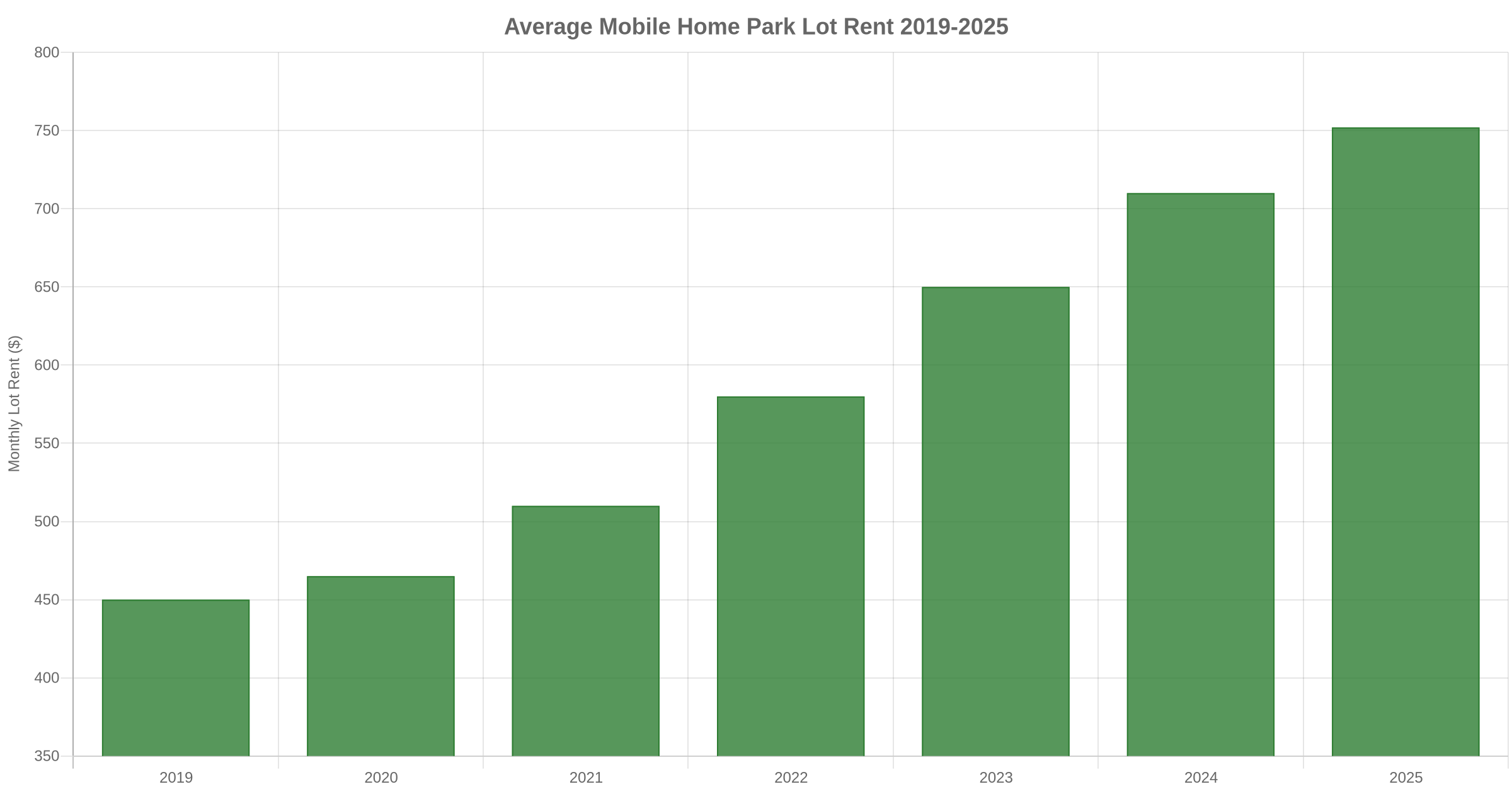
The average mobile home park lot rent in 2025 was $752 per month nationally. Compare that to apartment asking rents of $1,700–$2,500 in most markets and the value proposition is stark. As long as the affordability gap persists — and there is no structural reason it will close anytime soon — demand for manufactured housing communities will remain strong.
2. National Occupancy Rates Have Climbed to Historic Highs
National occupancy in manufactured housing communities reached approximately 94% in 2025, up from roughly 86% just a decade ago. In the Pacific region, average occupancy sits near 99%. The Southeast — which includes key markets like North Carolina, Tennessee, Georgia, and South Carolina — is running at 93–96%.
High occupancy is not just a vanity metric. It directly supports net operating income stability, reduces the risk of revenue shortfalls, and signals that demand for this housing type is growing faster than supply can keep pace. Investors who understand this dynamic are paying close attention.
For more on occupancy benchmarks and what they mean for deal evaluation, see: Mobile Home Park Occupancy Rates in 2026: Benchmarks, Trends, and What Every Investor Needs to Know.
3. New Supply Is Essentially Zero
This may be the single most powerful structural force behind mobile home park investment. While apartment developers deliver roughly 3.8% of their total housing stock as new units each year, manufactured housing communities add approximately 0.04% annually — about 20 new communities out of 45,000 nationwide.
Why? Zoning. Local governments across the country have effectively blocked new mobile home park development through exclusionary zoning, minimum lot size requirements, and neighborhood opposition. This means the supply side of the market is essentially locked. No matter how much demand grows, investors cannot build their way out of this shortage the way they can with apartments or self-storage.
For a deep dive into why no new mobile home parks are being built, read: The Supply Constraint Moat: Why Almost No New Mobile Home Parks Are Being Built in 2026.
4. Lot Rents Are Growing at 7% or More Annually
When national lot rent was approximately $450 per month in 2019, many investors overlooked this asset class as niche. By 2025, that figure had reached $752 per month nationally — a 67% increase in six years. In high-demand markets like Florida, annual lot rent growth has run 5.5–11% per year. Arizona and Colorado have seen growth above 9%.
Lot rent growth translates directly to net operating income growth, which translates directly to asset value appreciation. In a market where cap rates have compressed to 5–7% for stabilized assets, even modest rent increases produce significant equity upside for investors over a 5–7 year hold.
Two decades of hard-won lessons distilled into one free guide. Whether you’re evaluating your first deal or your fiftieth, these insights will sharpen your approach.
5. Institutional Capital Has Discovered the Asset Class
Transaction volume in manufactured housing communities increased by 47.1% from 2024 to 2025, with approximately 460 communities traded. This surge in transaction activity reflects growing confidence from institutional buyers — including private equity firms, family offices, and publicly traded REITs — who have recognized the structural advantages of mobile home park investing.
As institutional capital has entered the sector, it has brought capital market sophistication: better financing structures, professional management, and higher acquisition prices for quality assets. For individual operators and syndication sponsors who understood this trend early, the institutional wave has created meaningful exit opportunities and has validated asset pricing at levels that would have seemed aggressive five years ago.
6. Tariffs Are Making New Manufactured Homes More Expensive
The 2025 tariff increases on steel and aluminum have directly impacted HUD-code manufactured home production costs. The average new manufactured home, priced at approximately $88,000 in 2020, is approaching $138,000 in 2026 — a 57% increase. For buyers who cannot afford a new home, renting a lot in an existing manufactured housing community becomes an even more attractive option.
Higher new home costs also create a pricing floor beneath existing community assets. Operators who secure home inventory early and maintain strong dealer relationships will be best positioned in this environment.
For more on this topic: How Tariffs Are Affecting Manufactured Home Prices and What It Means for Mobile Home Park Investors in 2026.
7. A Recession-Proven Track Record Other Asset Classes Cannot Match
Perhaps the most compelling argument for mobile home park investing in 2026 is the asset class’s performance during economic stress. Net operating income for manufactured housing communities has been positive every year since 2007 — including through the Global Financial Crisis and the COVID-19 pandemic.
During the Global Financial Crisis (2008–2010), manufactured housing community net operating income grew approximately 1.5% while apartment net operating income declined by 5.6%. During COVID-19, manufactured housing communities posted approximately 4.2% growth while apartments declined by 3.2%.
The reason is straightforward: residents paying $752 per month in lot rent are not leaving their home over a market downturn. Moving a manufactured home is expensive, disruptive, and logistically complex. The tenant stickiness that makes mobile home parks operationally attractive in good times becomes a financial fortress in bad times.
The Bottom Line
No single trend explains why investors are increasingly allocating to mobile home parks in 2026. It is the convergence of all seven: an affordable housing crisis that shows no sign of resolution, historic occupancy levels, near-zero new supply, accelerating lot rent growth, institutional validation, tariff-driven increases in new home costs, and a recession-proven track record that holds up under scrutiny.
For investors who understand real estate fundamentals — supply, demand, and income stability — mobile home parks represent one of the most well-supported asset classes available today. Understanding the market data behind these trends is the starting point for anyone serious about underwriting opportunities in this space.
10 video modules, a 55-page master checklist, and 9 ready-to-use templates that walk you through every step of evaluating a mobile home park deal — from the first site visit to closing day.
Frequently Asked Questions
What is driving investment in mobile home parks in 2026?
Seven key trends are fueling demand: the affordable housing shortage, 94% national occupancy, near-zero new supply (0.04% annual additions), 7%+ annual lot rent growth, institutional capital entering the sector, tariff-driven increases in new manufactured home costs, and a recession-proven net operating income track record going back to 2007.
Are mobile home park investments still attractive at current cap rates?
Yes, though it depends on the deal tier. Premium stabilized assets are trading at 4.5–6% cap rates, which requires careful lot rent growth underwriting. Value-add and tertiary market opportunities still trade at 7–10%+ cap rates. The key is matching strategy to the correct asset tier and market.
Why has institutional capital moved into manufactured housing communities?
Institutional investors have recognized the supply constraint moat, the recession resilience of tenant rent payments, and the scalability of lot-rent revenue. National REITs like Sun Communities and Equity LifeStyle Properties, as well as private equity firms, have driven significant capital into the sector since 2020.
What is the average lot rent growth rate for mobile home parks?
Nationally, lot rents have grown at roughly 7% per year in recent years. High-demand markets like Florida have seen 5.5–11% annual growth. The national average lot rent reached $752 per month in 2025, up from approximately $450 per month in 2019 — a 67% increase over six years.
How does mobile home park new supply compare to apartments?
Manufactured housing communities add approximately 0.04% new supply annually — roughly 20 new communities nationwide out of 45,000 total. Apartments deliver approximately 3.8% new supply each year. This extreme supply disparity is one of the most powerful structural advantages of the mobile home park asset class.
Get the top 20 lessons from two decades of mobile home park investing — free.