South Carolina doesn’t get the same headlines as North Carolina or Tennessee in the mobile home park investing world. But investors who are looking closely are finding something worth paying attention to: strong population growth, an affordable acquisition environment, and a state where workforce housing demand is quietly outpacing supply in several key markets.
If you’re evaluating your next acquisition in the Southeast, this guide breaks down what you need to know about mobile home park investing in South Carolina in 2026 — from the top markets to watch, to the regulatory environment, to what separates a good deal from a great one in this state.
Why South Carolina Is on Investors’ Radar
South Carolina has quietly become one of the fastest-growing states in the Southeast. Between 2010 and 2024, major metro areas like Charleston, Myrtle Beach, and Greenville-Spartanburg posted population growth rates between 18% and 31% — driven by a combination of in-migration from more expensive markets, a booming manufacturing sector (BMW, Volvo, Boeing, and Toyota all have significant South Carolina operations), and a strong retiree influx to the coast.
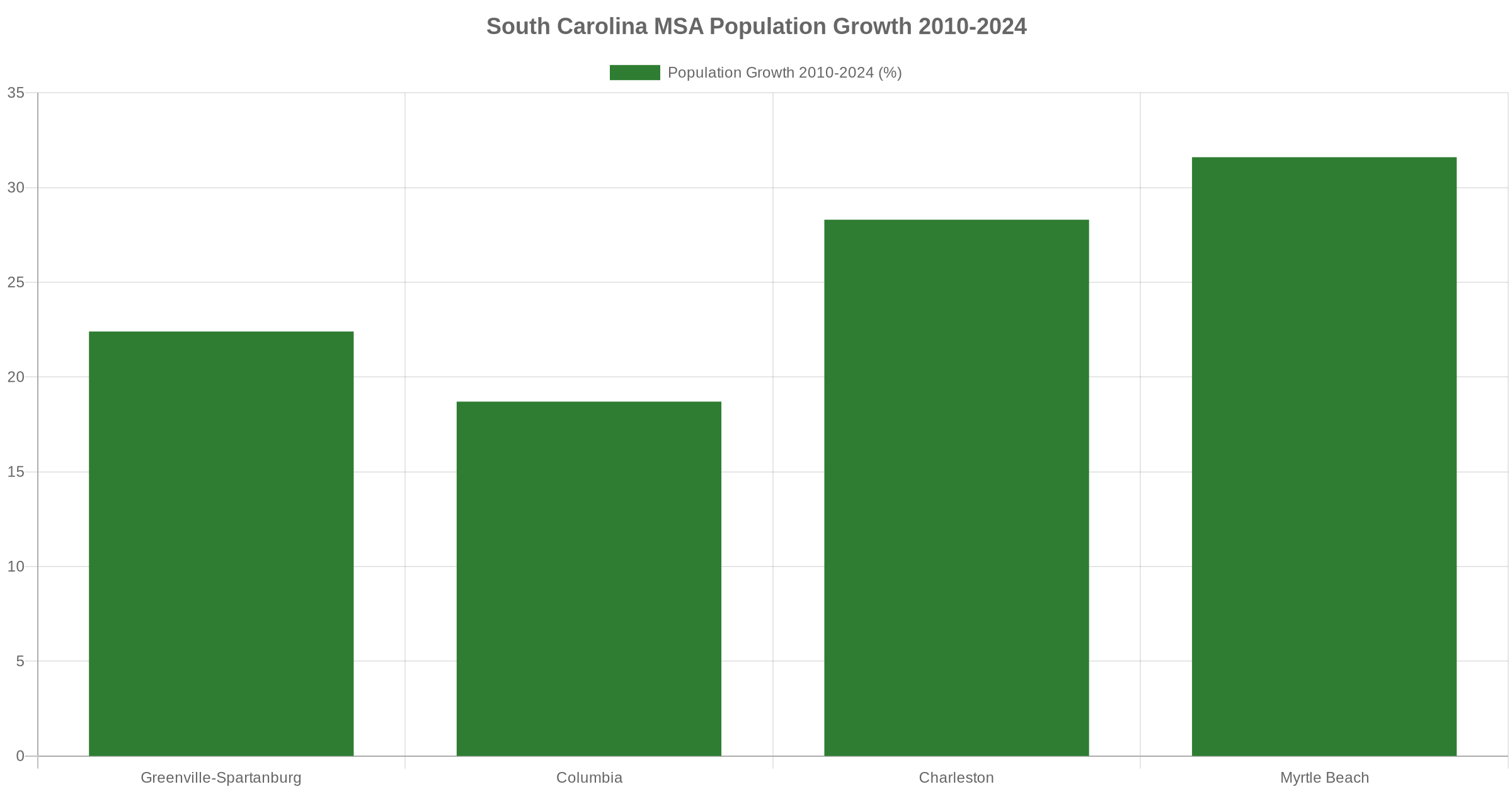
That kind of sustained growth creates durable demand for affordable housing — and mobile home parks sit right at the center of that demand. When housing costs in markets like Charleston push median home prices above $400,000, manufactured housing communities offering lot rents of $250–$450/month become essential infrastructure, not a last resort.
Compared to coastal North Carolina or suburban Nashville, South Carolina still offers a more favorable acquisition price environment. That combination — strong demand fundamentals plus more room to buy at reasonable valuations — is what’s drawing experienced mobile home park investors to look harder at the state.
Top Mobile Home Park Markets in South Carolina
Not all of South Carolina is created equal from an investing standpoint. Here are the markets worth prioritizing:
Greenville-Spartanburg
The Upstate region is South Carolina’s economic engine. With over 1.4 million residents across the metro, a diversified manufacturing base, and significant corporate relocations in recent years, Greenville-Spartanburg offers the kind of stable workforce housing demand that mobile home park operators rely on. Lot rents in the area typically range from $275–$425/month, and occupancy rates at well-run communities tend to run high. This is the market closest in profile to what you’d find in mid-tier Tennessee metros.
Columbia
South Carolina’s capital city benefits from government employment, the University of South Carolina’s 35,000+ student base, and Fort Jackson — one of the U.S. Army’s largest training installations. That military and government presence creates consistent housing demand even during economic downturns. Columbia-area mobile home park acquisitions tend to pencil at more moderate cap rates than Upstate, but the demand base is unusually stable.
Charleston and Surrounding Counties
Charleston is a high-demand coastal market with some of the strongest rent growth in the state. Mobile home parks near Charleston proper are rare finds — the market is supply-constrained, which is good for operators who already own there. More realistic acquisition targets are found in adjacent counties like Dorchester, Berkeley, and Colleton, where land is more available and workforce housing demand from Charleston’s labor pool spills over. Watch lot rents here: $350–$500/month is achievable for well-located communities within 30–45 minutes of Charleston.
Myrtle Beach / Horry County
The Grand Strand region has seen explosive growth driven by retiree migration and hospitality employment. Horry County is one of the fastest-growing counties in the United States. Mobile home park acquisitions in this market need careful analysis — the seasonal nature of some local economies can affect occupancy, and the presence of RV parks and seasonal communities requires clear diligence on year-round versus seasonal tenancy. Focus on communities with permanent resident tenants in established neighborhoods, not seasonal resort-adjacent properties.
Two decades of hard-won lessons distilled into one free guide. Whether you’re evaluating your first deal or your fiftieth, these insights will sharpen your approach.
What Makes a Strong Mobile Home Park Deal in South Carolina
The same core criteria that apply across the Southeast apply in South Carolina — but with a few state-specific considerations worth knowing. For a deeper look at deal evaluation across the region, the Invest in Mobile Home Parks guide covers the full framework. The state-by-state picture is also worth comparing: see how North Carolina and Georgia stack up as neighboring acquisition targets.
For South Carolina specifically:
- City water and city sewer: Communities on well and septic carry disproportionate infrastructure risk. In a state with South Carolina’s soil variability and coastal water table challenges, stick to municipal utilities wherever possible.
- Lot count and occupancy: Target communities with 50+ total lots and at least 35+ currently occupied. Below that threshold, the fixed cost base becomes harder to absorb during any period of softening occupancy.
- Lot rent to market comparison: South Carolina is still a market where many older, mom-and-pop owners haven’t raised lot rents in years. A community with lot rents at $175–$225/month in a market where $325+ is achievable represents meaningful value-add upside — but underwrite conservatively on the path to market-rate rents.
- RV lot concentration: Especially near coastal and resort markets, verify what percentage of lots have RV or seasonal tenants. Communities with more than 10% RV lots are operationally messier and harder to finance conventionally.
- Proximity to major employment: The strongest South Carolina communities are within 45–60 minutes of one of the major MSAs listed above. Rural communities far from employment centers face persistent infill challenges.
South Carolina Landlord-Tenant Laws: What Investors Need to Know
South Carolina operates under the South Carolina Manufactured Home Park Tenancy Act, which governs the landlord-tenant relationship in mobile home park communities. A few things worth knowing:
- Notice requirements: South Carolina requires meaningful notice periods for lot rent increases and terminations. Review current notice requirements with a South Carolina real estate attorney before closing on any acquisition — these can affect your operational timeline during a turnaround.
- Eviction process: South Carolina’s general reputation is landlord-friendly relative to northeastern states, but eviction timelines can still extend 60–90+ days when contested. Underwrite your holding costs accordingly during any occupancy repositioning.
- ROFR legislation: South Carolina has seen growing interest in right-of-first-refusal legislation for mobile home park residents. Track legislative activity at the state level — this is an evolving area across multiple Southeast states.
- Park closure requirements: Like most states, South Carolina has notice requirements for park closures. This matters less for acquisition due diligence but is worth understanding for long-term exit planning.
Always engage a South Carolina real estate attorney with manufactured housing experience before closing. The compliance environment is more nuanced than most deals’ standard closing checklists capture.
Finding Mobile Home Parks for Sale in South Carolina
Most of the best mobile home park deals in South Carolina — as in any state — are not listed on LoopNet or CoStar. The state has a large inventory of smaller, family-owned communities whose owners have held for 20–40 years and have no broker relationship. That’s the opportunity. Direct-to-owner outreach via mail, phone, and community visits remains the highest-yield sourcing strategy.
For a detailed breakdown of off-market sourcing tactics, see Finding Off-Market Mobile Home Parks: Strategies That Work. The same playbook applies in South Carolina — county property records, tax assessor databases, and consistent direct mail campaigns to owners in your target counties are where acquisitions come from.
Focus your outreach on Upstate counties (Greenville, Spartanburg, Anderson, Cherokee, Union) and the Midlands (Richland, Lexington, Kershaw) before going after the higher-priced coastal corridor. The price-to-income ratios in Upstate tend to be more favorable for buyers.
Key Metrics to Analyze Before You Buy
South Carolina mobile home park deals should be evaluated against the same financial benchmarks as any Southeast acquisition. A few benchmarks worth anchoring to:
- Cap rates: Stabilized, well-located communities in South Carolina’s primary markets are trading at 6–8% cap rates in 2026. Value-add opportunities with below-market rents or significant vacancy can still be acquired at 8–10%+ on actual income. For a full explanation of how cap rates work in this asset class, see Mobile Home Park Cap Rates Explained.
- Expense ratio: Well-run South Carolina communities on public utilities typically run 35–45% expense ratios. Communities with private utilities, aging infrastructure, or owner-supplied homes skew higher.
- Lot rent to median income: Healthy communities typically have lot rents at or below 25–30% of the local median household income. South Carolina’s median household incomes vary significantly by county — verify local data before assuming lot rent upside is achievable.
10 video modules, a 55-page master checklist, and 9 ready-to-use templates that walk you through every step of evaluating a mobile home park deal — from the first site visit to closing day.
The Bottom Line on South Carolina Mobile Home Park Investing
South Carolina is one of the more underrated mobile home park acquisition markets in the Southeast right now. The population growth is real, the demand fundamentals are strong in several key metros, and the acquisition environment — particularly in the Upstate — still offers room to buy at prices that pencil. It doesn’t have North Carolina’s sheer volume of communities or Tennessee’s investor infrastructure, but that’s partly what makes it interesting: less competition, more direct-to-owner opportunity, and owners who often haven’t had a serious conversation with a sophisticated buyer.
If you’re building a Southeast portfolio and haven’t yet mapped South Carolina specifically, now is the time to add it to your target list — particularly Greenville-Spartanburg and the Midlands. The markets that make sense are identifiable, the deals are findable with consistent outreach, and the long-term demand story holds up.
Want to learn more about mobile home park investing? Reach out and we’re happy to have a conversation.
Get the top 20 lessons from two decades of mobile home park investing — free.