Finding Off-Market Mobile Home Parks: 7 Proven Strategies That Actually Work
Andrew Keel
[wpbread]
The best mobile home park deals rarely hit LoopNet. If you’re waiting for listings to appear on commercial real estate marketplaces, you’re competing against every other buyer in the country — many of whom have larger war chests and faster closing timelines. The investors who consistently acquire great mobile home park properties do it differently: they find deals before they’re marketed.
Off-market mobile home park acquisitions require more legwork, but the payoff is real: less competition, more motivated sellers, and better pricing. If you’re serious about building a mobile home park portfolio, developing a consistent off-market pipeline isn’t optional — it’s the game.
Here are seven strategies that actually work.
Why Off-Market Mobile Home Parks Are Worth the Effort
A significant portion of mobile home parks in the U.S. are still owned by mom-and-pop operators — families who’ve held the same property for 20 to 40 years. Many of them haven’t thought seriously about an exit strategy, haven’t hired a broker, and wouldn’t know where to start if they wanted to sell quietly.
That gap is your opportunity. When you contact an owner directly — before they’ve engaged a broker or listed the property — you eliminate the bidding process. You can negotiate price and terms without competing offers. And because these sellers often care about more than just price (a smooth close, continuity for their residents, no public listing), you can offer things a listing-driven buyer simply can’t.
Direct mail remains one of the highest-converting outreach tools for off-market mobile home park deals — if you do it consistently and target the right list.
Build your list from county assessor data. Most county tax records are publicly searchable and allow you to filter by land use code. Look for codes associated with manufactured housing communities, mobile home parks, or trailer parks. Data aggregators like PropStream, DataTree, or ATTOM can speed up the process if you’re targeting multiple markets.
Keep the letter simple. Introduce yourself, state that you’re actively buying mobile home parks in the area, and give them an easy way to respond — a direct phone number and email. Don’t oversell. Many sellers respond months after the first letter. Stay in their mailbox.
Plan for realistic response rates. Expect somewhere between 0.5% and 2%. If you want 10 real conversations, plan to mail 500 to 2,000 letters. Volume and consistency matter far more than any single clever piece of copywriting.
2. Cold Calling Owners
Phone calls convert at a higher rate than letters — but they take more time and require persistence. Pull the same county assessor data, skip-trace the owner’s contact information, and start dialing.
The first call is never about negotiating a deal. It’s about starting a conversation. Ask how long they’ve owned the property, what they enjoy about it, whether they’ve given any thought to retirement. Many owners who aren’t actively looking to sell will still engage if you’re respectful, curious, and not pushy.
The goal is to be top of mind when they’re ready — even if that’s six months from now.
3. Driving the Market
This one is exactly what it sounds like: drive the markets you’re targeting and document every mobile home park you see. Note the condition, approximate size, location, and whether the signage looks dated or neglected — often a sign of an absentee or aging owner.
Apps like DealMachine let you photograph a property, capture the address, and skip-trace owner contact information in one step. Add every mobile home park you find to your outreach list. Some of the best deals come from properties that don’t even show up in county databases yet.
4. Building Relationships with Specialized Brokers
Mobile home park brokers — firms that focus specifically on manufactured housing communities — often know about potential deals weeks or months before a formal listing. They hear about sellers who are thinking about it but haven’t committed. They have conversations at conferences. They get referrals from estate attorneys and accountants.
Get on their radar early. Tell them exactly what you’re looking for: market, size, infrastructure requirements, deal size, and your ability to close. Brokers prioritize buyers they trust. If they know you’re serious, credible, and decisive, you’ll get the early calls instead of the listing email blast.
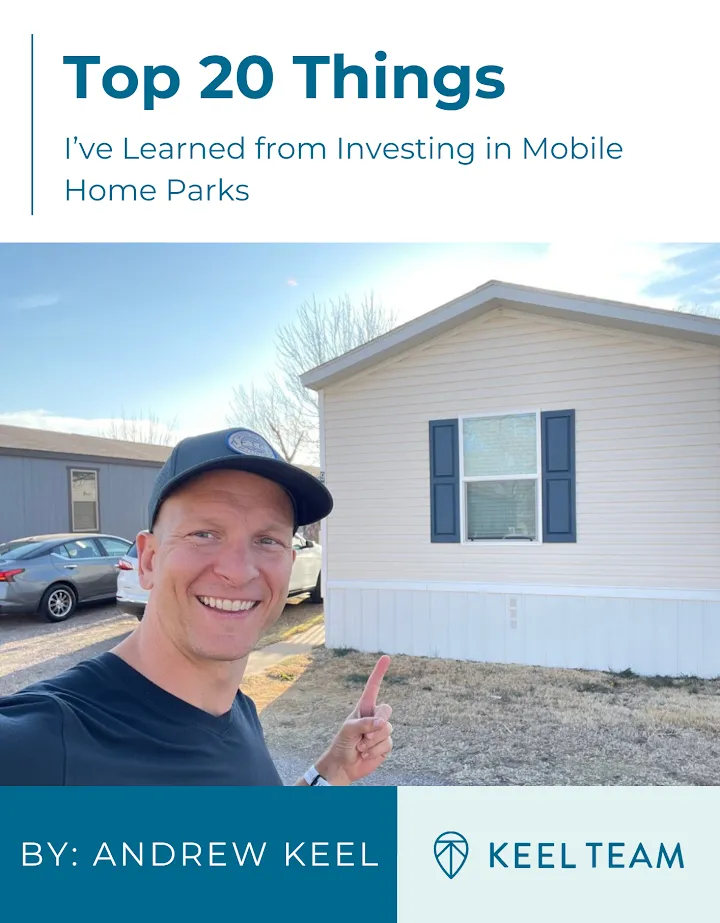
📚 Free eBook: Top 20 Things I’ve Learned from Investing in Mobile Home Parks
Before you start sending letters and making calls, make sure you know what to look for. Our free guide covers the real lessons from years of mobile home park acquisitions — including the red flags we learned the hard way. Download it free here
5. Industry Events and Manufactured Housing Conferences
The mobile home park investing world is smaller than it looks. The Manufactured Housing Institute annual conference, state manufactured housing association events, and regional investor meetups all put you in the same room as owners, operators, and fellow buyers.
Sellers don’t always go through brokers. Sometimes they mention at a conference dinner that they’re thinking about retiring. That conversation — if you’re in the room — can be the beginning of an off-market deal that never sees the open market. Show up consistently, add value, and make it known you’re an active buyer.
6. Online Communities and Industry Forums
Facebook groups for mobile home park owners, manufactured housing forums on BiggerPockets, and LinkedIn can all surface sellers who aren’t working with brokers yet. Join these communities genuinely — contribute, ask thoughtful questions, and make it clear over time that you’re an active buyer in specific markets.
Deals come through relationships. Relationships start with consistent, genuine presence over time.
7. Building a Referral Network
Some of the highest-quality off-market leads come from unexpected sources: estate attorneys handling the affairs of aging property owners, CPAs who advise small business owners on exit planning, property managers who know an owner is ready to step back, or even park residents and local vendors who hear things before anyone else does.
Let everyone in your orbit know that you buy mobile home parks. Follow up. Leave business cards. A referral from a trusted source reaches a seller who’s already primed to have the conversation — and often gets you in before they’ve talked to anyone else.
When You Find an Interested Seller: What Comes Next
Finding a motivated seller is just the beginning. Before momentum takes over, run the numbers carefully. Understand the cap rate, actual occupancy, utility infrastructure, and market fundamentals. Our mobile home park underwriting guide walks through how to analyze a deal from scratch — including what levers move value the most.
Once you’re under contract, you’ll want a solid process ready. Our mobile home park due diligence checklist covers 25 things to verify before you close — off-market deals can move fast, and surprises during the inspection window can kill otherwise great opportunities.
The Bottom Line
Finding off-market mobile home parks takes persistence. There’s no shortcut — you’re building relationships with people who haven’t thought about selling yet, in markets where most properties aren’t formally listed. But that’s exactly why the opportunity exists: most buyers aren’t putting in this kind of work.
The investors who build consistent off-market pipelines aren’t necessarily smarter or better-capitalized. They just show up more systematically, stay in front of owners longer, and follow up when most people have moved on.
Start with your target market. Pull the county assessor data. Send the first 100 letters. The deal is out there — it just hasn’t heard from you yet.
📚 Want to Go Deeper? Get Our Free eBook
We’ve compiled our top 20 lessons from years of mobile home park investing — the things we wish we had known before our first deal. It’s free and it’s yours. Download the eBook here
Want to learn more about mobile home park investing? Reach out and let’s connect — we’re always happy to talk through the asset class with people who are serious about it.
Andrew Keel
Andrew is a passionate commercial real estate investor, husband, father and fitness fanatic. His specialty is in acquiring and operating manufactured housing communities. Visit AndrewKeel.com for more details on Andrew's story.