South Dakota doesn’t get the same attention as North Carolina or Tennessee when investors start mapping out where to buy mobile home parks — but that’s exactly why it deserves a closer look. With no state income tax, a stable rural economy, limited new housing supply, and a growing primary metro in Sioux Falls, South Dakota offers the kind of quiet fundamentals that experienced mobile home park investors appreciate.
This guide breaks down what you need to know about mobile home park investing in South Dakota in 2026 — the key markets, what to look for in a deal, regulatory landscape, and how to evaluate whether this state fits your acquisition strategy.
Why South Dakota Is on Investors’s Radar
South Dakota consistently ranks among the most business-friendly states in the country. There’s no personal income tax, corporate income tax, or personal property tax — a meaningful advantage for investors holding real estate in their own name or through a pass-through entity. Combine that with relatively low land costs, modest operating expenses, and limited competition from institutional buyers, and you have a market that rewards operators who do their homework.
The state’s population is growing steadily. Sioux Falls, the largest city, has been one of the fastest-growing metros in the Midwest over the past decade. That growth is creating sustained demand for affordable housing — and mobile home parks are uniquely positioned to serve that demand, particularly for working families priced out of single-family homes.
Top Markets for Mobile Home Park Investing in South Dakota
Sioux Falls (Minnehaha + Lincoln Counties)
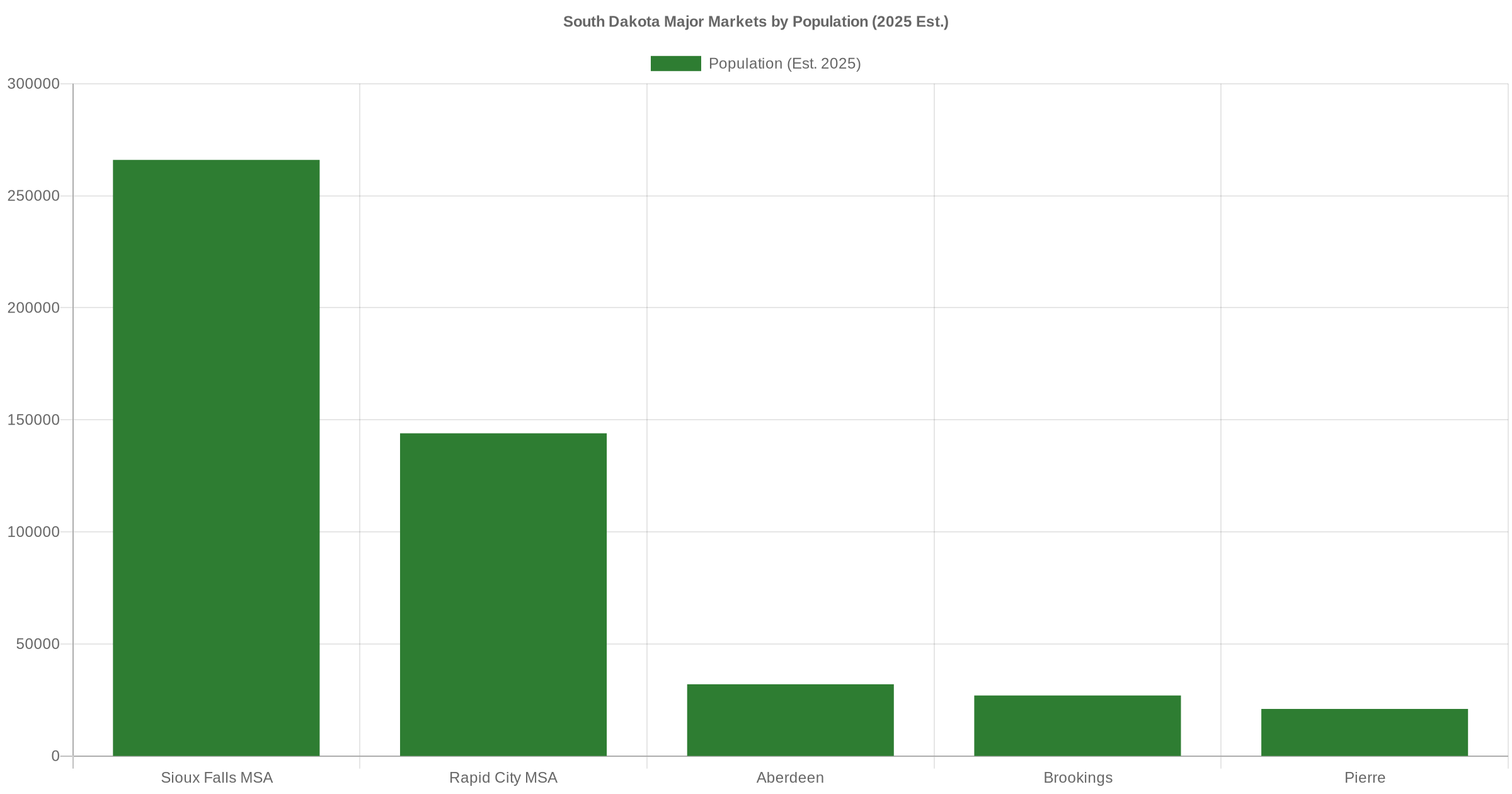
Sioux Falls is the anchor. With a metro population approaching 270,000 and a diverse economic base — healthcare (Sanford and Avera both headquartered here), financial services, distribution, and manufacturing — Sioux Falls offers the demand side of the equation that most secondary markets lack. Lot rents are moving higher, and the gap between mobile home park living costs and apartment rents continues to widen, making well-located parks here increasingly attractive. For investors looking to enter the asset class, this is the first market to underwrite.
Rapid City (Pennington County)
South Dakota’s second-largest city (~80,000 city population, ~145,000 metro) sits at the foot of the Black Hills near Mount Rushmore. The economy is more tourism-dependent than Sioux Falls, but there’s also a significant military presence (Ellsworth Air Force Base) and a growing healthcare sector. Affordability demand is real, and park quality tends to be lower than in Sioux Falls — which means there’s room for a disciplined operator to create value through infill and management improvements.
Aberdeen, Brookings, and Pierre
These smaller cities (populations ranging from 20,000 to 32,000) offer lower entry prices and less competition. The tradeoff: thinner tenant pools and limited economic diversification. If you’re considering one of these markets, look for parks near major employers — a regional hospital, a university, or an established manufacturing plant — to backstop occupancy.
What Makes a Good Mobile Home Park Deal in South Dakota
The same fundamentals that drive good deals nationally apply in South Dakota, but a few things are particularly worth watching:
- City water and sewer: South Dakota has a significant number of rural parks on private wells and septic systems. These are higher-risk and should be avoided unless priced at a steep discount with a clear path to municipal connection. Stick to parks with city utilities — your operating costs and future exit will thank you.
- Lot count and occupancy: Given the state’s smaller population base outside Sioux Falls, a 70-lot park in Aberdeen is a different animal than a 70-lot park in Sioux Falls. Make sure your occupancy thesis is grounded in realistic local demand, not optimistic projections.
- Lot rent vs. market: South Dakota lot rents are generally lower than southeastern markets — you’ll often see parks priced in the =– /month range. There’s usually room to push rents toward market over time, but budget for modest annual increases rather than dramatic jumps.
- Park-owned homes vs. tenant-owned homes: As in any market, parks with high concentrations of park-owned homes carry more operational complexity. Tenant-owned home communities are lower maintenance and generally trade at better cap rates.
For a deeper look at what to evaluate before buying, our mobile home park due diligence checklist walks through all 25 items you should verify before closing on any deal.
Two decades of hard-won lessons distilled into one free guide. Whether you’re evaluating your first deal or your fiftieth, these insights will sharpen your approach.
South Dakota Mobile Home Park Regulations
South Dakota has a relatively landlord-friendly regulatory environment compared to states like California or New York. Here’s what investors need to know:
- Rent control: There is no statewide rent control in South Dakota, and the state has not passed any legislation restricting it at the local level. You retain full flexibility on lot rent pricing.
- Notice requirements: South Dakota generally requires 30-day written notice for rent increases, though park rules and lease terms may specify longer periods. Always review existing leases during due diligence.
- Eviction process: The eviction process in South Dakota is relatively straightforward compared to coastal states. Non-payment and lease violation cases typically resolve within 30–60 days through the state’s magistrate court system.
- Home titling: South Dakota allows manufactured homes to be titled as real property or as personal property (vehicle title). This affects how homes can be financed and what happens on exit. Know what you’re buying.
Financing a South Dakota Mobile Home Park
Most of the same financing tools available in other states apply in South Dakota. Agency debt (Fannie/Freddie) remains the gold standard for stabilized, income-producing parks over 50 lots. For smaller deals or parks that need a turnaround period, community bank financing or seller financing is often the path of least resistance.
South Dakota’s USDA Rural Development programs can sometimes apply for parks in smaller communities, providing below-market financing for affordable housing projects. It’s worth a conversation with a local USDA office if you’re evaluating a park in a rural county.
For a full breakdown of loan types and when each makes sense, see our guide to mobile home park financing options.
Is South Dakota Right for Your Mobile Home Park Portfolio?
South Dakota isn’t the highest-velocity market on our acquisition list — deal volume is lower, and you’ll spend more time sourcing than in a larger state like North Carolina or Tennessee. But what you give up in deal flow, you often gain in pricing discipline. Competition from institutional buyers is minimal outside of Sioux Falls, and many parks in the state are still owned by aging operators who haven’t raised rents in years.
If you can source deals directly from owners — through direct mail, phone outreach, or broker relationships — and you’re comfortable operating in a smaller market, South Dakota can deliver solid, stable returns. The lack of income tax is a genuine economic advantage, and the state’s overall business climate is consistently favorable.
The key is staying disciplined on the fundamentals: city utilities, strong occupancy rationale, realistic rent growth assumptions, and a clear path to value-add. If you want to understand what buying criteria experienced operators use, our guide on what to look for in your first mobile home park investment covers the full checklist.
Conclusion
Mobile home park investing in South Dakota offers an underappreciated combination of landlord-friendly regulations, zero state income tax, growing affordability demand, and limited institutional competition. Sioux Falls is the primary market to focus on, with Rapid City offering secondary-market opportunities for operators willing to do the work.
As with any state, success comes down to deal selection and operations. Buy the right park, manage it well, and South Dakota will deliver.
10 video modules, a 55-page master checklist, and 9 ready-to-use templates that walk you through every step of evaluating a mobile home park deal — from the first site visit to closing day.
Get the top 20 lessons from two decades of mobile home park investing — free.