If you’re looking to buy a mobile home park in 2026, North Carolina should be near the top of your list. With a growing population, strong job markets in its major metros, and an affordable housing crisis that shows no sign of easing, the state offers a compelling combination of demand drivers, favorable landlord-tenant dynamics, and room for lot rent growth that many investors are still sleeping on.
This guide covers what you need to know before pursuing a mobile home park acquisition in North Carolina — from the best markets to target, to the regulatory landscape, to the due diligence nuances that are unique to the state.
Why North Carolina Is a Top-Tier Mobile Home Park Investing Market
North Carolina is one of the fastest-growing states in the country. The Research Triangle (Raleigh-Durham-Chapel Hill) added over 100,000 residents in a single five-year period, and Charlotte remains one of the top-five fastest-growing metros in the Southeast. That population growth puts sustained pressure on housing supply — and mobile home parks absorb a meaningful share of that demand.
The state is also home to a massive manufactured housing base. North Carolina consistently ranks among the top five states for manufactured housing as a percentage of total occupied housing units. This isn’t a fringe asset class here — it’s core infrastructure. That means deeper buyer pools, more experienced lenders familiar with the product type, and residents who understand mobile home park living as a long-term housing choice, not a temporary arrangement.
For investors focused on off-market acquisitions, North Carolina’s mobile home park ownership is still heavily fragmented. A significant portion of parks in the state are owned by operators who bought decades ago, have fully depreciated their assets, and have never experienced a serious acquisition inquiry. That’s a greenfield opportunity for disciplined, relationship-driven buyers.
Key Regions to Target for Mobile Home Park Investments in North Carolina
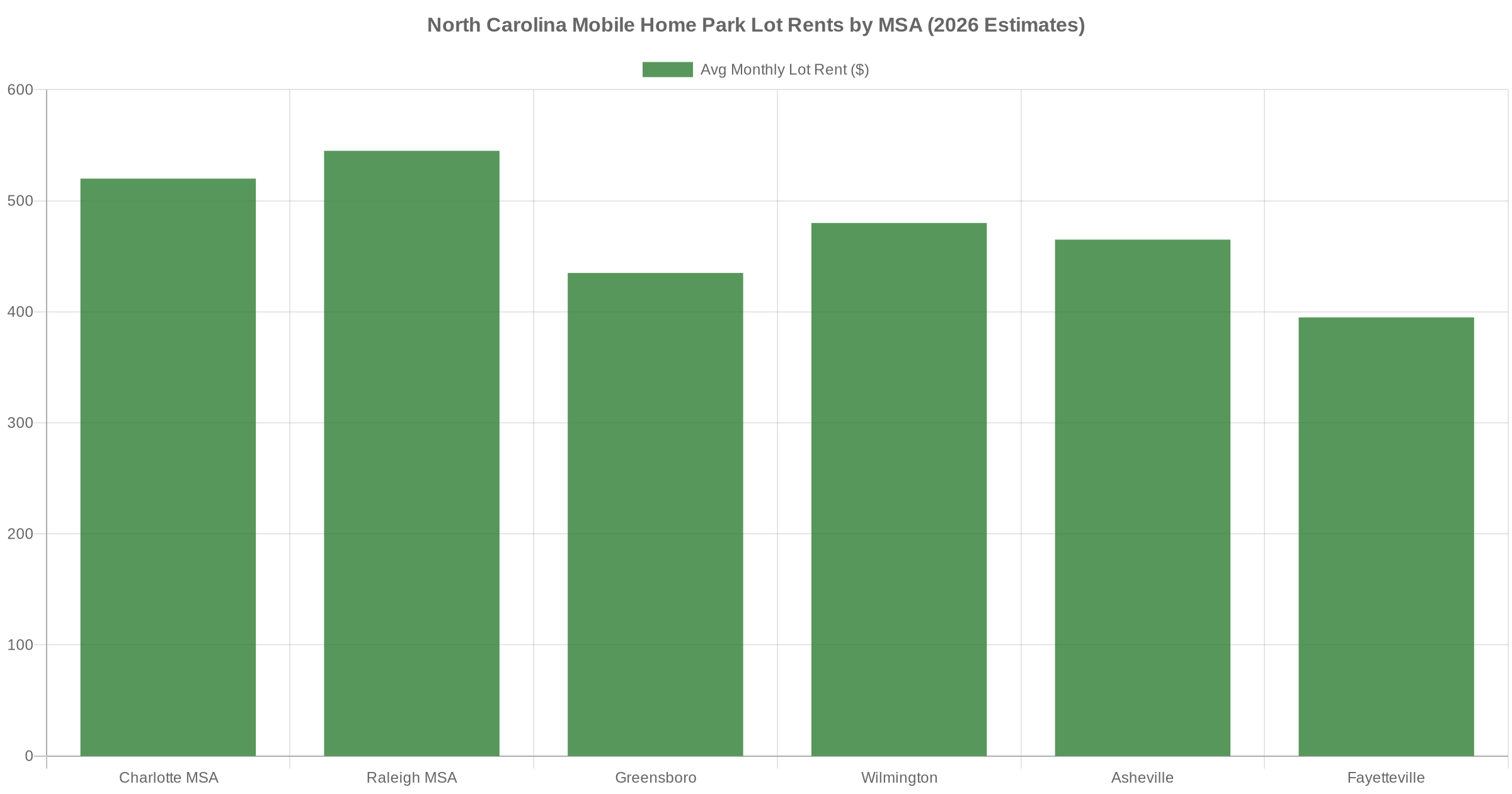
Not all North Carolina markets are equal. Here’s how the major regions stack up:
Charlotte MSA
The Charlotte metro is the most competitive market in the state — and the most rewarding if you can find deals. Population growth, job diversity (banking, logistics, manufacturing), and rising rents make this an ideal environment for mobile home parks. Lot rents in the Charlotte metro have been trending toward the $500–$550/month range in well-located communities. The downside: competition for deals is higher, and prices reflect it.
Raleigh-Durham MSA
The Research Triangle is arguably the strongest long-term hold market in the Carolinas. Tech, biotech, and university employment anchor a recession-resilient economy. Lot rents in the area have crept above $520/month on average and are still climbing. If you can get into the market at a reasonable basis, the appreciation story here is compelling on top of strong cash flow fundamentals.
Greensboro / Winston-Salem
The Piedmont Triad offers a different value proposition: lower purchase prices, stable working-class populations, and solid occupancy rates without the frenzied competition of the Triangle or Charlotte. Average lot rents run closer to $400–$450/month, which leaves meaningful upside for investors who can bring professional management and modest capital improvements.
Wilmington and the Coast
Coastal North Carolina is supply-constrained in a different way — tourism and retirement migration keep housing demand elevated even as new mobile home park supply is essentially zero. Lot rents along the Wilmington corridor have been rising steadily. Parks near the coast also benefit from demographic tailwinds as retirees seek affordable, low-maintenance housing options.
Asheville and Western NC
The Asheville market has seen significant rent appreciation across all housing types. Mobile home parks in the region benefit from the same dynamics — limited supply, strong demand, and a tenant base that has few affordable alternatives. Regulatory attitudes are more tenant-protective here than in the eastern part of the state, so operators need to be thoughtful about lease structures and communication practices.
If you’re still learning the basics of how to underwrite these deals before picking a market, our guide on investing in mobile home parks is a good starting point.
Two decades of hard-won lessons distilled into one free guide. Whether you’re evaluating your first deal or your fiftieth, these insights will sharpen your approach.
North Carolina Regulatory Environment: What Mobile Home Park Investors Must Know
North Carolina passed significant manufactured housing legislation with Senate Bill 518 (the NC Mobile Home Park Act), which took effect in 2023 and has continued to shape the operational landscape for park owners. Key provisions include:
- Required written leases: All tenants must receive written lease agreements — verbal month-to-month arrangements that were common under older operators are no longer acceptable.
- Extended notice periods: Eviction and non-renewal notices require longer lead times than previously required, which affects turnaround planning.
- Utility billing disclosure: Operators must disclose how utility charges are calculated, particularly for master-metered parks that bill tenants through RUBS (ratio utility billing systems).
- Right of first refusal considerations: While NC hasn’t passed full ROFR legislation as some states have, it has been proposed and warrants monitoring.
For investors buying parks in North Carolina, due diligence must include a full audit of existing lease compliance with SB 518. Older parks that haven’t been professionally managed may have significant lease remediation work to do post-acquisition — budget for it and factor it into your offer.
Utility Infrastructure: The Make-or-Break Factor in NC Mobile Home Park Deals
North Carolina has a higher-than-average concentration of mobile home parks on private water and sewer systems — wells, septic fields, and private lagoons. These are operational liabilities, not assets.
The priority for buyers should be city water and city sewer, full stop. Parks on private systems carry infrastructure replacement risk, regulatory exposure (the EPA and state DEQ are actively tightening enforcement of private water system compliance), and ongoing operating costs that can gut your NOI.
If you’re evaluating a park on a private well or septic system, get a thorough environmental and infrastructure assessment before going under contract. The cost of a proper inspection is negligible compared to the cost of a surprise infrastructure failure or a DEQ compliance order post-closing.
For a deeper look at what to evaluate before buying any mobile home park, our 25-point due diligence checklist covers the key inspection categories in detail.
Lot Rent Upside: Where North Carolina Parks Are Leaving Money on the Table
One of the most consistent value-add opportunities in North Carolina is lot rent normalization. Many mom-and-pop operators have held rents flat for years — sometimes decades — out of a desire to avoid conflict with long-term residents. It’s not uncommon to find parks in secondary NC markets where lot rents are $100–$175 below market rate.
A disciplined value-add buyer who can identify these parks, build a credible capital improvement plan, and execute thoughtful rent normalization over a 24–36 month period can generate substantial NOI growth without filling a single vacant lot. That’s the mobile home park value-add playbook at its most straightforward.
The key is doing it right: communicate rent changes well in advance, pair increases with visible improvements (road paving, lighting, landscaping, amenity upgrades), and make sure your management team is accessible and responsive. Residents who feel respected and see reinvestment happening will tolerate reasonable rent normalization far better than residents who feel ignored.
Financing Mobile Home Park Acquisitions in North Carolina
North Carolina mobile home parks generally finance well through agency debt (Fannie Mae and Freddie Mac) for larger stabilized assets (50+ lots, high occupancy), and through community banks and credit unions for smaller acquisitions. The state has a healthy regional banking ecosystem that is generally familiar with manufactured housing as collateral.
USDA Business & Industry (B&I) loans can also be relevant for parks in rural counties — these programs offer competitive rates and terms for qualifying rural properties, and a surprising number of NC mobile home parks sit in USDA-eligible areas despite being near sizeable population centers.
For a full overview of financing options, see our breakdown of mobile home park loan options.
The Bottom Line on Mobile Home Park Investing in North Carolina
North Carolina combines the right macro conditions — population growth, housing undersupply, fragmented park ownership — with a regulatory environment that, post-SB 518, has created more clarity rather than less. For operators who are willing to do the compliance work and bring professional management to older, under-managed parks, there is still meaningful opportunity across the state’s major and secondary markets.
The deals won’t come from LoopNet. They come from relationships — direct-to-owner outreach, consistent follow-up, and a reputation as a buyer who closes and treats residents with respect. If you’re building that pipeline in North Carolina, you’re in the right place.
10 video modules, a 55-page master checklist, and 9 ready-to-use templates that walk you through every step of evaluating a mobile home park deal — from the first site visit to closing day.
Get the top 20 lessons from two decades of mobile home park investing — free.