The 7 Due Diligence Mistakes That Cause Mobile Home Park Investors to Overpay (And One of Them Is Nearly Universal)
Andrew Keel
[wpbread]
Buying a mobile home park from a mom-and-pop seller sounds simple on paper: you get the rent roll, run the numbers, write the LOI, and close. The problem is that the numbers you’re given are often wrong, incomplete, or optimistically framed — and most investors don’t find out until they own the property.
After acquiring and operating over 50 mobile home parks, we’ve seen the same due diligence mistakes kill deals, crater returns, and leave investors holding properties worth significantly less than they paid. Here are the seven most common — and how to avoid them.
Mistake #1: Trusting the Seller’s P&L Without Independent Verification
Mom-and-pop owners have been running their parks for 20, 30, sometimes 40 years. Their financial records reflect that history — meaning handwritten ledgers, cash transactions, and P&Ls that don’t reconcile with reality.
The fix: Cross-reference everything independently. Pull 12 months of utility bills (water consumption is a reliable occupancy proxy). Request 3 years of bank statements. Compare government tax returns to the P&L you were handed. If the numbers don’t match, something is being hidden or misunderstood.
Never underwrite on an unverified P&L. Period.
Mistake #2: Skipping the Infrastructure Camera Inspection
This is the one that costs investors the most money.
Water and sewer lines in parks built in the 1960s and 1970s were often made from galvanized steel, clay pipe, or Orangeburg — materials that corrode, crack, collapse, and allow root intrusion. Worse, these lines are frequently buried beneath the roads, making repairs extraordinarily expensive.
Full infrastructure replacement can run $1,000 to $3,000 per lot. On a 100-lot park, that’s potentially $200,000–$300,000 you didn’t price into the deal.
The fix: Hire a licensed plumber to camera-scope the mains and laterals before you sign the LOI. Yes, before. A $2,500 inspection that kills a bad deal is the best money you’ll ever spend.
Mistake #3: Cap-Rating Park-Owned Home (POH) Income
This is a valuation error that inflates purchase price and causes buyers to dramatically overpay — a problem we address directly in our step-by-step mobile home park valuation guide.
When a park includes homes that the seller owns and rents out (park-owned homes, or POHs), many investors include that income in top-line revenue and apply the same cap rate to it as lot rent. The problem: POH income is apartment-style income — higher management intensity, higher turnover, higher maintenance, and most lenders won’t count it toward the park’s lending value at all.
Applying a 7% cap rate to $5,000/month of POH income adds $857,000 to your purchase price — for an asset most operators want to sell off as fast as possible.
The fix: Value lot rent income with your cap rate. Value POHs separately at discounted book value. Add them together. Never blend them.
Mistake #4: Not Calling the Tax Assessor
Property taxes are reassessed to reflect the new purchase price and income after a sale. In most markets, this happens in Year 2. Many first-time buyers never model this, then watch their NOI drop 8–15% without any operational change. For a full picture of the real costs of acquiring a mobile home park before close, see our guide on how much it costs to buy a mobile home park.
The fix: Before you close, call the local tax assessor and ask for an estimate of post-reassessment taxes based on your purchase price. It takes 20 minutes and can fundamentally change whether the deal pencils.
Mistake #5: Underwriting Vacant Lots Without Verifying Zoning
Vacant lots are the dream — you buy them at near-zero value and fill them with new homes, instantly manufacturing equity. The reality is that many parks have zoning restrictions, fire code setback requirements, or outdated permit structures that make placing new homes on vacant lots impossible or extraordinarily expensive.
We’ve seen buyers underwrite 15 vacant lots as a core value-add thesis, then discover post-close that the local fire code requires 10-foot setbacks between homes and the existing lot layout won’t accommodate new placements.
The fix: Get zoning approval in writing — not verbally, in writing — from the local zoning department before closing. Confirm setback requirements for new home placements. This is non-negotiable.
Mistake #6: Skipping the ALTA Survey
A standard boundary survey tells you where the property lines are. An ALTA survey tells you where the utility lines, easements, encroachments, and rights-of-way are. For mobile home parks — where you’re buying land, roads, and underground infrastructure — the ALTA survey is mandatory.
Boundary surveys cost less. They also miss the information you actually need. This is a false economy.
Mistake #7: Missing Lost Title Costs on Park-Owned Homes
In many states, manufactured homes have separate titles in addition to real property records. When a park changes hands, those titles need to be transferred or retired (if the home is being converted to real property). Missing, lost, or incorrectly titled homes can create significant legal and financing headaches.
On a portfolio with 20 POHs, title issues on even 5 of them can create months of delays and unexpected legal fees.
The fix: Do a full title audit on every park-owned home before close. Identify missing titles early and factor the retrieval cost into your offer.
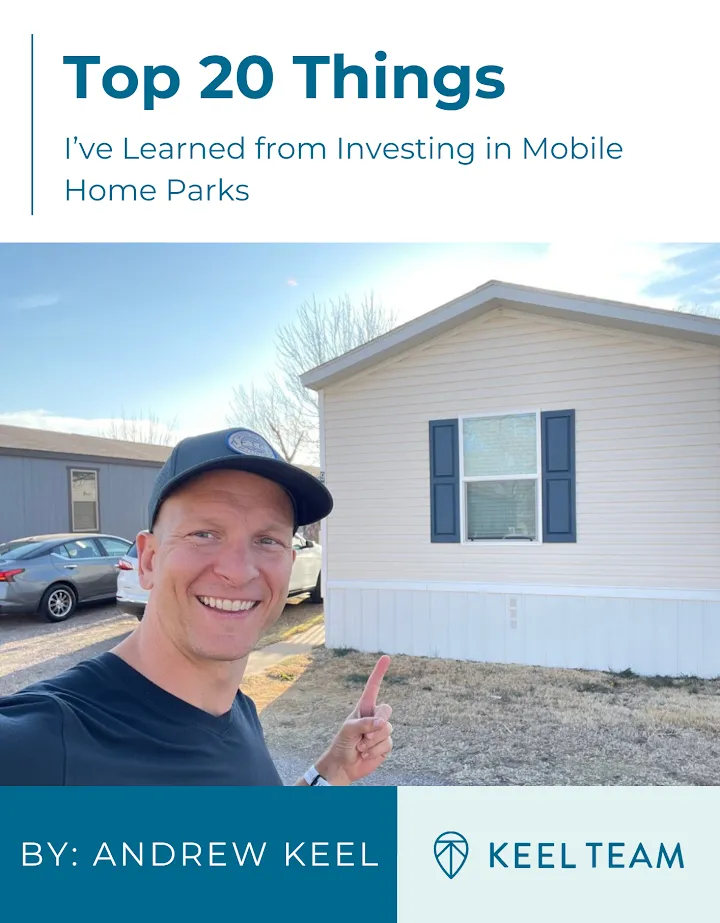
📘 Free eBook: Top 20 Things I’ve Learned from Investing in Mobile Home Parks
Two decades of hard-won lessons — including due diligence mistakes and how to avoid them.
Mobile home park investing rewards careful operators. For a balanced view of the opportunity, see our honest breakdown of the pros and cons of mobile home park investing. The deals that hurt investors most aren’t the ones with obvious problems — they’re the ones that look clean until they aren’t.
At Keel Team, we’ve built a 150-point due diligence process across 50+ acquisitions. Every single item on that checklist exists because something caught us — or someone we know — off guard at some point. The cost of rigorous due diligence is a rounding error compared to the cost of getting it wrong.
If you’re evaluating mobile home park investments and want to understand what a professional acquisition process looks like, we’ve documented our complete framework in the Keel Team Mobile Home Park Due Diligence Playbook — a free resource covering the full 150-point process our team runs on every acquisition.
Frequently Asked Questions
What is the most expensive due diligence mistake mobile home park investors make?
Skipping the infrastructure camera inspection is consistently the costliest error. Water and sewer lines in older parks can require $1,000–$3,000 per lot to replace. On a 100-lot park, that’s up to $300,000 in unexpected capital expenditure not reflected in the purchase price.
Should park-owned home income be included when valuing a mobile home park?
Not at the same cap rate as lot rent. Park-owned home income is operationally intensive and most commercial lenders won’t fully count it toward the park’s lending value. Value lot rent at your cap rate and park-owned homes separately at a discounted book value to avoid overpaying.
How do I verify a seller’s financial records for a mobile home park?
Cross-reference the seller’s profit and loss statement against at least three years of federal tax returns, 12 months of bank statements, and utility bills. Water consumption is a reliable proxy for actual occupancy. Never underwrite on a single unverified document.
What’s the best way to check for zoning issues before buying a mobile home park?
Contact the local zoning or planning department directly and get written confirmation — not verbal — that vacant lots can legally accept new manufactured home placements. Confirm setback requirements and whether fire code restrictions limit home placement on the existing lot layout.
When do property taxes get reassessed after buying a mobile home park?
In most markets, property taxes are reassessed in Year 2 after a transaction, based on the new purchase price and income. This can reduce net operating income by 8–15% without any operational change. Always call the local tax assessor before close and request an estimated post-reassessment tax figure.
📋 The Mobile Home Park Due Diligence Playbook
10 video modules, a 55-page master checklist, and 9 ready-to-use templates covering every step of evaluating a mobile home park deal.
Andrew Keel is the founder of Keel Team Real Estate Investments and one of the most active mobile home park operators in the United States, with a portfolio spanning 50+ communities across multiple states.
Andrew Keel
Andrew is a passionate commercial real estate investor, husband, father and fitness fanatic. His specialty is in acquiring and operating manufactured housing communities. Visit AndrewKeel.com for more details on Andrew's story.