Investing in mobile home parks continues to attract attention from both new and seasoned investors seeking consistent cash flow and long-term stability. Yet before evaluating any potential investment, it’s important to understand two fundamental sources of revenue in mobile home park investing — lot rent and park-owned home rent.
Both influence how income is generated, what responsibilities exist, and how much management is required. This article explains each concept clearly and explores how they affect the structure and performance of a mobile home park investment.
What Is Lot Rent in a Mobile Home Park?
Lot rent refers to the monthly fee residents pay for the right to occupy a specific lot within a mobile home park. In this model, residents typically own their manufactured homes while paying rent for the land and community infrastructure provided by the mobile home park.
How Lot Rent Works
A typical lot includes essential connections such as water, sewer, and electricity, as well as access to shared infrastructure like roads, lighting, and occasionally amenities. Lot rent amounts vary depending on factors such as:
- Location: Mobile home parks near growing metro areas or high-demand regions may achieve stronger lot rent potential.
- Utility Type: Public utilities often reduce operational complexity, while private systems can require more maintenance.
- Amenities: Additions like playgrounds, community centers, or landscaped common areas can justify slightly higher lot rents.
Because residents own their homes, they are generally responsible for interior and exterior upkeep. This creates a structure where the mobile home park focuses on maintaining the land, utilities, and common areas.
Download our FREE eBook on the Top 20 things to know BEFORE investing in mobile home parks!
Why the Tenant-Owned Home Model Appeals to Investors
A tenant-owned home model refers to mobile home parks where residents own their homes and pay rent solely for the lot and related services. This structure, sometimes called a land-lease community, offers several benefits for investors.
Lower Maintenance and More Predictable Operations
Mobile home parks operating under the tenant-owned home model typically experience fewer maintenance requests because residents handle their own home repairs. The mobile home park’s obligations are limited to infrastructure such as roads, lighting, and landscaping, which helps create more predictable expense patterns.
Resident Stability
Relocating a manufactured home can be costly, which encourages residents to remain long term. This inherent stability reduces turnover and vacancy, supporting consistent occupancy rates over time.
Scalable Management Structure
Because the mobile home park is not maintaining homes directly, this model allows efficient scaling. Investors can manage multiple mobile home parks under this structure without a large increase in maintenance or staffing requirements.
What Are Park-Owned Homes in a Mobile Home Park?
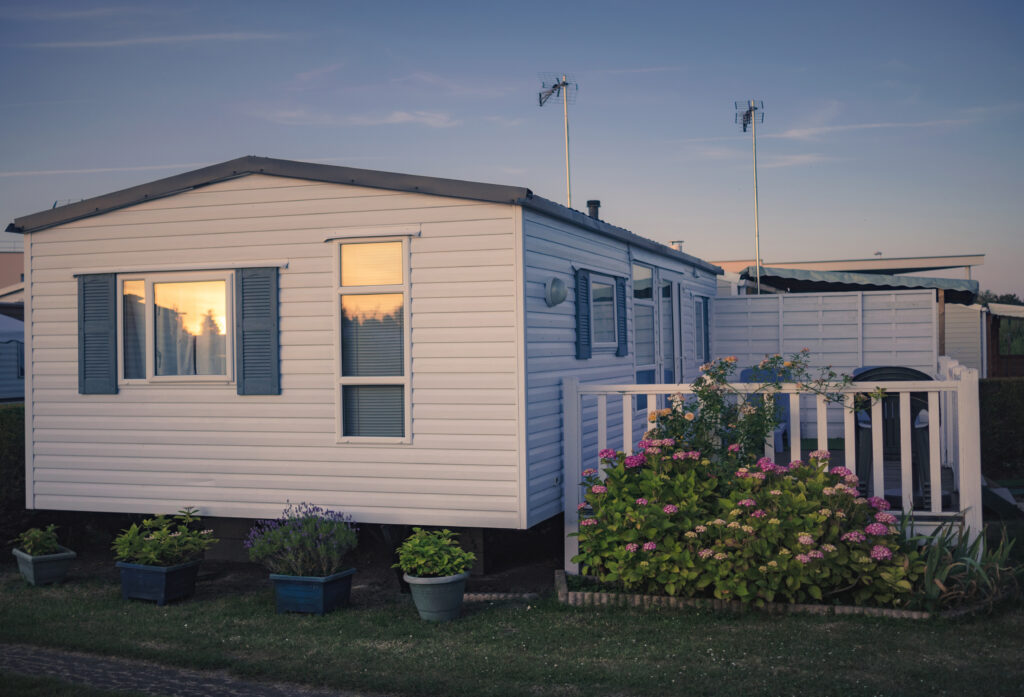
Park-owned homes are mobile homes within a mobile home park that are owned by the mobile home park itself and rented out to residents. In this setup, residents pay both lot rent and home rent, while the mobile home park retains ownership and maintenance responsibility for the physical homes.
Why Some Mobile Home Parks Include Park-Owned Homes
There are generally two reasons a mobile home park includes park-owned homes:
- Legacy Inventory: Homes were originally installed and retained by the mobile home park rather than sold to residents.
- Value-Add Strategy: The mobile home park acquires or installs homes on vacant lots to increase occupancy and generate additional income.
While park-owned homes can strengthen short-term returns, they also increase operational complexity because the mobile home park must manage both home maintenance and tenant turnover.
Tenant-Owned Home Model vs. Park-Owned Home Model
Understanding the differences between these two models helps investors align their strategies with their goals.
| Factor | Tenant-Owned Home Model | Park-Owned Home Model |
|---|---|---|
| Home Ownership | Resident owns the home | Mobile home park owns the home |
| Maintenance Responsibility | Resident maintains home | Mobile home park maintains home |
| Turnover Costs | Typically low | Typically higher |
| Monthly Income | Usually lower | Usually higher |
| Management Intensity | Lower | Higher |
| Operational Risk | Lower | Higher due to repairs and vacancies |
Both models can perform well under the right conditions. The ideal choice depends on the mobile home park’s location, condition, and management approach.
Benefits of the Tenant-Owned Home Model
1. Lower Operating Expenses
Since residents maintain their own homes, the mobile home park’s expenses are largely limited to land maintenance, utilities, and common areas. This makes financial forecasting more straightforward and generally more stable.
2. Long-Term Resident Commitment
Resident ownership fosters pride and care, leading to better-maintained properties and lower turnover. A stable tenant base helps create predictable income and stronger community cohesion.
3. Easier Portfolio Expansion
The tenant-owned home model allows operators to scale into additional mobile home parks without significantly expanding their maintenance or personnel footprint. This operational efficiency makes portfolio growth more practical.
Challenges of the Tenant-Owned Home Model
1. Slower Occupancy Growth
Vacant lots can take time to fill, as residents must either relocate an existing home or purchase a new one. This can slow down occupancy compared to mobile home parks that already have homes available for rent.
2. Limited Immediate Upside
Income growth under the tenant-owned home model tends to occur gradually. Increases in revenue often depend on modest rent adjustments or gradual occupancy improvements rather than large short-term gains.
3. Infrastructure Responsibility
Even though residents maintain their own homes, the mobile home park remains responsible for essential systems like roads, sewer, and electrical infrastructure. These can require long-term capital planning and periodic upgrades.
Common Benefits of the Park-Owned Home Model
1. Faster Occupancy Growth
By owning homes, a mobile home park can quickly fill vacant lots, boosting occupancy and cash flow more rapidly than waiting for residents to bring in homes.
2. Higher Gross Income Potential
Collecting both home rent and lot rent increases total income per site. For investors seeking stronger near-term returns, this can make a measurable impact on cash flow.
3. Pathway to Future Stability
Some mobile home parks use park-owned homes as a temporary strategy. Once stabilized, homes can be sold to residents through installment or rent-to-own arrangements, eventually converting the community into the tenant-owned home model for lower maintenance.
Challenges of the Park-Owned Home Model
1. Increased Maintenance Costs
When a mobile home park owns homes, it must handle all repairs and replacements. Costs such as HVAC servicing, roofing, and interior fixes can fluctuate and require close tracking.
2. Greater Management Demands
Managing park-owned homes requires active oversight — from tenant screening to coordinating maintenance and tracking both home and lot rent. This adds time and operational complexity.
3. Depreciating Housing Assets
While land can appreciate, manufactured homes typically depreciate. Over time, the mobile home park must plan for replacements or refurbishments to keep units rentable.
Blended Models in Mobile Home Park Investing
Many mobile home parks use a hybrid strategy, combining the tenant-owned home model with park-owned homes. This approach balances stable income from tenant-owned homes with faster fill-up from park-owned units.
A typical progression involves starting with more park-owned homes to increase occupancy and then selling those homes to residents once stabilized. This gradual conversion supports consistent income while reducing long-term management intensity.
Financing and Valuation Considerations
The ratio between tenant-owned homes and park-owned homes directly affects how lenders and appraisers evaluate a mobile home park investment.
Financing Implications
- Tenant-Owned Home Model: Often viewed as more stable, since revenue comes primarily from lot leases and long-term resident ownership.
- Park-Owned Home Model: May be financed differently, as lenders sometimes discount the value of homes due to depreciation and management requirements.
Valuation Differences
Mobile home parks operating under the tenant-owned home model may achieve tighter capitalization rates due to predictable income and lower risk. Communities with heavier park-owned home components might trade at slightly higher cap rates to reflect increased management and maintenance exposure.
Key Metrics in Mobile Home Park Analysis
When analyzing a mobile home park investment, investors commonly focus on:
- Occupancy Rate: Percentage of occupied lots or rented homes.
- Expense Ratio: Operating expenses as a share of total income.
- Home Ownership Mix: The ratio between tenant-owned and park-owned homes.
- Utility Setup: Whether utilities are public or private, which impacts costs and reliability.
Understanding these elements helps align a mobile home park investment with an investor’s risk profile and return objectives.
Improving Mobile Home Park Performance
Mobile home park operators often implement practical improvements to enhance value and resident satisfaction, such as:
- Infill Programs: Bringing in new or refurbished homes to fill vacant lots.
- Utility Efficiency Projects: Adding sub-meters to reduce shared utility costs.
- Community Enhancements: Upgrading signage, roads, or landscaping to improve curb appeal.
- Gradual Rent Adjustments: Aligning lot rent with comparable market rates responsibly.
These measures can increase net operating income and support long-term appreciation when executed thoughtfully.
Final Thoughts on Tenant-Owned Homes and Park-Owned Homes
Understanding how tenant-owned homes and park-owned homes function is fundamental to evaluating mobile home park investments.
The tenant-owned home model offers stability, lower operational intensity, and long-term resident retention, while the park-owned home model may provide higher short-term income but requires more active management.
The ideal balance depends on each mobile home park’s market, infrastructure, and ownership strategy. By grasping both models clearly, investors can make more informed decisions and build stronger portfolios in mobile home park investing.
Mobile Home Park Lot Rents in 2026: What Investors Are Seeing
As of 2026, lot rents across the United States continue to rise in response to growing demand for affordable housing and limited new supply of land-lease communities. Markets in the Southeast and Midwest — particularly North Carolina, Tennessee, and South Carolina — have seen meaningful rent growth as both institutional and private operators work to bring below-market lots to more competitive rates. In many established communities, average lot rents have climbed into the $450 to $650 range, while high-demand Sun Belt markets can exceed $700 per month in well-located parks.
This environment continues to reward well-run mobile home parks with below-market lot rents, as the value-add opportunity to gradually raise rents toward market rate remains one of the most reliable levers in the asset class. Passive investors participating through mobile home park syndications benefit from this dynamic without direct management involvement. Learn more about the pros and cons of mobile home park investing in 2026.
Download our FREE eBook on the Top 20 things to know BEFORE investing in mobile home parks!
Frequently Asked Questions
What is lot rent in a mobile home park?
Lot rent is the monthly fee a resident pays to lease the land their manufactured home sits on within a mobile home park. The resident owns the home; the investor owns the land. Lot rent typically covers access to the lot, infrastructure connections (water, sewer, electric), and common area maintenance. In 2026, lot rents across the U.S. average between $350 and $700+ per month depending on location and community quality.
What is the difference between a park-owned home and a tenant-owned home in a mobile home park?
In a tenant-owned home model, the resident owns their manufactured home and pays lot rent to the mobile home park. In a park-owned home model, the mobile home park owns the physical home and rents it to the resident, who pays both home rent and lot rent. Tenant-owned homes are generally preferred by investors because they reduce maintenance obligations, lower turnover costs, and create a more stable income stream.
How does lot rent affect mobile home park valuation?
Mobile home parks are valued primarily on their net operating income (NOI), which is directly driven by lot rent. Higher lot rents and strong occupancy lead to higher NOI, which at a given cap rate translates to a higher property value. Many value-add mobile home park investments focus specifically on acquiring communities with below-market lot rents and gradually raising them toward market rate, thereby increasing NOI and overall asset value. Learn more in our step-by-step mobile home park valuation guide. For more, see our why mobile home parks outperform other asset classes.
What happens if a resident can’t pay lot rent?
If a resident fails to pay lot rent, the mobile home park operator must follow state-specific eviction procedures. Because residents own their homes, eviction from a mobile home park involves removing the home from the lot — a costly and time-consuming process for the resident. This financial friction is one reason eviction rates in well-run mobile home parks tend to be low: residents who own their homes are strongly motivated to remain current on lot rent to protect their asset.
Can passive investors benefit from lot rent income without managing a mobile home park?
Yes. Through mobile home park syndications, passive investors can access lot rent income and appreciation without any direct management responsibilities. An experienced operator acquires and manages the mobile home park, while passive investors contribute capital and receive a share of distributions and proceeds from the eventual sale. This structure allows investors to benefit from the fundamentals of lot rent-driven cash flow without the operational demands. For a deeper overview, read our guide on passive mobile home park investing. For more, see our the complete guide to investing in mobile home parks.
Are you looking for MORE information? Book a 1-on-1 consultation with Andrew Keel to discuss:
- A mobile home park deal review
- Due diligence questions
- How to raise capital from investors
- Mistakes to avoid, and more!
Disclaimer:
The information provided is for informational purposes only and is not investment advice or a guarantee of any kind. We do not guarantee profitability. Make investment decisions based on your research and consult registered financial and legal professionals. We are not registered financial or legal professionals and do not provide personalized investment recommendations. For more, see our start investing in mobile home parks.