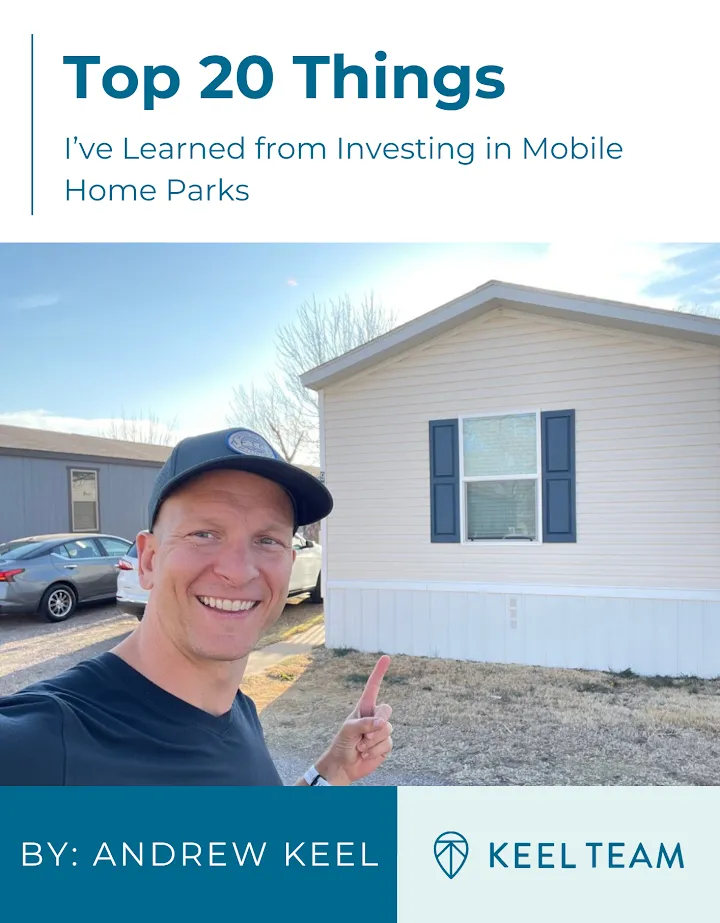
Mobile home park investing may offer a compelling path to passive income, especially for busy professionals seeking hands-off opportunities. Unlike traditional real estate, such as apartments or single-family rentals, mobile home parks often deliver unique advantages that align with today’s economic landscape. From higher cap rates to recession-resistant demand, passive mobile home park investing through syndications may provide a smarter way to build wealth in 2026. Let’s explore five reasons why this niche could outshine traditional real estate, backed by a real-world experience.
Why Passive Mobile Home Park Investing Stands Out
Passive mobile home park investing typically involves joining a syndication, where investors pool capital to acquire properties managed by experienced operators. This structure may allow you to earn cash flow without dealing with tenants, maintenance, or daily operations. In contrast, traditional real estate often demands active involvement or higher management costs. By focusing on affordable housing investments, mobile home parks may tap into a growing market with distinct benefits. Here’s why they may be a better choice.
Download our FREE eBook on the Top 10 things to know BEFORE investing PASSIVELY in mobile home parks!
1. Higher Cap Rates for Stronger Return Potential
Mobile home parks often boast cap rates between 7% and 10%, potentially outpacing apartments (4-6%) and single-family rentals (5-7%). Cap rate, or capitalization rate, measures a property’s net operating income relative to its purchase price, reflecting its income-generating potential. Higher cap rates may translate to better returns for investors.
For example, a $5 million mobile home park generating $400,000 in annual net income yields an 8% cap rate. Compare this to a $5 million apartment complex with $250,000 in net income, yielding only 5%. Mobile home parks may achieve these rates because they often require lower maintenance costs and cater to stable, long-term residents. Passive investors in syndications may benefit from these returns without the hassle of property management.
2. Lower Tenant Turnover Saves Time and Money
Tenant turnover can erode profits in traditional real estate. Apartments may see 40-50% annual turnover, and single-family rentals often face frequent vacancies. Mobile home parks, however, typically experience turnover rates as low as 10-20%. Why? Residents often own their mobile homes and rent the lot, creating a financial incentive to stay long-term.
Lower turnover may reduce vacancy costs, marketing expenses, and unit repairs. For passive investors, this stability can translate to consistent cash flow. Syndications further enhance this benefit by delegating tenant management to professional operators, freeing you from daily oversight.
3. Recession-Resistant Demand for Affordable Housing
Mobile home parks may thrive in uncertain economic times due to the rising demand for affordable housing. With median home prices exceeding $400,000 in many U.S. markets, mobile homes offer a budget-friendly alternative, often costing $30,000-$80,000. This affordability attracts a diverse tenant base, including retirees, young families, and blue-collar workers, ensuring steady occupancy.
During recessions, demand for affordable housing often remains strong or grows, as people seek cost-effective living options. Apartments and single-family rentals, while stable, may face higher default risks or vacancy spikes in downturns. Passive mobile home park investing through syndications may allow you to capitalize on this resilience without navigating market volatility yourself.
In 2026, the affordable housing shortage has only intensified. According to the National Low Income Housing Coalition, there is a national shortage of over 7 million affordable rental homes for extremely low-income renters. Mobile home parks continue to fill a critical gap by offering lot rents that average $300 to $600 per month in many markets — a fraction of what apartment or single-family renters pay. With mobile home parks positioned as the future of affordable housing, demand-side fundamentals remain exceptionally strong for passive investors entering this space.
4. Hands-Off Investing Through Real Estate Syndications
Real estate syndications may be the cornerstone of passive mobile home park investing. In a syndication, a sponsor (or general partner) identifies, acquires, and manages the property, while passive investors (limited partners) provide capital. Investors may earn a share of cash flow, appreciation, and tax benefits without lifting a finger.
Contrast this with apartments or single-family rentals, where landlords often handle tenant issues, repairs, or property management fees (8-10% of rent). Syndications typically charge fees, but these may be offset by the sponsor’s expertise and economies of scale. For busy professionals, like sales executives or physicians, this hands-off approach may align perfectly with a demanding lifestyle.
How Syndications Work
Generally speaking, in a typical mobile home park syndication, investors contribute a minimum of $50,000-$100,000. The sponsor pools funds to purchase a property, often targeting “value-add” opportunities, like underperforming assets with low occupancy. The sponsor may renovate lots, raise rents to market rates, or improve amenities, boosting the property’s value. Investors may receive 6-12% annual cash flow, plus a share of profits upon sale, typically within 5-7 years.

5. Tapping Into a Growing Market With Less Competition
Mobile home parks may offer a less crowded investment space compared to traditional real estate. Institutional investors often dominate apartments, driving up prices and compressing cap rates. Single-family rentals face fierce competition from flippers and iBuyers. Mobile home parks, however, remain under the radar, attracting savvy investors seeking high returns.
The U.S. has approximately 43,000 mobile home parks, housing 22 million residents, yet new development is rare due to zoning restrictions. This scarcity may drive demand for existing mobile home parks, potentially increasing property values. Passive investors can access this market through syndications, leveraging the sponsor’s expertise to secure off-market deals or mom-and-pop properties ripe for improvement.
Why Busy Professionals Love This Niche
For professionals juggling demanding careers, passive mobile home park investing may offer a low-stress way to build wealth. Syndications eliminate the need for property management, allowing you to focus on your day job while earning cash flow. The niche’s stability, driven by affordable housing demand, may also provide peace of mind in volatile markets.
Tax Advantages That Amplify Returns in 2026
One often-overlooked advantage of passive mobile home park investing is the significant tax benefits available in 2026. With the return of 100% bonus depreciation for mobile home park investments, passive investors may be able to offset a substantial portion of their taxable income in the first year of ownership. Cost segregation studies can accelerate depreciation on infrastructure like roads, utilities, and site improvements, potentially generating paper losses that shelter cash distributions from taxes. Combined with the strong cash flow that mobile home parks already deliver, these tax advantages may significantly boost after-tax returns compared to traditional real estate investments. For more, see our how mobile home park investments stack up.
Getting Started With Passive Mobile Home Park Investing
If passive mobile home park investing intrigues you, start by researching reputable syndicators. Look for operators with a proven track record, transparent communication, and a history of successful deals. Review their offering memorandums, which detail the investment’s structure, risks, and projected returns. You might also consult a financial advisor or CPA to assess tax benefits, like depreciation or 1031 exchanges.
Additionally, educate yourself through resources like the Passive Mobile Home Park Investing Podcast or blogs and eBooks available online. These platforms can offer insights into market trends and due diligence tips.
Conclusion: A Smarter Path to Passive Income
Download our FREE eBook on the Top 10 things to know BEFORE investing PASSIVELY in mobile home parks!
Passive mobile home park investing may offer a compelling alternative to traditional real estate in 2026. With higher cap rates, lower tenant turnover, and recession-resistant demand, mobile home parks could deliver strong returns for hands-off investors. Real estate syndications make it possible to tap into this niche without managing properties, ideal for busy professionals seeking passive income. While no investment is guaranteed, the case study and market trends suggest mobile home parks may be a smart addition to your portfolio. Good luck and happy hunting! For more, see our what passive mobile home park investing looks like.
Are you looking for MORE information? Book a 1-on-1 consultation with Andrew Keel to discuss:
- A mobile home park deal review
- Due diligence questions
- How to raise capital from investors
- Mistakes to avoid, and more!
Frequently Asked Questions
What is passive mobile home park investing?
Passive mobile home park investing involves placing capital into a mobile home park syndication or fund managed by an experienced operator. As a limited partner, you earn a share of the cash flow and potential appreciation without handling day-to-day property management, tenant relations, or maintenance decisions. For more, see our start investing in mobile home parks.
How much money do I need to invest passively in a mobile home park?
Most mobile home park syndications require a minimum investment of $50,000 to $100,000, though some may accept lower amounts. The exact minimum depends on the sponsor and the specific deal structure outlined in the offering memorandum.
What kind of returns can I expect from passive mobile home park investments?
While returns are never guaranteed, many mobile home park syndications may target annual cash-on-cash returns of 6% to 12%, with total returns (including appreciation upon sale) potentially reaching 15% to 20% or more over a 5 to 7 year hold period. Actual results vary based on market conditions, property performance, and the sponsor’s execution of the business plan.
Are mobile home parks a good investment during a recession?
Mobile home parks have historically demonstrated resilience during economic downturns. Because they provide some of the most affordable housing available, demand often remains stable or increases during recessions as consumers seek lower-cost living options. This can help maintain occupancy rates and cash flow when other asset classes may struggle.
How do mobile home park investments compare to apartment investing?
Mobile home parks often feature higher cap rates (7% to 10% vs. 4% to 6% for apartments), lower tenant turnover, and reduced maintenance costs since residents typically own their homes. Mobile home parks may also benefit from supply constraints — new development is extremely limited due to zoning restrictions — which can support long-term value appreciation. For a detailed comparison, see our article on mobile home parks vs. multi-family investing.
Disclaimer:
The information provided is for informational purposes only and is not investment advice or a guarantee of any kind. We do not guarantee profitability. Make investment decisions based on your research and consult registered financial and legal professionals. We are not registered financial or legal professionals and do not provide personalized investment recommendations.