The mobile home park purchase agreement is the single most important document in any acquisition. It locks in your price, defines your due diligence window, and sets the rules if something goes sideways before closing. Get it right and you have a clear path to ownership. Miss a critical clause and you could lose your earnest money — or worse, inherit problems you never knew existed.
This guide walks through the key terms every buyer needs to understand before signing.
What Is a Mobile Home Park Purchase Agreement?
A purchase agreement — sometimes called a purchase and sale agreement, or PSA — is the binding contract between buyer and seller that governs the terms of a real estate transaction. For mobile home parks, these agreements are often more complex than standard commercial contracts because they typically involve:
- Land plus infrastructure (roads, utilities, water and sewer lines)
- Park-owned homes or units in addition to lots
- Existing tenant leases that transfer with the property
- Business licenses, permits, and regulatory compliance history
- Utility billing systems and metering agreements
A well-drafted PSA gives you the legal leverage to walk away — with your earnest money back — if the property does not pass your inspection. A poorly drafted one hands that leverage to the seller.
Key Terms Every Mobile Home Park Buyer Must Review
1. Purchase Price and Earnest Money Deposit
The purchase price is obvious, but the earnest money deposit (EMD) deserves close attention. Typically ranging from 1% to 3% of the purchase price on mobile home park deals, the EMD signals your seriousness to the seller and is held in escrow until closing.
Key questions to pin down before you sign:
- Is the EMD fully refundable during the due diligence period?
- Does it go hard (non-refundable) at a specific date?
- What triggers forfeiture?
Never let your deposit go hard before you have completed your due diligence. The leverage shifts dramatically once earnest money is at risk.
2. Due Diligence Period
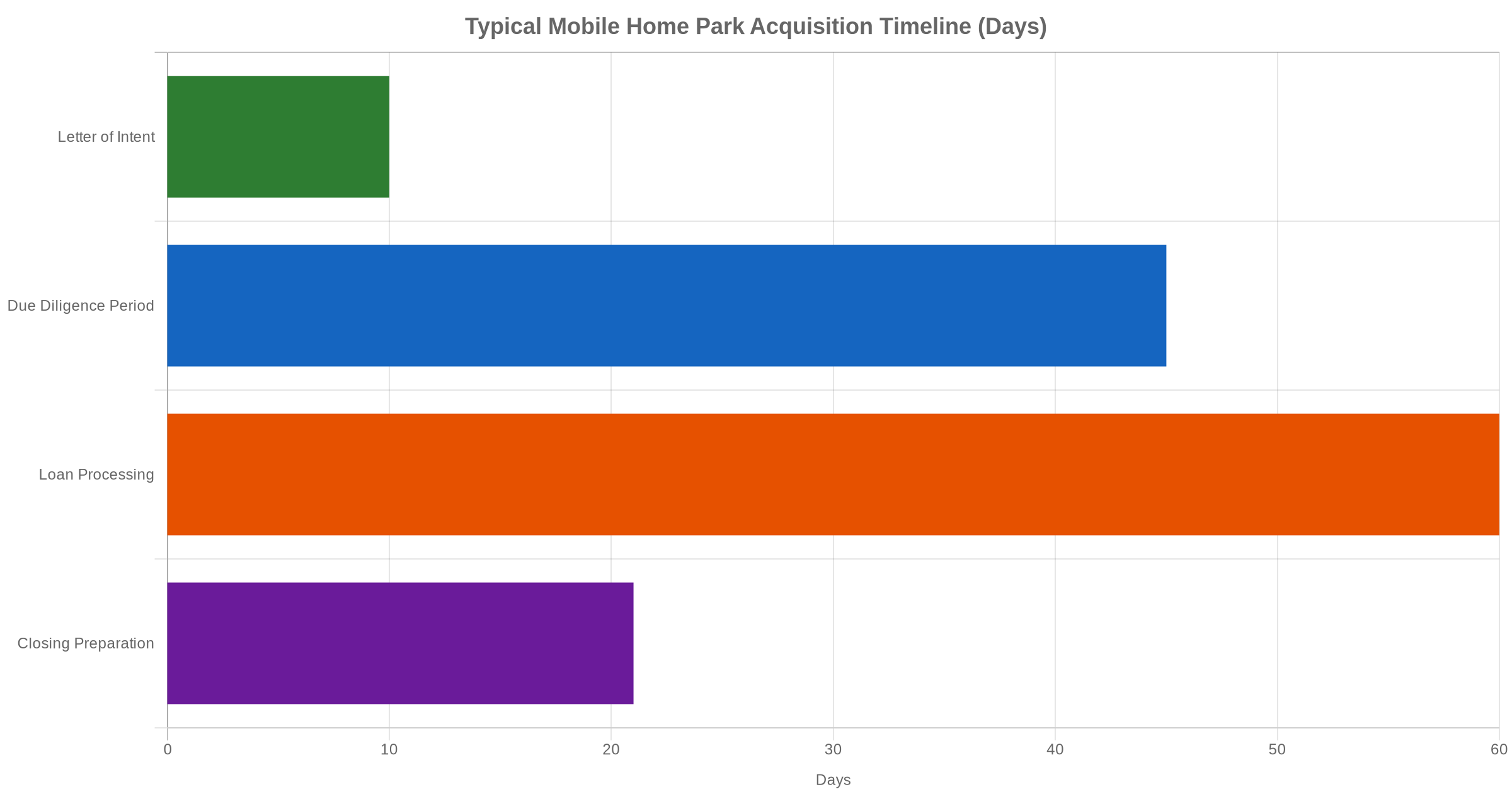
This is your window to inspect, verify, and investigate every aspect of the property before you are fully committed. For mobile home parks, you want a due diligence period of 30 to 60 days minimum — longer for larger or more complex properties.
During this window, you will verify:
- Rent rolls and all lease agreements
- Utility infrastructure, metering, and billing
- Title and survey
- Environmental history and Phase I ESA results
- Local zoning and permit status
- Physical condition of lots, roads, and common areas
Make sure the agreement gives you the right to terminate for any reason during due diligence and receive your full EMD back. Language that limits your ability to exit this window is a serious red flag.
3. Contingencies
Contingencies are conditions that must be met for the deal to proceed. Common contingencies in mobile home park transactions include:
- Financing contingency: Protects you if your lender does not approve the loan
- Inspection contingency: Allows you to exit based on physical findings
- Environmental contingency: Critical for older parks that may have underground storage tanks or soil contamination
- Zoning and use contingency: Ensures the property can legally continue operating as a mobile home park
Sellers in competitive markets may push back on contingencies. Know which ones are deal-breakers before you enter negotiations.
4. Representations and Warranties
Representations and warranties are the seller’s formal assurances about the condition of the property. Standard reps in a mobile home park PSA should include:
- No undisclosed litigation or regulatory violations
- All leases are current and in the form provided to the buyer
- Utilities are operational and no deferred maintenance has been concealed
- The rent roll is accurate as of the effective date
- No pending condemnation, eminent domain, or rezoning actions
If a seller breaches a rep post-closing, you may have legal recourse — but only if those representations are clearly stated in the agreement. A bare-bones PSA with no substantive reps is a major warning sign.
Two decades of hard-won lessons distilled into one free guide. Whether you’re evaluating your first deal or your fiftieth, these insights will sharpen your approach.
5. Closing Date and Extension Rights
The PSA should specify a target closing date and include language about what happens if either party needs more time. Typical mobile home park closings take 60 to 120 days from an executed PSA to deed transfer, depending on financing complexity and lender timelines.
Negotiate at least one extension option — typically 15 to 30 days — in case financing takes longer than expected. Sellers who refuse any extension clause are often signaling urgency or expecting the deal to fall apart.
6. Prorations and Adjustments
Rent collected, property taxes, utility deposits, and prepaid expenses are typically prorated at closing. The PSA should spell out exactly how these are calculated and who is responsible for expenses before and after the transfer date.
Pay particular attention to:
- Security deposits held by the seller (these transfer to you at closing)
- Utility pre-payments or deposits with the municipality
- Any park-owned home mortgages or chattel loans that may convey with the sale
7. Assignment Rights
If you are purchasing through an LLC or syndication structure, ensure the PSA explicitly allows assignment to an entity you control — or includes language permitting you to designate the actual purchasing entity at closing. Missing this clause can create legal complications if you need to change your acquisition vehicle during due diligence.
Red Flag Clauses to Watch For
Not all purchase agreements are drafted equally. Sellers or their brokers sometimes include terms that tilt the deal significantly in the seller’s favor. Watch out for:
- As-is language without offsetting disclosure requirements: You should still receive full representations and warranties even on an as-is sale
- Due diligence windows under 21 days: Not enough time to properly inspect a mobile home park
- Non-refundable earnest money from day one: No experienced buyer accepts this on a commercial deal
- Vague utility language: Especially on parks with private wells, septic systems, or lagoon wastewater treatment
- No tenant estoppel certificates: You want written confirmation from tenants about their lease terms before you close
The Letter of Intent vs. the Purchase Agreement
A Letter of Intent (LOI) comes before the PSA. It outlines the general terms of the deal — price, structure, exclusivity period — but is typically non-binding. Once both parties agree on the LOI, the PSA is drafted with the full legal terms.
Do not treat the LOI casually. The terms you lock in during LOI negotiations often define the baseline for the PSA. Push for favorable due diligence and contingency language in the LOI before either party spends money on legal drafting.
For a complete step-by-step breakdown of the full acquisition process — from sourcing your first deal to closing — see our beginner’s guide to mobile home park investing in 2026.
Work With a Commercial Real Estate Attorney
Mobile home park purchase agreements are commercial real estate contracts — not residential ones. The standard forms a residential realtor uses do not apply here. You need a commercial real estate attorney, ideally one familiar with the state you are buying in, to:
- Review or draft the PSA before you sign
- Flag any seller-favorable clauses
- Confirm that your due diligence window and exit rights are clearly protected
- Coordinate title, survey, and lender requirements
Legal fees for PSA review typically run $1,500 to $3,500 for a mobile home park deal — a small cost relative to the seven-figure transaction you are protecting. It is one of the best investments you can make in the acquisition process.
Final Thoughts
The purchase agreement is not just paperwork — it is your shield. A well-drafted PSA gives you time to investigate, legal recourse if the seller misrepresents the property, and a clean exit if something does not check out. Before you sign anything, ask yourself: do I have enough time to verify what I need to verify? Are my deposits protected until due diligence is complete? If the seller breaches a representation, what are my options?
If you cannot answer those questions from the language in the document, keep negotiating.
For a deep dive into what to verify during your inspection window, see our mobile home park due diligence checklist. And for a broader look at evaluating and acquiring mobile home parks, visit our guide to investing in mobile home parks.
10 video modules, a 55-page master checklist, and 9 ready-to-use templates that walk you through every step of evaluating a mobile home park deal — from the first site visit to closing day.
Get the top 20 lessons from two decades of mobile home park investing — free.