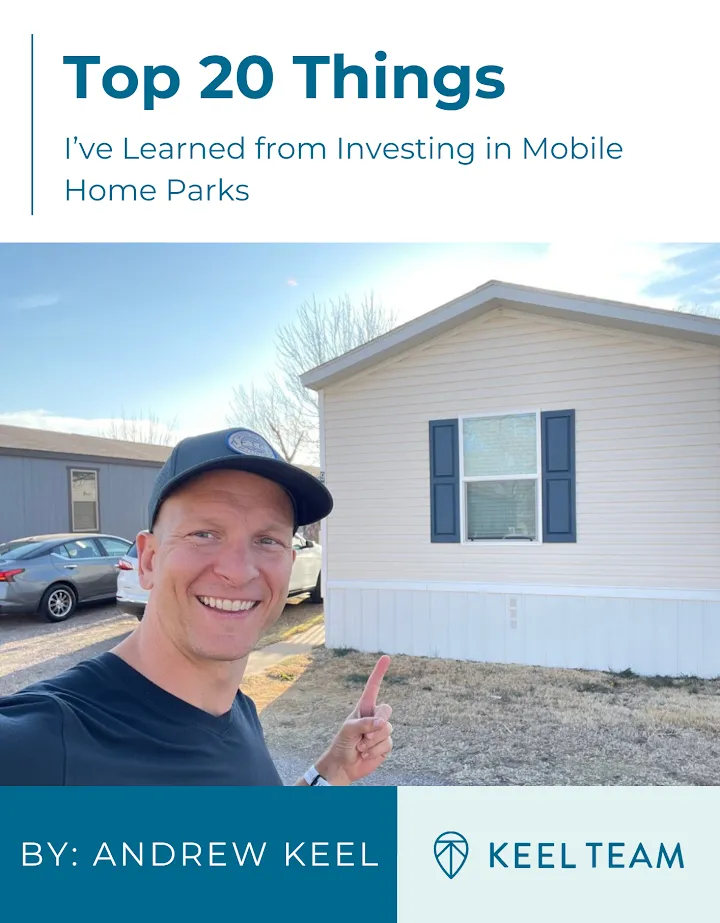
The 7-Point Mobile Home Park Due Diligence Framework
Andrew Keel
[wpbread]
The 7-Point Mobile Home Park Due Diligence Framework
Most mobile home park deals die in due diligence — or they should. The difference between a great investment and a money pit often comes down to what you find (or miss) in the 60–90 days between letter of intent and closing.
This framework is how Keel Team evaluates every acquisition. It’s not theory — it’s the product of 50+ acquisitions across North Carolina, Tennessee, Georgia, and South Carolina. Whether you’re a passive investor evaluating a GP’s thoroughness or an active operator doing your own analysis, this checklist covers what actually matters.
The 7 Due Diligence Categories
1. Infrastructure Assessment
Water, sewer, electric, and road condition. This is the single most important category in mobile home park due diligence. City water and city sewer are non-negotiable for quality investments — private utilities introduce regulatory, maintenance, and capital risk that rarely prices correctly at acquisition.
Confirm utility type: city/municipal vs. private well or septic
Walk every road — gravel, asphalt, or concrete, and condition
Inspect electrical pedestals for age, amperage, and code compliance
Identify any deferred maintenance with cost estimates
2. Financial Analysis
Rent rolls, P&L verification, expense ratio analysis, and utility billing review. Never accept seller-provided numbers without verification against primary sources.
Request 12–24 months of bank statements and cross-reference with stated income
Verify each occupied lot against a physical site map walkthrough
Analyze expense ratios (well-run communities run 30–40% expenses; legacy owners often show artificially low expenses)
Review utility bills if utilities are included in rent
3. Market Analysis
MSA proximity, population growth trends, competitive rent survey, and demand indicators within the submarket.
Confirm proximity to MSA of 100,000+ population within 60 minutes
Survey competing communities’ lot rents to establish market rate
Review Census data for population and income trends in the county
Check new apartment construction pipeline (competing affordable housing supply)
4. Regulatory Review
Zoning conformity, state licensing requirements, rent increase notice laws, and right-of-first-refusal (ROFR) status.
Confirm legal nonconforming or conforming zoning status
Review state-specific notice requirements for rent increases
Check for any pending ROFR legislation in the state
Verify park license is current and transferable
5. Physical Inspection
Lot-by-lot walkthrough, home condition assessment, abandoned home identification, and common area evaluation.
Walk every lot — document occupied, vacant, and abandoned
Photograph each home and categorize condition (good/fair/poor/tear-down)
Identify homes that need removal and estimate cost
Evaluate office, laundry, playground, and common area condition
6. Tenant Analysis
Physical vs. economic occupancy, tenant-owned vs. park-owned home ratio, delinquency history, and length-of-tenancy patterns.
Physical occupancy = lots with a home; economic occupancy = lots paying rent
High park-owned home (POH) ratio increases management complexity and risk
Request 12 months of rent collection records
Long-tenancy residents (5+ years) indicate community stability
7. Environmental Assessment
Phase I ESA requirements, FEMA flood zone mapping, on-site tank history, and soil contamination risk factors.
Order a Phase I Environmental Site Assessment from a qualified firm
Check FEMA flood maps — avoid properties with significant lots in Zone AE
Identify any historical underground storage tanks (USTs)
Review historical aerials for prior commercial or industrial use on or adjacent to the site
How to Use This Framework
If you’re a passive LP investor, use these 7 categories as the basis for questions to ask any GP before committing capital. A sophisticated operator should be able to walk you through their findings in each category in detail. Vague answers, reluctance to share data, or inability to speak to infrastructure specifics are red flags.
If you’re an active operator, this framework should be your minimum standard. Many of Keel Team’s best acquisitions came from walking away from deals that looked good on the broker OM but revealed significant infrastructure or financial problems during thorough due diligence.
Andrew is a passionate commercial real estate investor, husband, father and fitness fanatic. His specialty is in acquiring and operating manufactured housing communities. Visit AndrewKeel.com for more details on Andrew's story.