Affordable housing demand keeps climbing, and high-net-worth investors have taken notice. Increasingly, many are adding mobile home park investing to portfolios once dominated by stocks, bonds, and traditional real estate. So what makes this overlooked asset class so appealing? Below, we break down the forces behind the trend — and what passive investors may want to consider before getting involved.
A Quietly Resilient Asset Class
For decades, mobile home park investing sat on the sidelines of mainstream real estate. Today, that perception is shifting. Manufactured housing now provides homes for roughly 22 million Americans, accounting for about 7% of occupied housing nationwide and closer to 15% in rural areas.
Despite this scale, the sector long flew under the radar. That relative obscurity may actually work in an investor’s favor, since less competition can translate into more attractive entry pricing.
The Forces Drawing High-Net-Worth Capital
Several structural trends help explain why sophisticated investors continue to allocate capital toward mobile home park investing.
📋 The MHP Due Diligence Playbook — 10 video modules, a 55-page master checklist, and 9 ready-to-use templates that walk you through every step of evaluating a mobile home park deal. Get the Playbook →
Persistent Demand for Affordable Housing
Housing affordability remains stretched. With the national median home price sitting well above $400,000 and rents rising across most major markets, millions of households are searching for lower-cost options. Manufactured housing often costs significantly less per square foot than site-built homes, which helps explain why it remains the largest source of unsubsidized affordable housing in the country.
Because this demand tends to hold steady — and may even strengthen during economic downturns — mobile home parks could offer a measure of resilience that some other property types lack.
A Supply That Rarely Grows
While demand keeps building, supply barely moves. Zoning restrictions reportedly limit new development across roughly 70% of major U.S. counties, and local opposition makes building new communities difficult. As a result, the United States has only an estimated 43,000 to 50,000 mobile home park communities, and that number grows slowly, if at all.
This supply-demand imbalance is rare in real estate. For investors, a largely fixed supply paired with rising demand may help support long-term property values.
Steady Occupancy and Durable Cash Flow
Once residents move into a mobile home park, they tend to stay. Relocating a manufactured home is expensive and complex, which often keeps turnover low and occupancy stable. Nationally, occupancy has reportedly climbed from around 86.5% a decade ago to nearly 94% today.
For passive investors, that stability can translate into more predictable cash flow — a quality high-net-worth investors often prize when diversifying away from volatile markets.
How Passive Investors Participate
Owning and operating a mobile home park directly takes time, expertise, and infrastructure. Fortunately, passive investors do not have to do any of that.
Syndications and Funds
Many high-net-worth investors gain exposure through syndications or funds. In these structures, an experienced operator handles acquisition, management, and the eventual sale, while investors contribute capital and share in the potential returns. This approach lets investors participate in mobile home park investing without managing tenants, utilities, or day-to-day operations.
Institutional players have helped validate this model. Between 2020 and 2021, institutional buyers reportedly accounted for roughly 23% of manufactured home community purchases — nearly double their share from just a few years earlier. While that growing competition signals confidence in the asset class, it may also make experienced operators more valuable than ever.
What to Weigh Before Investing
No investment is without risk, and mobile home park investing is no exception. Aging infrastructure, such as private water or sewer systems, can require significant capital. Regulatory scrutiny is also increasing in some markets, with rising interest in tenant protections and rent regulation. And like most real estate, mobile home parks are relatively illiquid, so investors should be comfortable with a multi-year hold.
Why the Operator Matters
Because outcomes can vary widely, the operator often matters as much as the asset itself.
Questions Worth Asking
Before committing capital, passive investors may want to review an operator’s track record, business plan, and approach to responsible community management. A strong operator can help navigate the very risks that catch less-experienced buyers off guard.
The Bottom Line
Mobile home park investing offers a compelling combination of durable demand, constrained supply, and steady occupancy — qualities that continue to attract high-net-worth investors seeking diversification and resilience. While no returns are ever guaranteed, the long-term fundamentals appear strong. For investors willing to partner with the right operator, this often-overlooked asset class may well deserve a closer look.
10 video modules, a 55-page master checklist, and 9 ready-to-use templates that walk you through every step of evaluating a mobile home park deal — from the first site visit to closing day.
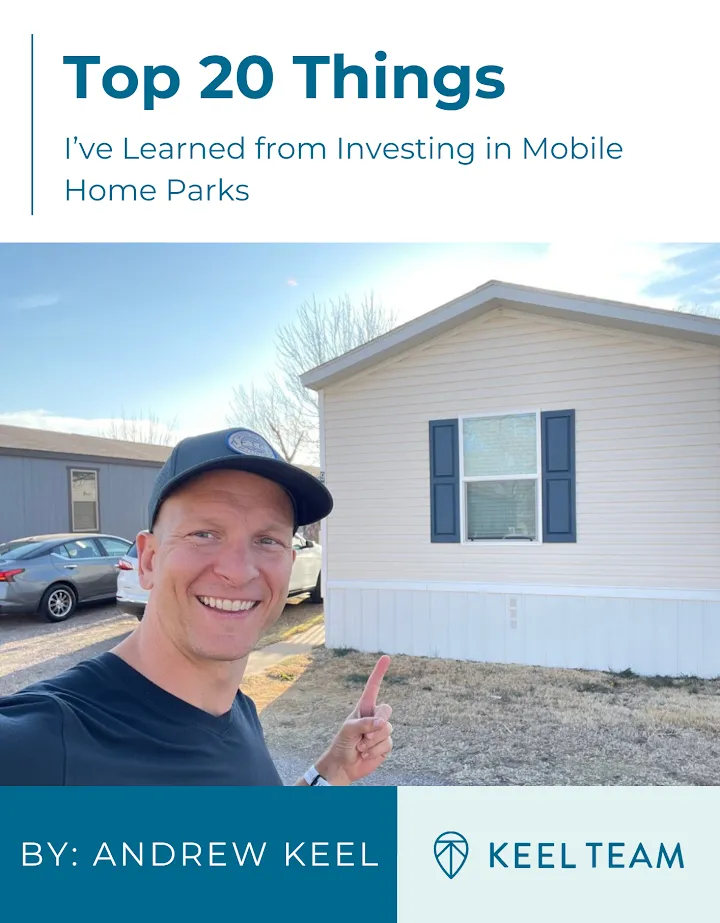
Get the top 20 lessons from two decades of mobile home park investing — free.
Disclaimer:
The information provided is for informational purposes only and is not investment advice or a guarantee of any kind. We do not guarantee profitability. Make investment decisions based on your research and consult registered financial and legal professionals. We are not registered financial or legal professionals and do not provide personalized investment recommendations. This article was written with the help of AI and reviewed by Andrew’s team. Always consult a licensed professional before investing.