What Is a Self-Directed IRA?
Most people think of an IRA as a vehicle for stocks, bonds, and mutual funds — but that’s only scratching the surface. A self-directed IRA (SDIRA) works just like a traditional or Roth IRA in terms of tax treatment, but it allows you to invest in a much broader range of assets, including real estate.
As a result, savvy investors have started using SDIRAs to gain exposure to alternative assets like mobile home parks — an asset class that has quietly attracted serious institutional attention over the past decade. To understand the full landscape of mobile home park investing, our complete guide is a useful starting point.
Why Mobile Home Parks Deserve a Spot in Your Retirement Strategy
Mobile home parks have emerged as one of the more resilient segments of the real estate market. According to data from the Manufactured Housing Institute, approximately 22 million Americans live in manufactured housing, and demand continues to outpace supply in many regions.
A few characteristics make mobile home parks particularly interesting for retirement accounts:
- Limited new supply. Zoning restrictions make it extremely difficult to build new mobile home parks in most jurisdictions, which may help protect the value of existing communities over time.
- Affordable housing demand. As housing costs continue to rise across the country, mobile home parks tend to remain one of the most affordable options for working-class Americans — keeping occupancy rates relatively stable.
- Tenant stickiness. Unlike apartment renters, mobile home park residents often own their homes and simply lease the land beneath them. Moving a manufactured home can cost thousands of dollars, which tends to keep tenants in place longer.
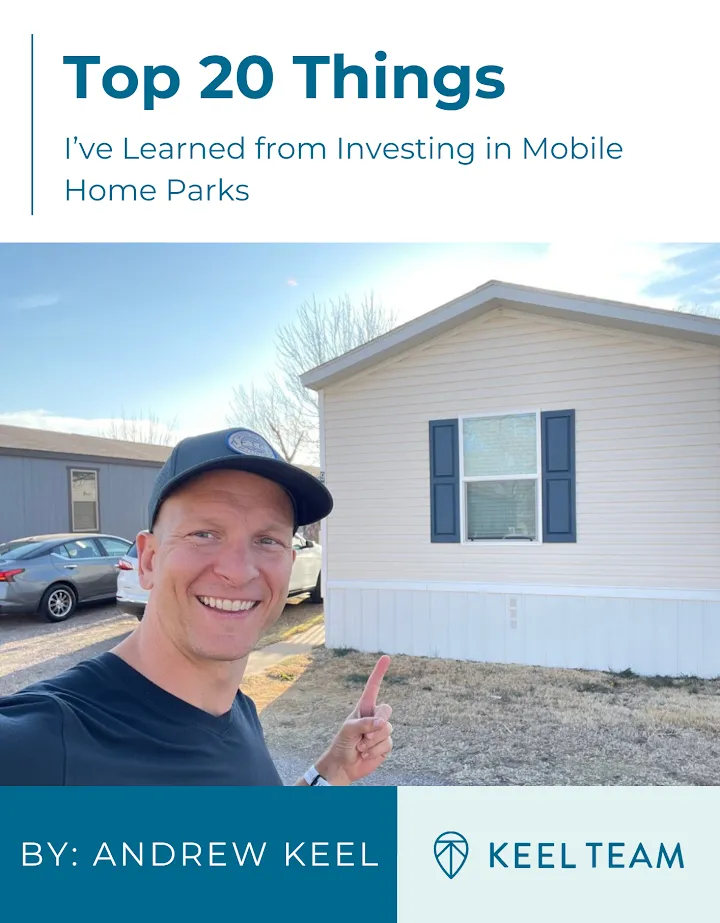
Our free guide covers the top 20 lessons learned from investing in mobile home parks — including the financial mistakes to avoid.
How Passive Mobile Home Park Investing Works
Passive investing means you can participate in mobile home park ownership without ever managing a property yourself. Typically, this happens through a syndication or private equity fund structure. To learn more about the full range of pros and cons of investing in mobile home parks, it is worth reviewing the tradeoffs before committing capital.
In a syndication, a general partner (GP) — usually an experienced operator — identifies, acquires, and manages the mobile home park. Passive investors, known as limited partners (LPs), contribute capital and receive a share of the income and appreciation in return. The day-to-day operations remain entirely with the GP.
This structure tends to suit retirement investors well, since it requires minimal time or involvement on the investor’s part.
How to Use a Self-Directed IRA to Invest Passively in Mobile Home Parks
Step 1: Open a Self-Directed IRA With a Qualified Custodian
Unlike conventional IRAs, SDIRAs require a specialized custodian that permits alternative investments. Companies like Equity Trust, Entrust Group, and Millennium Trust are among the more widely used custodians for real estate investments. It’s worth comparing fee structures and service quality before making a decision.
Step 2: Fund Your Account
You can fund your SDIRA through a rollover from an existing 401(k) or IRA, a direct transfer from another IRA, or an annual contribution (subject to IRS limits — $7,000 in 2026, or $8,000 if you’re 50 or older). Rollovers are often the fastest path to meaningful capital inside an SDIRA.
Step 3: Identify a Mobile Home Park Syndication
Once your account is funded, you’ll want to research passive mobile home park investment opportunities. Look for operators with a verifiable track record, transparent reporting, and a clear business plan for the asset. Many syndications are offered under Regulation D, which typically means they’re open to accredited investors only.
Step 4: Direct Your Custodian to Invest
Your SDIRA custodian, not you personally, makes the investment on behalf of your retirement account. You instruct the custodian to wire funds to the syndication, and the investment is held inside the IRA in the name of the account.
Tax Advantages Worth Understanding
Traditional SDIRA
Contributions may be tax-deductible, and the investment grows tax-deferred. You’ll pay ordinary income tax when you take distributions in retirement.
Roth SDIRA
Contributions are made with after-tax dollars, but qualified distributions — including any gains from your mobile home park investment — could be completely tax-free. For long-term holds with significant appreciation potential, this could be a meaningful advantage.
It’s important to note that income generated inside an SDIRA from certain leveraged investments may trigger Unrelated Business Taxable Income (UBTI), so it’s worth consulting a tax professional who specializes in self-directed retirement accounts before committing.
Important Rules to Keep in Mind
The IRS places strict rules on SDIRA investments to prevent self-dealing. Some key restrictions to be aware of include:
- You cannot invest in a mobile home park that you or a “disqualified person” (such as a spouse, parent, or child) currently owns or benefits from directly.
- You cannot personally manage or perform services for the mobile home park — all activities must go through the operator. Understanding how to evaluate a mobile home park operator is therefore an essential part of SDIRA due diligence.
- All expenses and income related to the investment must flow through the IRA, not your personal accounts.
Violating these rules could result in the IRA losing its tax-advantaged status, so working with a knowledgeable custodian and tax advisor is strongly advisable.
Is Passive Mobile Home Park Investing Through an SDIRA Right for You?
This strategy may suit investors who are looking to diversify their retirement portfolio beyond Wall Street, who meet the accredited investor threshold, and who have a longer investment horizon — most mobile home park syndications have hold periods of five to seven years.
According to NAREIT data, real estate has historically provided a valuable diversification benefit within retirement portfolios, and mobile home parks in particular have shown relatively low correlation with broader market volatility.
That said, like any investment, passive mobile home park investing carries risk. Returns are not guaranteed, and the value of your investment can go down as well as up. Past performance of any asset class does not predict future results.
Frequently Asked Questions
Can I use a self-directed IRA to invest in a mobile home park syndication?
Yes. A self-directed IRA allows you to invest in alternative assets including real estate syndications. You direct your SDIRA custodian to wire funds into the syndication on behalf of your retirement account. The investment is held in the IRA’s name, not yours personally, and all income and gains flow back into the IRA.
What is UBTI and does it affect SDIRA mobile home park investments?
UBTI stands for Unrelated Business Taxable Income. If a mobile home park syndication uses debt financing (which most do), income attributable to the leveraged portion may trigger UBTI inside your IRA. UBTI above $1,000 per year is taxed even inside tax-advantaged accounts. The impact varies by deal structure, so consult a tax professional who specializes in self-directed IRAs before investing.
What is the minimum investment for a mobile home park syndication through an SDIRA?
Most mobile home park syndications require a minimum investment of $50,000 to $100,000. You would need at least that amount in your SDIRA to participate in a typical deal. Some fund structures offer lower minimums, but institutional-quality deals generally start in this range.
Can I use a Roth IRA for mobile home park syndication investing?
Yes, a Roth self-directed IRA can be used. The advantage is that qualified distributions — including all gains from the mobile home park investment — may be completely tax-free if you meet the age and holding-period requirements. This makes a Roth SDIRA particularly attractive for long-term holds with significant appreciation potential.
How long are most mobile home park syndication hold periods?
Most mobile home park syndications target hold periods of five to seven years, though some value-add deals may exit sooner. This illiquidity is worth factoring in when using SDIRA funds — make sure the capital you invest is not needed before the projected exit date.
Final Thoughts
A self-directed IRA can open the door to mobile home park investing in a way that’s both tax-efficient and entirely passive. For investors who want to put their retirement capital to work in a tangible, affordable-housing-driven asset class, it may be worth exploring further.
As always, speak with a qualified financial advisor and tax professional before making any investment decisions involving your retirement accounts.
Our free guide covers the top 20 lessons learned from investing in mobile home parks — including the financial mistakes to avoid.
If you’re interested in learning more about mobile home park investing, reach out and we’ll set up a call. We’re happy to share what we’ve learned from acquiring and operating communities across the country.
Disclaimer:
The information provided is for informational purposes only and is not investment advice or a guarantee of any kind. We do not guarantee profitability. Make investment decisions based on your research and consult registered financial and legal professionals. We are not registered financial or legal professionals and do not provide personalized investment recommendations. This article was written with the help of AI and reviewed by Andrew’s team. Always consult a licensed professional before investing.