If you’re buying mobile home parks in North Carolina — or planning to — the rules just changed in a significant way.
North Carolina’s Mobile Home Park Act (Senate Bill 518) took effect in early 2026. It’s the most sweeping reform to mobile home park regulations in the state’s history, and it introduces several provisions that will directly impact your deal timelines, underwriting assumptions, and operational strategy.
Most investors haven’t fully processed what this means yet. This post will change that.
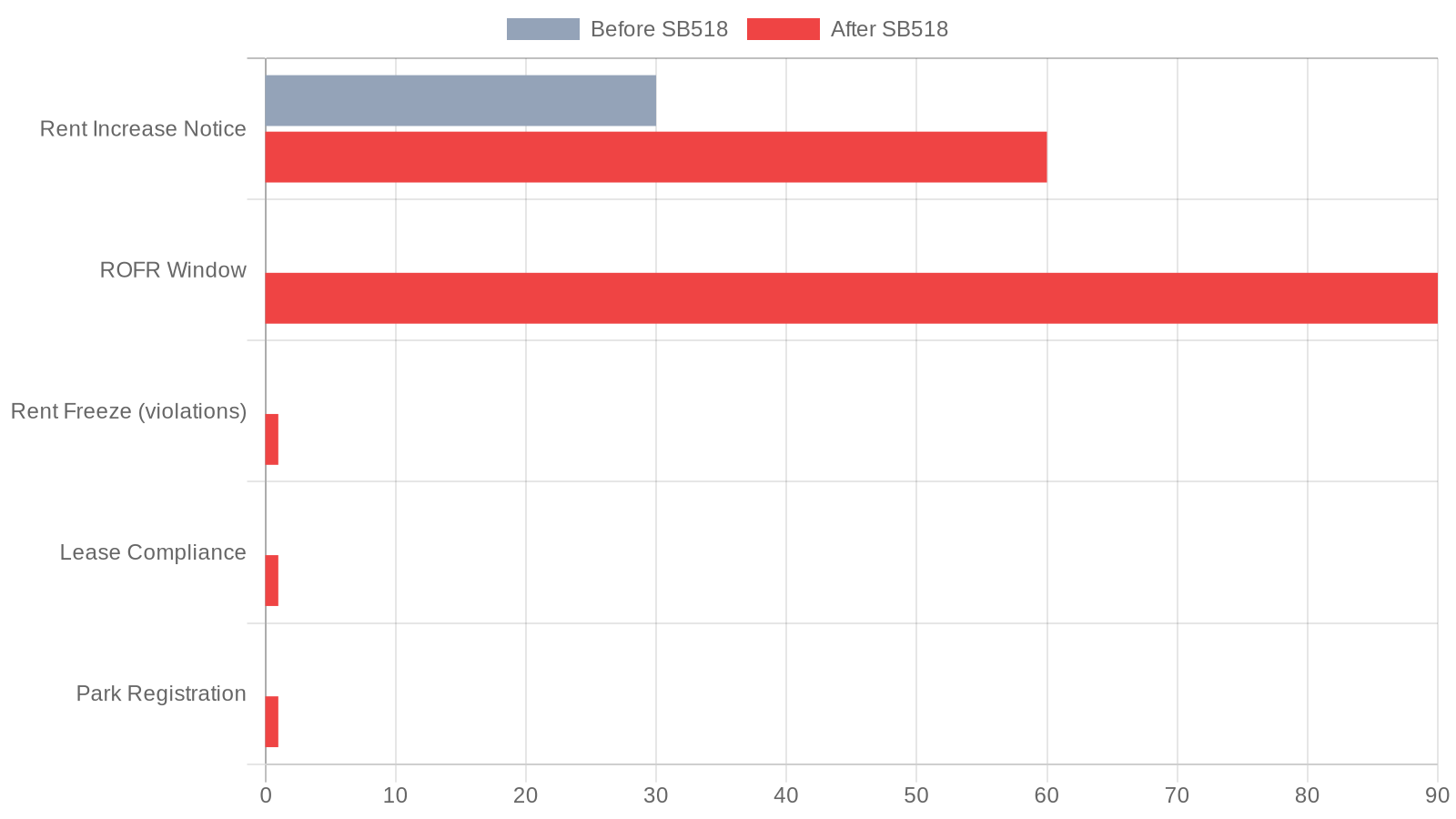
The Four Changes That Matter Most
1. Right of First Refusal (ROFR)
When you sell a mobile home park in North Carolina, you are now legally required to notify residents — or their organized homeowners association — before closing. They have 30 to 90 days to submit a competing purchase offer. If they match or beat your buyer’s price, the park is theirs.
Here’s the practical impact: If you’re a buyer, you need to build 30–90 additional days into your deal timeline. Hard financing deadlines that can’t accommodate a potential 90-day ROFR window will blow up transactions. If residents have organized and have access to a nonprofit housing organization, they can assign their ROFR rights — which means the potential buyer pool just expanded to include mission-driven capital that operates differently than commercial buyers.
Underwriting adjustment: Add a ROFR buffer to every North Carolina deal timeline. Budget $1,500–$3,000 for ROFR-related legal compliance per transaction. Do not agree to financing expiration dates inside the 90-day window.
2. 60-Day Rent Increase Notice (Up from 30)
Before SB518, you could raise lot rents on 30 days’ notice. Now it’s 60 days. This sounds minor. It isn’t.
If you close on a park in January with a business plan that requires bringing rents to market to service your debt, you cannot realize that income until April at the earliest — and that’s assuming you send the notice on the day you close. Two months of below-market rent at closing is a direct hit to first-year cash flow.
Underwriting adjustment: Push any rent increase revenue back 75–90 days from close in your Year 1 projections. Do not model Month 1 rent normalization. If your deal only works if you capture rent increases immediately, it doesn’t work in North Carolina anymore.
3. Mandatory Park Registration
Every mobile home park operating in North Carolina is now required to register with the North Carolina Human Rights Commission. Parks that are not registered — or that have open code violations — cannot raise rents until they achieve compliance.
This is a due diligence landmine. Sellers are not always forthcoming about registration status or code violation history. If you buy a non-registered park, you inherit a rent freeze until you fix it. Depending on what’s outstanding, that could be months.
Due diligence addition: Add NC Human Rights Commission registration status to your acquisition checklist. Pull any open code violation history through the county. If violations exist, model the cost to cure AND the timeline to cure before projecting any rent increase. The Keel Team Mobile Home Park Due Diligence Playbook includes a state-specific compliance checklist you can adapt for North Carolina acquisitions.
4. Enhanced Eviction Standards and Lease Requirements
SB518 tightens eviction criteria and requires that all leases clearly define renewal rights, lease terms, and tenant responsibilities. Leases that don’t comply with the new standards create operational and legal exposure.
Action item: Have a North Carolina-specific lease agreement reviewed and updated by a local attorney before using it at any newly acquired park. Audit existing leases at acquisition.
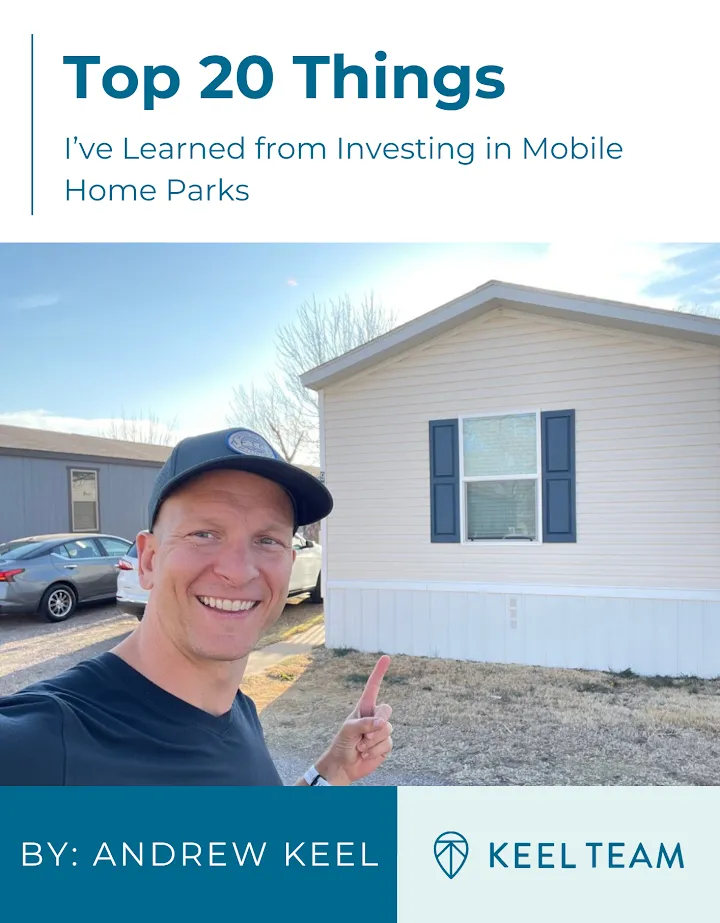
Two decades of hard-won lessons distilled into one free guide. Whether you're evaluating your first deal or your fiftieth, these insights will sharpen your approach.
Download the Free eBook →
What This Means for Investors Targeting North Carolina
North Carolina is still a strong market. Population growth, demand for affordable housing, landlord-friendly culture outside of this act — the fundamentals haven’t changed. The broader 2026 manufactured housing market data confirms that occupancy and transaction volume remain near historic highs in the Southeast, and North Carolina deals can still pencil if you adjust your underwriting. But the execution requirements have changed.
The investors who will continue to do well in North Carolina are the ones who:
- Update their underwriting to reflect the new timeline and notice realities
- Add SB518 compliance to their due diligence process as a non-negotiable
- Build attorney relationships in North Carolina who specialize in landlord-tenant law
- Get ahead of the ROFR by understanding whether target parks have organized resident associations before pursuing a deal
The investors who will get burned are the ones operating on 2023 assumptions in a 2026 regulatory environment.
To understand how to properly underwrite a mobile home park deal given these new constraints, including modeling delayed rent bumps and ROFR timelines, see our full guide on how to value a mobile home park step by step.
What About Tennessee?
For investors feeling the friction of North Carolina’s new rules, Tennessee remains the most operator-friendly state in the Southeast. No statewide rent control. Local rent control banned by state law since 1981. Standard 30-day notice for rent increases. No right of first refusal. No registration requirements.
Is legislative pressure building in Tennessee? Yes. There are early-stage bills targeting algorithmic rent-setting and calling for tenant protections. But there’s a significant gap between “legislative pressure building” and “law passed.” Tennessee’s regulatory environment gives mobile home park investors more operational flexibility today — and likely for the near term.
The Bottom Line
North Carolina’s Mobile Home Park Act is a real change with real deal implications. It is not a reason to abandon the market — but it is a reason to be more precise about how you underwrite, structure, and close deals in the state.
Get your compliance checklist updated. Build the timeline buffers in. And if you’re already under contract on a North Carolina park and haven’t accounted for these changes, talk to your attorney today.
Frequently Asked Questions
What is the North Carolina Mobile Home Park Act (SB518)?
The North Carolina Mobile Home Park Act, enacted as Senate Bill 518, is a comprehensive reform of mobile home park regulations that took effect in early 2026. It requires right of first refusal notices to residents before any sale, extends rent increase notice periods from 30 to 60 days, mandates park registration with the NC Human Rights Commission, and tightens eviction and lease requirements.
How does the right of first refusal work under SB518?
When a mobile home park owner in North Carolina decides to sell, they must notify residents or their homeowners association and give them 30–90 days to submit a competing purchase offer at the same or better price. If residents (or a nonprofit they assign their rights to) match the buyer’s price, they have priority to purchase the park.
Can I still raise rents at a North Carolina mobile home park after SB518?
Yes — SB518 does not cap rent increases. However, you must now provide 60 days’ notice before any rent increase (up from 30 days). Additionally, parks that are not registered with the NC Human Rights Commission or have open code violations cannot raise rents until they achieve compliance.
Is North Carolina still a good state to buy mobile home parks?
Yes, with adjusted underwriting. North Carolina’s strong population growth, affordable housing demand, and Southeast location still make it an attractive market. SB518 adds deal timeline complexity and operational requirements, but investors who update their due diligence process and build appropriate buffers into their models can still find compelling opportunities in the state.
How does SB518 compare to other Southeast states?
North Carolina is now among the more regulated Southeast states for mobile home park operators. Tennessee, Georgia, and South Carolina remain more operator-friendly — no right of first refusal, standard 30-day rent notice, no mandatory registration. Investors diversifying across Southeast states should factor this regulatory divergence into their portfolio strategy.
Get the top 20 lessons from two decades of mobile home park investing — free.
Download the Free eBook →
Andrew Keel is the founder of Keel Team Real Estate Investments, which owns and operates 50+ mobile home parks across the United States. Keel Team is an active acquirer of mobile home parks in North Carolina, Tennessee, and across the Southeast. Learn more at keelteam.com.