Mobile home park environmental due diligence is one of the most overlooked steps in the acquisition process — and one of the most consequential. A buried fuel tank, contaminated soil, or an aging septic lagoon can transform a promising deal into a six-figure liability. Experienced investors budget for environmental review from day one. Here’s what you need to know before you close on any mobile home park.
Why Environmental Issues Can Kill a Mobile Home Park Deal
Unlike a single-family home or even a small apartment building, a mobile home park sits on a large land footprint with decades of operational history. Older parks may have housed on-site fuel tanks for generators or equipment, operated private septic systems, or had tenants who disposed of hazardous materials improperly. Lenders — especially agency lenders like Fannie Mae and Freddie Mac — require clean environmental reports before they’ll fund a loan. Even if you’re paying cash, undisclosed contamination creates ongoing liability that can follow the property through ownership changes.
Bottom line: environmental due diligence isn’t optional. It’s a core part of any serious mobile home park acquisition checklist.
Phase I Environmental Site Assessment: Your First Line of Defense
A Phase I Environmental Site Assessment (ESA) is a standard report conducted by a licensed environmental professional. It involves no soil sampling or lab testing — it’s a records and reconnaissance review. The assessor will:
- Review historical aerial photographs and fire insurance maps to identify past land uses
- Check federal and state databases for known contamination sites nearby
- Walk the property to look for visual indicators (stained soil, abandoned drums, vent pipes)
- Interview current owners and neighbors where possible
The Phase I typically takes two to three weeks and costs between $1,500 and $3,000. The output is a report identifying any Recognized Environmental Conditions (RECs) — potential problem areas that warrant further investigation. If no RECs are found, you’re generally in the clear from an environmental standpoint. If RECs are identified, you’ll need a Phase II.
Phase II Environmental Site Assessment: When You Need to Go Deeper
A Phase II ESA moves from desktop review to physical investigation. Soil borings and groundwater samples are collected and sent to a lab for analysis. The assessor targets the specific areas flagged in the Phase I — beneath the old equipment shed, near the suspected underground tank location, along the drainage channel. Phase II costs typically range from $5,000 to $25,000 depending on the number of sample locations and the depth of investigation required.
If contamination is confirmed, the Phase II will also estimate remediation costs — which is where numbers can escalate rapidly.
The Most Common Environmental Issues in Mobile Home Parks
Underground Storage Tanks
Older mobile home parks often have underground fuel tanks from on-site generators or heating systems. If the tank has leaked, you’re looking at soil and potentially groundwater contamination. Tank removal alone can cost $10,000 to $40,000. If contamination has spread, remediation can run $100,000 or more. Always ask sellers directly whether any underground tanks exist, and verify against historical records. A seller’s “no” doesn’t protect you if a tank turns up post-closing.
Soil and Groundwater Contamination
Mobile home parks in industrial corridors or near agricultural land may have contamination that has nothing to do with the park’s own history — migration from neighboring properties can affect your soil and groundwater. Depending on the contaminant, remediation might involve pump-and-treat systems, soil excavation, or monitored natural attenuation. Always look at what’s adjacent to the property, not just what’s on it.
Septic Systems and Sewage Lagoons
Mobile home parks on private sewer systems — particularly those using lagoons or older drain fields — carry ongoing regulatory and environmental risk. Aging lagoons can leach into groundwater. Failing septic systems create both liability and operational headaches. This is one reason experienced mobile home park investors strongly prefer parks on city water and city sewer. If you’re evaluating a mobile home park with private sewer, budget for a full system inspection by a licensed engineer in addition to your Phase I.
Asbestos and Lead-Based Paint
Manufactured homes built before 1978 may contain lead-based paint, and older structures on the property — community buildings, laundry facilities — may have asbestos-containing materials. These don’t always create immediate liability if undisturbed, but renovation or demolition triggers abatement requirements that add significant cost. Know what era the structures date from and price accordingly.
Two decades of hard-won lessons distilled into one free guide. Whether you’re evaluating your first deal or your fiftieth, these insights will sharpen your approach.
How to Budget for Environmental Due Diligence
Every mobile home park acquisition budget should include a line item for environmental review. Here’s how experienced buyers typically think about it:
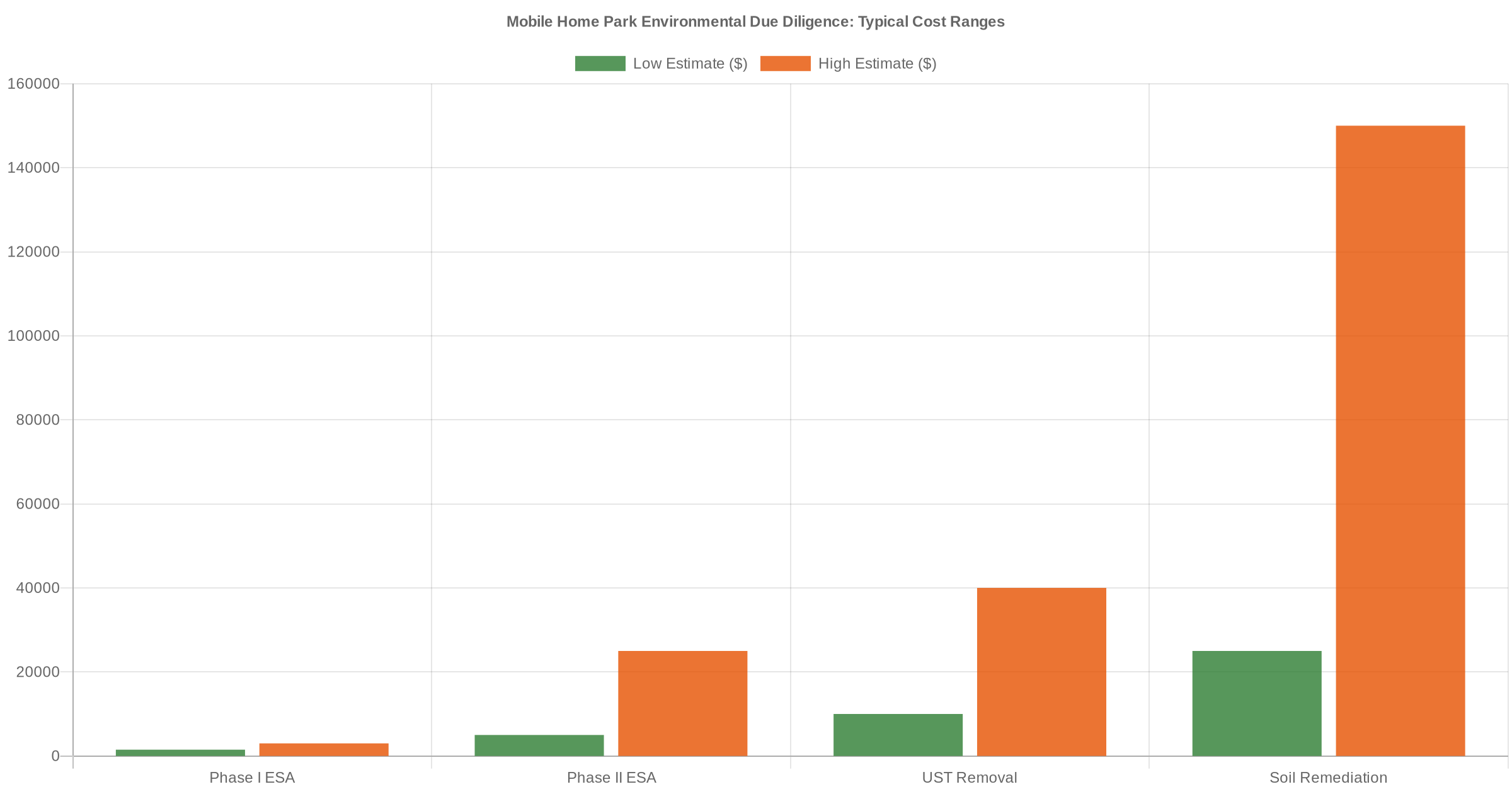
- Phase I ESA: $1,500–$3,000 (budget this on every deal, no exceptions)
- Phase II ESA: $5,000–$25,000 (budget conditionally based on Phase I findings)
- Underground tank removal: $10,000–$40,000 (plus remediation if contamination is found)
- Soil remediation: $25,000–$150,000+ depending on extent and contaminant type
If your Phase I comes back clean, you’ve spent $2,000 to confirm the property is low-risk. That’s money well spent. If it flags something significant, you have the information you need to negotiate a price adjustment, require the seller to remediate before closing, or walk away entirely.
What Happens If an Environmental Issue Is Found?
Finding a problem during due diligence isn’t necessarily a deal-killer — it’s a negotiating tool. Your options typically include:
- Price reduction: Adjust the purchase price to reflect the estimated remediation cost plus a risk buffer
- Seller remediation: Require the seller to clean up the issue before closing (common with known underground tanks)
- Escrow holdback: Close the deal but hold a portion of the purchase price in escrow until remediation is complete
- Walk away: If the scope is too large or the seller won’t negotiate, the right move is to exit
Many states also have voluntary cleanup programs that limit future liability for buyers who remediate contaminated properties. Your environmental attorney can walk you through state-specific options in your target market.
Protecting Yourself Contractually
Your purchase agreement should include a clear environmental contingency — language that allows you to exit the deal without penalty if Phase I or Phase II findings reveal contamination above acceptable thresholds. Most experienced mobile home park buyers also request seller representations and warranties around environmental conditions, and require sellers to disclose any known issues in writing. These provisions don’t eliminate risk, but they create recourse if undisclosed problems emerge post-closing.
Work with an attorney who understands real estate environmental law in your target state. This is not the place to cut corners on legal counsel.
Environmental Due Diligence Is Non-Negotiable
The best mobile home park investors treat environmental review the same way they treat title search or property inspection — it’s table stakes, not optional. The cost of a Phase I is trivial relative to the downside of closing on a contaminated site. Build it into your process, budget for contingencies, and know how to negotiate when issues arise. For a comprehensive framework for evaluating mobile home park deals from site selection through closing, visit our Invest in Mobile Home Parks resource center.
10 video modules, a 55-page master checklist, and 9 ready-to-use templates that walk you through every step of evaluating a mobile home park deal — from the first site visit to closing day.
Get the top 20 lessons from two decades of mobile home park investing — free.