Mobile home parks have quietly become one of the most talked-about asset classes in commercial real estate. Around 22 million Americans live in manufactured housing today, yet new community development has nearly stopped. That mix of steady demand and tight supply is why many investors look closely at value-add opportunities. So what does “value-add” actually mean here, and which strategies tend to move the needle? Let’s break it down.
What “Value-Add” Means in Mobile Home Park Investing
In simple terms, a value-add strategy aims to raise a property’s net operating income and, in turn, its overall value. Operators usually pursue this by increasing revenue, trimming expenses, or both. Because mobile home park values often hinge on income rather than comparable sales, even modest improvements can have a meaningful effect. However, results vary widely from property to property, so none of the strategies below should be viewed as guaranteed.
📋 The MHP Due Diligence Playbook — 10 video modules, a 55-page master checklist, and 9 ready-to-use templates that walk you through every step of evaluating a mobile home park deal. Get the Playbook →
Bringing Below-Market Lot Rents Toward Market
Many mobile home parks, especially those run by long-time “mom-and-pop” operators, charge lot rents well below the local market. The national average site rent reached roughly $782 per month in 2025, though figures range from under $200 in rural areas to over $800 in high-demand markets. When an operator gradually adjusts rents toward market levels, revenue can climb without major capital spending.
Why Gradual Increases Often Matter
That said, residents in this asset class tend to be sensitive to sudden changes. Moving a mobile home can cost between $3,000 and $10,000, so most residents prefer to stay put. Thoughtful operators usually phase in increases, pair them with visible improvements, and communicate clearly. This approach can support retention while still lifting income.
Filling Vacant Lots Through Infill
Infill is another widely used strategy. When a mobile home park has empty lots, each vacant space represents lost potential income. By bringing in additional homes — and then renting or selling them to residents — operators can grow occupancy and revenue. A stabilized mobile home park typically runs at 85% to 95% occupancy, so communities sitting below that range may offer room to improve.
Still, infill takes both capital and time. Operators must source homes, transport them, and prepare each lot, which can be slow. As a result, infill tends to reward patience rather than quick wins. Watch this video on effective value-add in action!
Improving Utility Recovery
Utilities can quietly eat into a mobile home park’s bottom line. In many older communities, the owner covers water, sewer, and trash, then never passes those costs along. By submetering or introducing a utility billing system, operators can recover some of these expenses from the residents who use them.
Balancing Recovery With Fairness
Of course, operators must follow local regulations and keep total housing costs reasonable. When handled fairly, utility recovery can reduce the owner’s expense load and also encourage residents to conserve. The combined effect may strengthen the property’s net operating income over time.
Reducing Operating Expenses
Expense management is a less glamorous but important lever. Smart operators review every line item — insurance, landscaping, payroll, and repairs — then look for efficiencies. For example, switching to professional management software, renegotiating service contracts, or addressing deferred maintenance can lower long-run costs. Because lower expenses flow directly to net operating income, even small savings can add up.
Converting Park-Owned Homes to Tenant-Owned Homes
Some mobile home parks own many of the homes on site, which means the operator handles repairs, turnover, and tenant issues. By selling these homes to residents, operators shift maintenance responsibility to the homeowners and refocus on what this asset class does best: renting land. Homeowners also tend to stay longer and take better care of their property, which can support stability. In fact, the average resident reportedly stays more than ten years.
Enhancing the Community and Curb Appeal
Finally, physical improvements can reshape how a mobile home park performs. Repairing roads, adding lighting, cleaning common areas, and enforcing community standards can attract quality residents and help justify rent adjustments. These upgrades also signal that the operator cares, which can build trust. While curb appeal alone won’t transform a property, it often complements the strategies above.
Bringing the Strategies Together
No single approach works everywhere, and each one carries its own risks and costs. Still, when operators combine several of these strategies thoughtfully, the cumulative impact on a mobile home park’s value can be meaningful. For investors exploring this asset class, understanding these levers is a useful first step. As always, careful due diligence and experienced operators tend to matter more than any single tactic.
10 video modules, a 55-page master checklist, and 9 ready-to-use templates that walk you through every step of evaluating a mobile home park deal — from the first site visit to closing day.
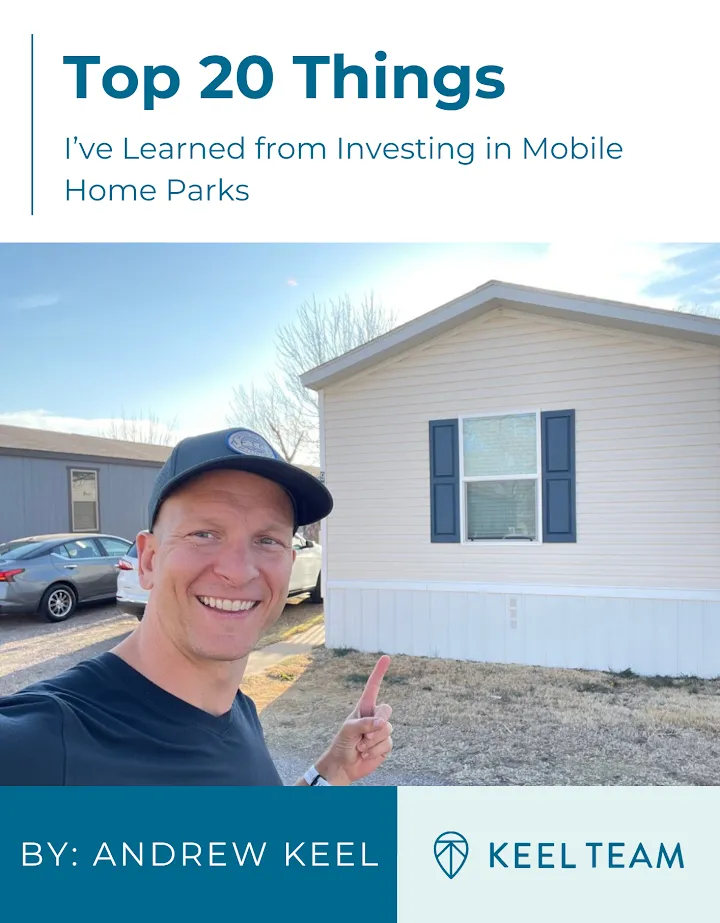
Get the top 20 lessons from two decades of mobile home park investing — free.
Disclaimer:
The information provided is for informational purposes only and is not investment advice or a guarantee of any kind. We do not guarantee profitability. Make investment decisions based on your research and consult registered financial and legal professionals. We are not registered financial or legal professionals and do not provide personalized investment recommendations. This article was written with the help of AI and reviewed by Andrew’s team. Always consult a licensed professional before investing.