Orlando, FL — Mobile Home Park Investments
Orlando, Florida is far more than theme parks and tourist corridors. With a population of approximately 320,000 residents in the city proper and a metropolitan area exceeding 3.0 million people, Orlando ranks among the fastest-growing major cities in the United States. For manufactured housing investors, that growth creates durable, long-term demand for affordable lot-rent communities throughout Orange County and beyond.
📚 Free Resource: Mobile Home Park Investing Guide
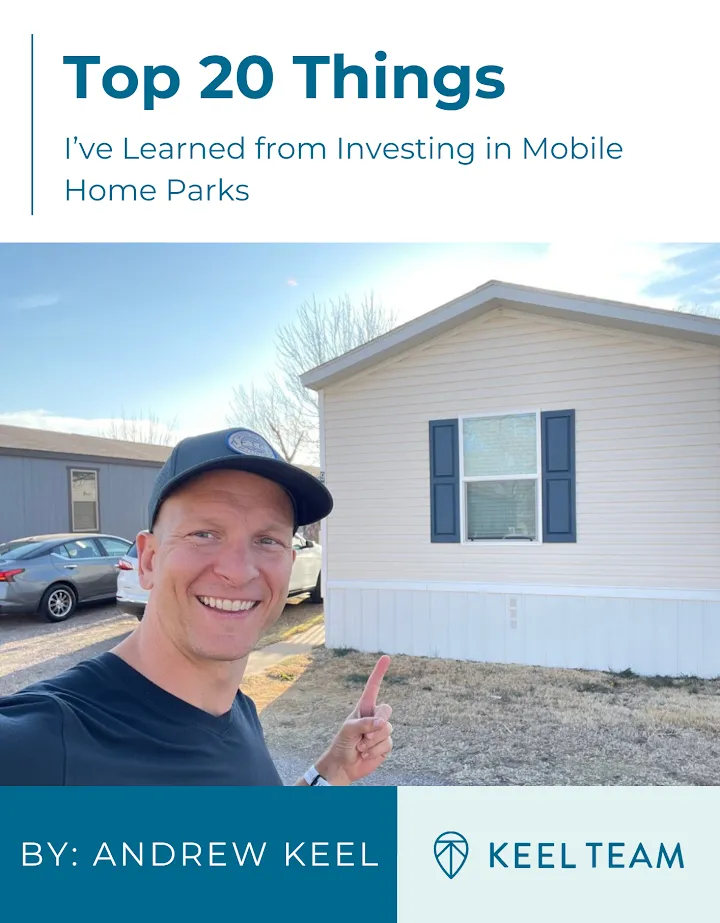
Before going further, grab our free guide: Top 20 Things Learned from Mobile Home Park Investing — battle-tested lessons from operators who have closed deals across America, including Florida markets like Orlando.
Orlando Market Overview
The Orlando-Kissimmee-Sanford Metropolitan Statistical Area has added roughly 60,000 to 80,000 new residents per year for much of the past decade. Population growth is driven by a diversified economy anchored in tourism, aerospace, healthcare, technology, and education. Walt Disney World alone employs more than 75,000 people, making it the largest single-site employer in the United States. Universal Orlando, SeaWorld, and hundreds of hospitality-adjacent businesses collectively employ hundreds of thousands more.
Beyond entertainment, Orlando has quietly built a serious technology economy. The Central Florida Research Park — one of the largest university-affiliated research parks in the nation — houses over 130 companies and more than 11,000 employees working in defense simulation, modeling, and emerging technologies. Lockheed Martin, Raytheon, and the U.S. military’s Program Executive Office for Simulation, Training and Instrumentation (PEO STRI) all maintain major presences in the area. AdventHealth and Orlando Health each operate large hospital systems serving the region.
Why Orlando for Manufactured Housing Investment
The same economic forces driving Orlando’s population growth create persistent demand for affordable manufactured housing. Tourism and hospitality wages, while steady and plentiful, skew toward the lower and middle income bands. A front-line Disney employee, a hotel housekeeper in International Drive, or an Uber driver serving the convention center corridor all need affordable housing options. Mobile home park communities provide exactly that: stable, dignified shelter at lot rents that remain well below the cost of renting a site-built apartment or house.
Florida’s landlord-tenant laws also remain relatively investor-friendly compared to many northern markets. The state caps are predictable, permitting timelines while variable by county, are generally manageable in Orange County for operators who understand the process.
Local Lot Rent Data and Trends
Orlando’s lot rent market has appreciated steadily over the past decade. In 2015, average lot rents in well-maintained communities in the broader Orlando area ran approximately $390 to $450 per month. By 2019, that range had climbed to $510 to $600. As of 2025, the Orange County market sees average lot rents of $700 to $950 per month in established communities near employment centers, with some premium lakeside or amenity-rich communities pushing higher.
Infill pressure is significant. New mobile home park development is effectively prohibited by local zoning in most incorporated areas, meaning the existing supply of lots is fixed. Demand keeps climbing. This supply-demand imbalance underpins the rent growth trajectory and makes Orlando one of the more compelling markets for long-term hold strategies.
Zoning and Permitting Landscape
Orange County and the City of Orlando maintain separate land-use codes. Mobile home park zoning typically falls under residential-manufactured housing classifications. Existing communities are generally grandfathered, but new greenfield development of mobile home parks within city limits is rarely approved. This creates value: operating parks carry location premiums that cannot be replicated by new construction.
For investors doing rehab or value-add projects — upgrading infrastructure, repaving roads, replacing aged utilities — Orange County’s permitting office processes straightforward permits reasonably well, though complex projects benefit from a local contractor familiar with county processes. Impact fees for unit additions can be material and should be modeled carefully in acquisition underwriting.
Infrastructure: City Water and Sewer
City water and sewer access in Orange County is extensive. The vast majority of established mobile home park communities in Orlando proper are connected to municipal systems, eliminating the operational complexity and capital expense associated with private wells or septic fields. For investors, city water and sewer connectivity materially reduces long-term cap-ex exposure and makes properties far more financeable and exit-marketable.
That said, some older rural-adjacent communities on the Orange/Osceola county border may rely on well or septic. Always verify infrastructure status during due diligence — it directly affects valuation multiples and risk profile.
Proximity to Orlando Employment Centers
What makes Orlando communities compelling is the density of employment within reasonable commute distance. International Drive, the Walt Disney World complex at Lake Buena Vista, downtown Orlando, the Medical City corridor in Lake Nona, and the UCF Research Park in east Orange County all sit within 20 to 35 minutes of most mobile home park locations in the county. For workforce housing tenants, this proximity is non-negotiable — residents without cars depend on SunRail commuter rail and LYNX bus service, both of which serve key Orlando corridors.
Related pages: Kissimmee, FL | Sanford, FL | Tampa, FL | Miami, FL
Frequently Asked Questions
Q: Are mobile home parks in Orlando profitable investments?
A: Yes — when acquired at reasonable cap rates and operated efficiently, Orlando parks benefit from low vacancy (strong workforce demand), no new competing supply (zoning constraints), and consistent lot rent appreciation. Due diligence on infrastructure and tenant mix is critical, as always.
Q: What is a typical cap rate for Orlando mobile home parks?
A: Marketed listings in the Orlando metro have generally traded in the 5.0% to 7.5% cap rate range in recent years, with stabilized, well-located assets on the tighter end and value-add opportunities with vacant lots or deferred maintenance on the wider end.
Q: Does Florida have mobile home park tenant protections that affect operations?
A: Florida’s Mobile Home Act (Chapter 723, Florida Statutes) governs lot rent communities and includes rules on rent increase notice periods (90 days for annual increases) and resident rights. Operators who follow proper procedures operate effectively; these rules are manageable with good property management systems.
Q: Are there mobile home parks in Orlando near Disney or Universal?
A: Yes. Several communities exist in the I-4 corridor, in Kissimmee, and in the Four Corners area near the Orange/Osceola county line. These are particularly attractive to workers in the hospitality and entertainment sectors who prioritize proximity to their workplace.
📚 Take the Next Step: Download the Free Ebook
Download Top 20 Things Learned from Mobile Home Park Investing — packed with actionable insights from real deals in Florida and across the country. No fluff, just hard-won lessons.