Kissimmee, FL — Mobile Home Park Investments
Kissimmee, Florida sits at the southern edge of the Orlando Metro, straddling the line between tourist corridor and authentic working-class community. As the county seat of Osceola County with a population near 80,000, Kissimmee has long been one of the highest-density manufactured housing markets in the Southeast. For investors, that means established inventory, strong tenant demand, and meaningful runway for lot rent appreciation.
📚 Free Resource: Mobile Home Park Investing Guide
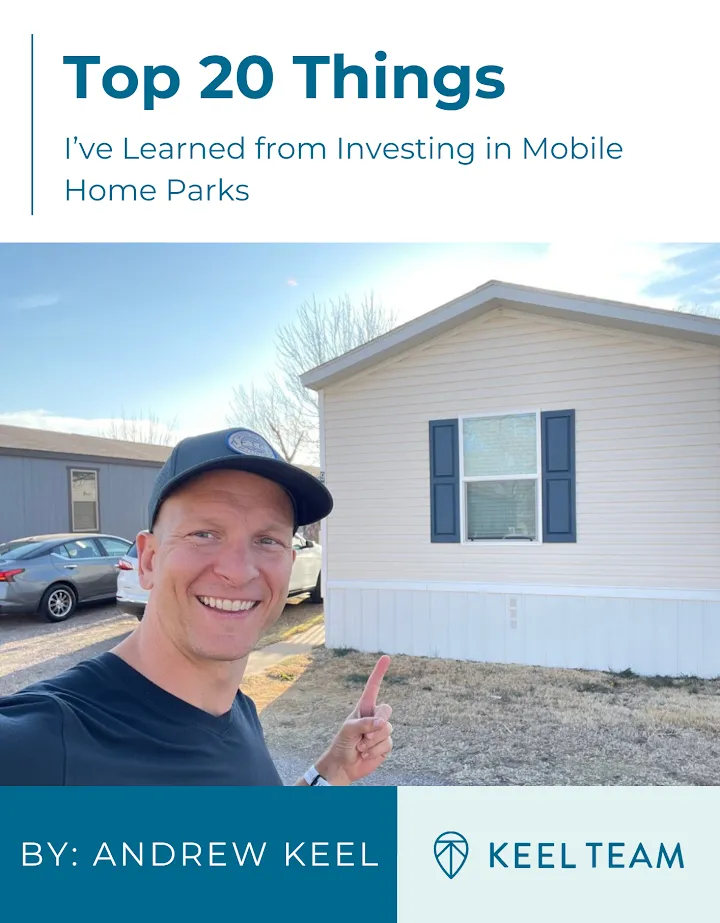
Before going further, grab our free guide: Top 20 Things Learned from Mobile Home Park Investing — battle-tested lessons from operators who have closed deals across America, including Florida markets like Orlando.
Kissimmee Market Overview
Osceola County — of which Kissimmee is the seat — has grown from roughly 170,000 residents in 2000 to well over 400,000 today. That pace of growth ranks it among Florida’s fastest-expanding counties. The county’s population skews younger, is majority-Hispanic, and is heavily employed in the tourism and hospitality sectors that fan out from Kissimmee along US-192 and US-441 toward Walt Disney World and International Drive.
Major employers in the Kissimmee market include Osceola Regional Medical Center (HCA Healthcare), Walt Disney World (accessible via US-192), Tupperware Brands, and a large concentration of hospitality operators running hotels, vacation rentals, and theme park support businesses. Kissimmee serves as a bedroom community for tens of thousands of Disney and Universal employees who cannot afford rent in Orange County’s tighter apartment market.
Why Kissimmee for Manufactured Housing Investment
Kissimmee has one of the highest concentrations of mobile home park communities in all of Florida. The combination of affordable land (historically), workforce-heavy economy, and steady in-migration created fertile conditions for mobile home park development throughout the 1970s, 1980s, and 1990s. Today, that existing supply represents a significant opportunity for investors who can identify parks with operational upside.
Rent-to-income ratios for Kissimmee residents are stretched — the median household income in Osceola County runs below $60,000, while site-built apartment rents have risen sharply. Mobile home park lot rents, at $650 to $850 per month, still pencil for residents as a more affordable alternative, creating low turnover and steady collections when parks are operated with good tenant relations.
Local Lot Rent Data and Trends
Kissimmee lot rents have tracked steadily upward. In 2015, operators in well-run Osceola County communities were collecting $380 to $450 per month on average. By 2020, that range had climbed to $520 to $650. As of 2025, stabilized communities in Kissimmee are running $650 to $850 per month, with some premium communities pushing toward $900 for well-maintained lots with amenities.
Florida’s 90-day notice requirement for annual rent increases is manageable for operators who plan ahead. The Kissimmee market has seen consistent 4% to 7% annual rent growth for well-positioned communities over the past five years.
Zoning and Permitting Landscape
Osceola County’s land development code and the City of Kissimmee’s zoning ordinances both treat existing mobile home parks as legal nonconforming uses in many areas, providing effective grandfathering that protects existing operators. New greenfield park development within city limits is rarely pursued or approved. This supply lock creates durable pricing power for existing operators.
For capital improvements — road resurfacing, utility upgrades, clubhouse construction — Osceola County’s permitting process is generally functional, though timeline can vary. Working with a local general contractor experienced in manufactured housing community improvements is advisable.
Infrastructure: City Water and Sewer
The City of Kissimmee operates its own electric utility (Kissimmee Utility Authority) along with water and wastewater services. Municipal utility coverage is strong throughout incorporated Kissimmee and extends into many adjacent unincorporated areas served by county utilities. Most established mobile home park communities in the Kissimmee market are on public water and sewer systems, which is a significant plus for investors focused on operating simplicity and long-term cap-ex predictability.
Proximity to Orlando Employment Centers
Kissimmee sits 15 to 25 miles south of downtown Orlando and 10 to 20 minutes from the main Walt Disney World entrance. The US-192 corridor connecting Kissimmee to Disney is one of the most heavily trafficked employment corridors in Florida. LYNX bus service connects Kissimmee to Orlando’s transit network. SunRail commuter rail has a Kissimmee station providing service north toward downtown Orlando and Sanford.
Related pages: Orlando, FL | Sanford, FL | Altamonte Springs, FL
Frequently Asked Questions
Q: Why does Kissimmee have so many mobile home parks?
A: The combination of historically affordable land, proximity to Disney-area employment, a large workforce population, and Florida’s warm climate made Kissimmee one of the most active manufactured housing markets in the state beginning in the 1960s and accelerating through the 1990s.
Q: Are Kissimmee mobile home parks at risk from redevelopment pressure?
A: Some parks in higher-value locations along major corridors do face periodic redevelopment inquiries. However, Chapter 723 of Florida Statutes provides residents meaningful protections including 12-month notice and relocation assistance requirements in closure scenarios — making closure an expensive proposition that most operators avoid.
Q: What are cap rates like for Kissimmee mobile home parks?
A: Marketed transactions in Osceola County have generally run in the 5.5% to 8.0% cap rate range depending on asset quality, occupancy, and lot rent positioning relative to market.
Q: Is Kissimmee a good long-term hold market?
A: Population trends, employment density, and supply constraints all point to yes. Osceola County’s growth trajectory is among the strongest in Florida, and affordable housing alternatives to mobile home parks remain limited.
📚 Take the Next Step: Download the Free Ebook
Download Top 20 Things Learned from Mobile Home Park Investing — packed with actionable insights from real deals in Florida and across the country. No fluff, just hard-won lessons.