
When investors start looking for passive income through real estate, two options often come up: mobile home parks and single-family home rentals. Both can generate cash flow, but they work very differently — and the gap in performance may surprise you. If you’re trying to decide where to put your capital, this comparison can help you think it through.
How Each Investment Model Works
Single-Family Home Rentals
With a single-family rental, you buy a house and lease it to a tenant. You collect monthly rent, and in exchange, you’re responsible for the property — repairs, taxes, insurance, and everything in between. It’s one of the most common entry points into real estate investing, and it can work well in the right market.
Mobile Home Park Investing
A mobile home park operates differently. In the most common model — known as the land-lease model — you own the land and the infrastructure, but residents own their own homes. They pay you monthly lot rent to park their home on your property. This means you’re not maintaining dozens of individual units. Instead, you’re managing the land, roads, and utilities that serve the community.
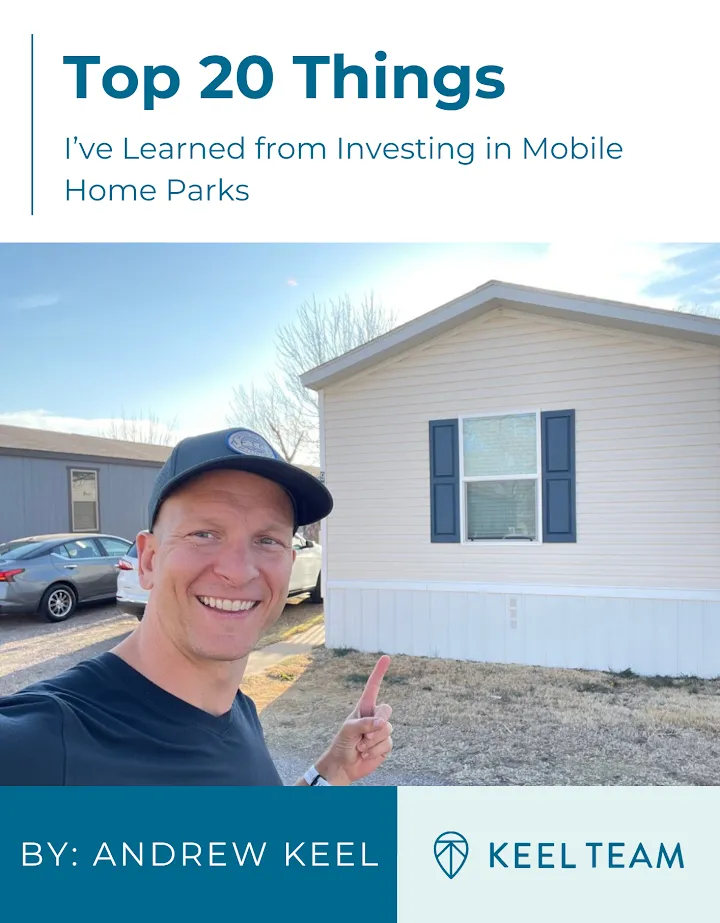
Our free guide covers the top 20 lessons learned from investing in mobile home parks — including the financial mistakes to avoid.
The Cost of Ownership: Who Pays for What?
Single-Family Rentals Come with Higher Operating Costs
Owning a single-family rental tends to carry significant ongoing expenses. According to Thumbtack, average maintenance costs for a single-family home can exceed $10,000 per year. On top of that, landlords deal with tenant turnover every two to three years on average, which means re-leasing costs, potential vacancy periods, and ongoing repairs between tenants. About 38% of landlords cited property upkeep as one of their biggest challenges in 2024, according to Baselane survey data.
Mobile Home Parks May Offer Lower Maintenance Overhead
Because mobile home park residents typically own their homes, they handle interior maintenance themselves. Mobile home park owners tend to focus on shared infrastructure — roads, utilities, and common areas — rather than individual unit upkeep. This structure could lower operating costs by roughly 20% compared to apartment complexes, according to data from Keel Team Real Estate Investments. Additionally, because moving a mobile home can cost around $4,000 or more and most residents live on fixed incomes, tenant turnover in mobile home parks tends to hover around just 5% per year.
Occupancy Rates and Demand Stability
Vacancy is one of the biggest threats to any rental investment. For single-family rentals, national vacancy rates reached approximately 6% in Q3 2024 — the highest level recorded in 26 quarters, according to Rentometer’s 2024 national report. That means landlords in certain markets are sitting on empty homes longer than they have in years.
Mobile home parks, on the other hand, have tended to show much tighter occupancy. Leading mobile home park REITs like Sun Communities reported occupancy rates of around 97.3% in both Q4 2024 and Q1 2025. Equity LifeStyle Properties held steady near 94.4% over the same period. Strong affordable housing demand is likely a major driver — roughly 20.9 million Americans live in manufactured housing, and that number tends to grow as traditional homeownership becomes less accessible.
Returns: What Investors Can Potentially Expect
Single-Family Rental Returns
Single-family rentals can offer rental yields in the range of 7% to 9%, depending on location and property type. However, rent growth has slowed considerably. According to Rentometer’s 2024 national report, average single-family rents grew just 0.8% year-over-year in 2024 — the smallest increase in recent years. Some Sun Belt markets even saw year-over-year rent declines, according to Multi-Housing News.
Mobile Home Park Returns
Mobile home parks may offer a more compelling income picture. Lot rents at leading REITs grew between 5% and 5.5% year-over-year through 2024. For example, Equity LifeStyle Properties reported average lot rent growth of 5.5%, reaching $870 per lot in Q4 2024. Net operating income across the sector has also trended upward, with UMH Properties posting an 8.4% year-over-year NOI increase in Q1 2025. For passive investors participating through syndications, preferred returns in the 7–9% range are common, though returns can vary significantly depending on the deal, operator, and market.
How Passive Is Each Investment, Really?
Single-family rentals can become relatively passive with a property manager in place, but you’re still the asset owner responsible for repairs, turnover, and capital improvements. The more properties you add, the more complexity you take on.
Mobile home park investing, particularly through syndications or private funds, can offer a more hands-off structure for passive investors. In a syndication, a general partner operator handles acquisitions, management, and operations while limited partners contribute capital and receive distributions. This could be worth considering for investors who want exposure to the asset class without day-to-day involvement.
Why Mobile Home Parks Could Keep Attracting Investor Interest
There are a few structural reasons why mobile home parks tend to hold their own during economic uncertainty. First, affordable housing demand shows no signs of slowing — the U.S. faces a shortage of over seven million affordable homes for extremely low-income families, according to Keel Team’s research. Second, new mobile home park supply is extremely limited, as zoning restrictions and community opposition make it very difficult to build new ones. This supply constraint could continue to support occupancy and lot rents over time.
Institutional investors have taken notice. Major players like Blackstone have expanded their manufactured housing portfolios, and the late Sam Zell — one of the most respected real estate investors in American history — held over 150,000 lots before his passing. Warren Buffett’s Berkshire Hathaway paid $1.7 billion for Clayton Homes. That kind of institutional interest may suggest the asset class has moved well beyond niche status.
Which One Wins for Passive Income?
There’s no universal right answer — the best investment depends on your goals, capital, risk tolerance, and time horizon. However, mobile home parks tend to offer a combination of characteristics that can be attractive for passive investors: lower tenant turnover, potentially lower maintenance costs, strong occupancy fundamentals, and growing institutional demand driven by an affordable housing crisis that shows no sign of resolving quickly.
Single-family rentals remain a solid option, particularly for investors who want direct ownership of tangible residential assets with straightforward financing. But for those prioritizing truly passive income with scalability, mobile home park investing — through syndications or other passive vehicles — may deserve a serious look.
The Bottom Line
Mobile home parks have long been overlooked by mainstream investors, but the numbers increasingly tell a different story in terms of passive income. With occupancy rates often above 95%, lot rents growing at a pace that may outperform traditional rentals, and lower operating costs driven by the land-lease model, mobile home parks could offer a compelling passive income opportunity — especially as affordable housing demand continues to rise across the United States.
As with any investment, results are not guaranteed and past performance does not predict future returns. Always consult a qualified financial or real estate professional before making investment decisions.
Our free guide covers the top 20 lessons learned from investing in mobile home parks — including the financial mistakes to avoid.
If you’re interested in learning more about mobile home park investing, reach out and we’ll set up a call. We’re happy to share what we’ve learned from acquiring and operating communities across the country.
Disclaimer:
The information provided is for informational purposes only and is not investment advice or a guarantee of any kind. We do not guarantee profitability. Make investment decisions based on your research and consult registered financial and legal professionals. We are not registered financial or legal professionals and do not provide personalized investment recommendations. This article was written with the help of AI and reviewed by Andrew’s team. Always consult a licensed professional before investing.