Longmont, CO — Mobile Home Park Investments
Part of the Denver-Aurora-Lakewood Metro | Boulder County | Population ~100,000
Longmont Market Overview
Longmont is Boulder County’s second-largest city with approximately 100,000 residents and a distinctly different character from its upscale neighbor Boulder, 16 miles to the south. Longmont offers meaningfully more affordable housing, a strong manufacturing and technology employment base, and a community identity rooted in its agricultural heritage and working-class workforce. The city has grown rapidly over the past decade as households priced out of Boulder, Denver, and Fort Collins have found Longmont’s home prices — typically $450,000–$550,000 for a single-family home — relatively more accessible, though still out of reach for a significant segment of the workforce.
Longmont’s economy is anchored by major employers including Seagate Technology, TCI (Comcast Cable), Envision Solar, and a robust healthcare sector centered on Longmont United Hospital and several urgent care and specialty clinic operations. The city also hosts a growing cluster of craft beverage and food manufacturing companies, adding to the diverse employment profile that drives manufactured housing demand.
Why Longmont for Manufactured Housing Investment
Longmont occupies a strategic position in the Colorado manufactured housing investment landscape: it’s affordable enough to attract workforce housing demand at scale, close enough to Boulder’s high-wage employment base to support premium lot rents, and large enough to sustain professional park management economics. The city’s existing mobile home park inventory has been a vital component of the affordable housing ecosystem for decades, serving manufacturing workers, healthcare employees, retail workers, and retirees on fixed incomes.
Longmont has also seen meaningful population growth from Northern Colorado spillover — families relocating from Fort Collins and Greeley who work along the US-287 and CO-119 corridors find Longmont well-positioned geographically. This demographic trend supports continued manufactured housing demand growth without reliance on any single employer or industry sector.
📘 Free Resource: Mobile Home Park Investing Lessons
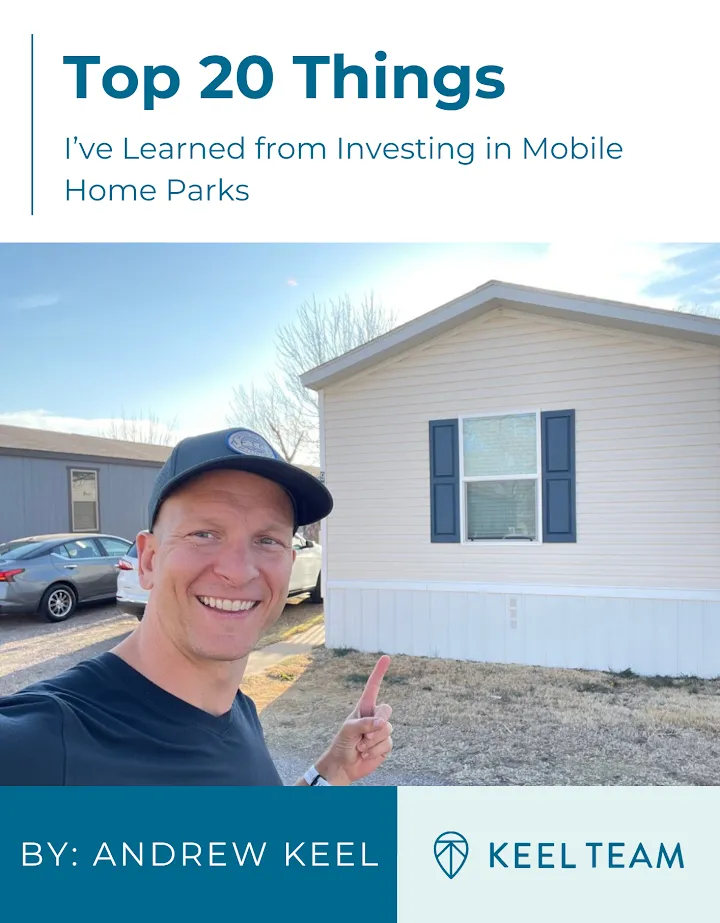
Want to learn what separates successful mobile home park investors from those who struggle? Andrew Keel’s free ebook covers the top 20 lessons learned from years of hands-on park operations — from due diligence red flags to infrastructure pitfalls.
Local Lot Rent Data and Trends
Longmont’s mobile home park lot rents currently range from approximately $600 to $850 per month, representing a meaningful discount relative to Boulder-proper parks (which can reach $1,100/month) while still reflecting the city’s strong demand fundamentals and Boulder County location premium. Five-year rent growth in the Longmont market has averaged approximately 6–8% annually, with newer or better-amenitized communities at the upper end of that range. Apartment alternatives in Longmont start around $1,300–$1,500 per month for a one-bedroom, confirming that manufactured housing offers a compelling 40–50% housing cost discount to residents.
Zoning and Permitting Landscape
Longmont’s land use code classifies manufactured housing communities as a permitted or conditional use in specific residential and transitional zones. The city has been more accommodating of manufactured housing than Boulder proper, and several parks have undergone improvement-oriented renovations with city cooperation. New park development remains constrained by land costs and competition from other residential uses, but Longmont’s regulatory environment is generally constructive for existing park operators seeking to maintain and improve their communities. Investors should review any park’s specific zoning designation and confirm compliance with Longmont’s manufactured housing standards before closing.
Infrastructure: City Water and Sewer
Longmont operates a municipal water system serving the entire city, drawing primarily from the St. Vrain Creek drainage and treated at the Button Rock Reservoir system. The city’s wastewater treatment is managed at the Longmont Wastewater Treatment Plant, which handles sanitary sewer for the urban service area. Manufactured housing communities within Longmont’s service boundaries benefit from reliable city utility connections. Given Longmont’s age and the vintage of many existing parks, investors should budget for potential water line upgrades — particularly in parks with original polybutylene or galvanized steel piping from the 1970s and 1980s.
Proximity to Boulder and Northern Colorado Employment
Longmont sits at the intersection of multiple Northern Colorado employment corridors: 16 miles northeast of Boulder (25–30 minutes via CO-119), 38 miles north of Denver (45–55 minutes via US-36 or I-25), and 20 miles south of Loveland/Fort Collins. This multi-directional employment access makes Longmont-based manufactured housing communities attractive to workers across a wide geography. The Diagonal Highway connecting Longmont to Boulder is a heavily trafficked commuter route, and manufactured housing residents in Longmont frequently commute to Boulder-area employers while enjoying Longmont’s more affordable cost of living.
Frequently Asked Questions
Is Longmont a better investment market than Boulder for mobile home parks?
Longmont and Boulder serve different investment profiles. Boulder offers maximum scarcity protection and premium rents but commands very high acquisition prices. Longmont typically offers better initial yields, more available inventory, and strong underlying demand fundamentals at more accessible price points. Many investors find Longmont’s risk-adjusted return profile superior to Boulder, particularly for operators focused on cash-on-cash returns over appreciation plays.
How does Longmont’s flood history affect mobile home park investments?
Longmont experienced significant flooding from the St. Vrain Creek in 2013. Investors should verify any targeted park’s FEMA flood zone designation and review its flood history before acquisition. Parks in mapped flood hazard areas may face elevated insurance costs, financing challenges, and operational disruptions that must be factored into underwriting.
What types of residents typically live in Longmont mobile home parks?
Longmont parks typically serve a mix of long-term working-class families, retirees on fixed incomes, and newer arrivals who work in Boulder or Fort Collins but need more affordable housing. The city’s manufacturing employment base creates demand from blue-collar workers with stable incomes but limited wealth to pursue homeownership in conventional markets.
What is the outlook for lot rent growth in Longmont over the next 5–10 years?
Given Boulder County’s structural housing shortage, Longmont’s growing population, and the limited supply of manufactured housing communities, the outlook for continued lot rent appreciation is positive. Investors should underwrite conservatively, modeling 4–6% annual rent growth while acknowledging that favorable market conditions could support higher escalation.
Related markets: Boulder, CO | Broomfield, CO | Brighton, CO | Denver, CO
🎓 Learn From 20+ Real Mobile Home Park Deals
Whether you’re evaluating your first mobile home park or your fifth, this free resource condenses years of real operational experience into actionable insights — covering everything from city utility requirements to lot rent positioning.