Denver, CO — Mobile Home Park Investments
Metro #19 — Denver-Aurora-Lakewood Metro Area (Pop. 3.1M) — Colorado’s capital and one of America’s fastest-growing metros
Denver Market Overview
Denver is the capital and most populous city in Colorado, home to approximately 730,000 residents within city limits and anchoring a metro area of 3.1 million people. The Denver metro has been one of the top-performing growth metros in the United States over the past two decades, driven by Colorado’s booming energy sector, technology industry growth, outdoor recreation economy, and massive in-migration from coastal markets. Denver’s economy is among the most diversified of any major US city — anchor employers include aerospace and defense contractors (Lockheed Martin, Raytheon, Boeing), healthcare systems (UCHealth, SCL Health, Denver Health), financial services (Charles Schwab, TIAA, Fidelity), government (state capital, federal agencies), energy companies (Chevron, BP America, Xcel Energy), and a booming technology sector. Denver’s rapid growth has created an acute housing affordability crisis: median home prices have exceeded $600,000 and conventional apartment rents average $1,800-$2,400 for a one-bedroom unit, making manufactured housing communities critically important for the city’s essential workforce.
Why Denver for Manufactured Housing Investment
Denver represents one of the strongest manufactured housing investment markets in the Mountain West. The combination of rapid population growth, extreme housing affordability pressure, strong employment diversity, and a landlord-friendly regulatory environment (by California standards) creates exceptional demand fundamentals. Colorado has been at the forefront of manufactured housing policy, with the Colorado Mobile Home Park Act of 2019 establishing the current regulatory framework — investors should review current requirements as part of due diligence. Denver’s parks serve a diverse tenant base: working families, retirees, service workers, and increasingly young professionals who choose manufactured home living as a lifestyle and financial choice. The stigma historically associated with manufactured housing has decreased significantly in Denver’s market as quality community development has improved overall park perception.
Free Investor Resource
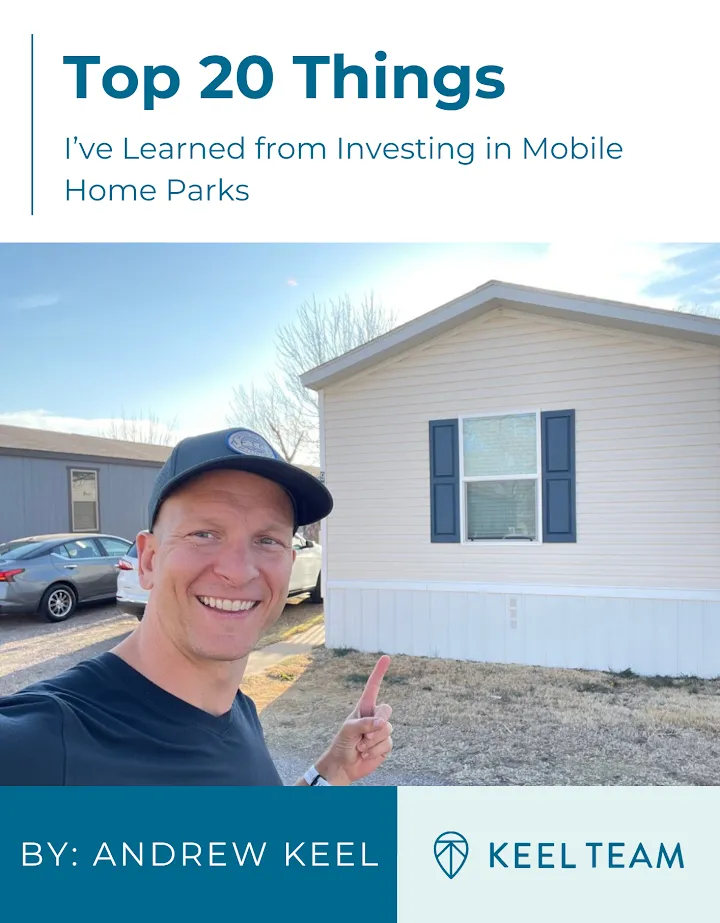
Want to understand what it really takes to succeed in manufactured housing investing? Download Andrew Keel’s free ebook: Top 20 Things Learned from Mobile Home Park Investing — packed with practical lessons from years in the field.
Local Lot Rent Data and Trends
Denver metropolitan lot rents have risen sharply over the past decade. Current lot rents in Denver proper and close-in suburban communities generally range from $600 to $1,000 per month, with well-located parks near employment centers commanding premiums. Some older parks with long-tenured residents may have below-market rents in the $450-$550 range, representing significant value-add potential. Colorado’s Mobile Home Park Act requires landlords to provide 90 days’ notice of significant rent increases. The long-term trajectory for Denver lot rents is firmly upward — the metro added 200,000+ residents between 2015 and 2023 with no corresponding increase in manufactured housing community supply, driving persistent rent appreciation.
Zoning and Permitting Landscape
Denver’s zoning code includes Mobile Home Park (MH) districts and the city’s Blueprint Denver Plan emphasizes affordable housing preservation, generally supporting policies that protect existing manufactured home communities from conversion or closure pressure. Denver’s Community Planning and Development (CPD) department handles zoning inquiries and permitting. Denver’s rapidly rising land values create both opportunity and risk — parks on high-value urban infill sites may face redevelopment pressure over the long term. Investors should assess each site’s General Development Plan designation and any transit-oriented development overlay proximity.
Infrastructure: City Water and Sewer
Denver Water — one of the oldest and most respected municipal water utilities in the Western US — provides water service to the city. Denver Metro Wastewater Reclamation District handles regional sewage treatment. Essentially all established mobile home parks in the Denver urban area operate on full municipal water and sewer connections. The infrastructure quality in Denver’s utility systems is high by national standards.
Proximity to Denver Metro Employment Centers
- Downtown Denver / LoDo: Central — state government, financial services, healthcare, tech
- Denver Tech Center (DTC): ~15 miles southeast — telecommunications, financial services, tech
- Fitzsimons / Anschutz Medical Campus: ~8 miles east (Aurora) — nation’s largest medical campus, 30,000+ employees
- Denver International Airport (DEN): ~25 miles northeast — 35,000+ direct and indirect jobs
- Rocky Mountain Arsenal / Commerce City: ~12 miles northeast — logistics, distribution, energy
- Buckley Space Force Base: ~18 miles southeast (Aurora) — military, defense contractors
FAQ: Mobile Home Park Investing in Denver, CO
What is the Colorado Mobile Home Park Act and how does it affect investors?
The Colorado Mobile Home Park Act, significantly strengthened in 2019 and subsequently updated, establishes tenant rights including notice requirements for rent increases and park closures, first-right-of-purchase requirements if a park is sold, and dispute resolution processes. The Act does not cap rents but requires 90-day advance notice for rent increases, which affects operational planning timelines.
Are there institutional buyers competing for Denver mobile home parks?
Yes — Denver is firmly on the radar of major manufactured housing REIT platforms and institutional private equity operators. Competition for quality parks in the metro has intensified significantly since 2018. Off-market acquisitions through direct owner outreach remain the most reliable path to acquisitions at reasonable pricing.
What cap rates are typical for Denver mobile home parks?
Well-stabilized Denver parks with strong occupancy have traded in the 4.5% to 6.5% cap rate range in recent years. Value-add parks with below-market rents and deferred maintenance can offer higher initial cap rates with strong upside through stabilization. Parks in suburban Denver communities often price at slightly higher cap rates than in-city assets.
How has Denver’s rapid growth affected mobile home park tenant demographics?
Denver’s in-migration has diversified the tenant base in manufactured housing communities. The traditional profile of retirees and long-tenured working families has been supplemented by younger households who deliberately choose manufactured home living as an affordable alternative to conventional rentals. This demographic shift has broadened the overall demand base and reduced the average stigma associated with manufactured home communities.
Related Pages: Aurora, CO | Lakewood, CO | Thornton, CO
Continue Your Education
Before you invest in any mobile home park market, arm yourself with the right knowledge. Andrew Keel’s Top 20 Things Learned from Mobile Home Park Investing is the essential starting point.