Lakeland, FL — Mobile Home Park Investments
Lakeland, Florida occupies a strategic position at the geographic midpoint between Tampa and Orlando — two of the fastest-growing metros in the United States. As a result, Lakeland has benefited from the economic spillover of both metros while maintaining a distinctly more affordable cost of living. For mobile home park investors, Lakeland is a well-established market with significant existing inventory, strong occupancy fundamentals, and a growing economy anchored by one of the most recognizable headquarters in American retail.
📘 Free Investor Resource
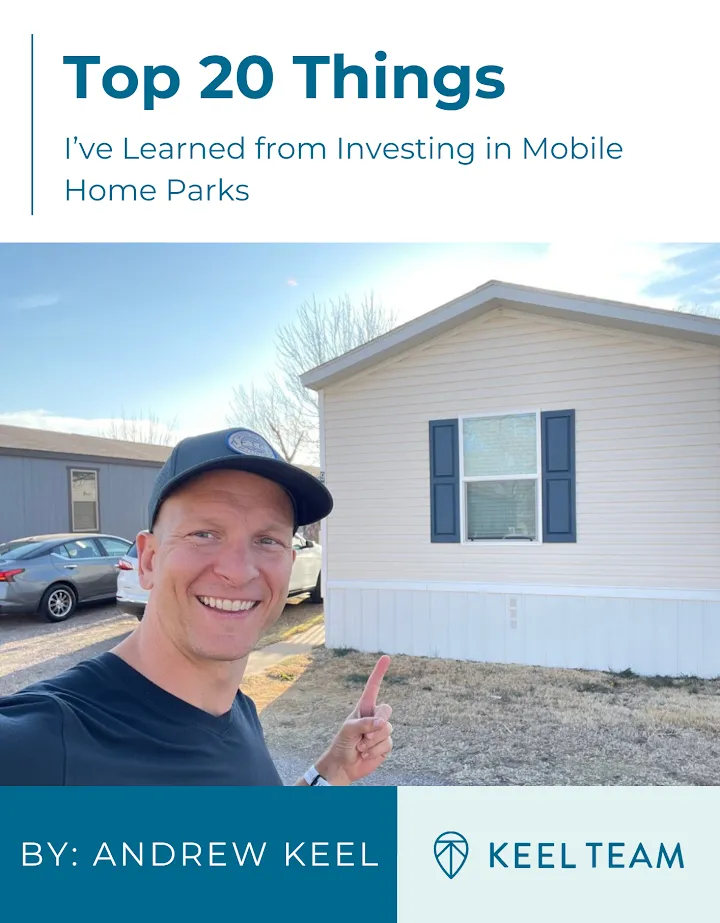
Download the guide that covers what Keel Team has learned across dozens of mobile home park acquisitions: Top 20 Things Learned from Mobile Home Park Investing. Essential reading before entering any new market.
Lakeland Market Overview
Lakeland is the county seat of Polk County and the largest city between Tampa and Orlando with a population of approximately 130,000 in the city proper and roughly 750,000+ across the broader Polk County metro. The city’s name derives from its 38 lakes, which provide recreational amenity and scenic character while also constraining development in certain directions.
The Lakeland economy has diversified significantly over the past two decades. While agriculture remains important in surrounding Polk County, Lakeland’s city economy is now driven by healthcare, logistics, retail, education, and corporate headquarters. Median household incomes around $48,000–$56,000 keep workforce housing — including manufactured housing — in high demand throughout the city and its suburban ring.
Why Lakeland for Manufactured Housing Investment
Lakeland has long been one of Florida’s most active manufactured housing markets, and several structural factors sustain that activity:
- Publix Super Markets HQ: Publix, headquartered in Lakeland, employs thousands directly and anchors significant retail and support employment throughout the region. Its workforce creates steady demand for affordable housing options.
- Amazon and Walmart Distribution: Lakeland hosts major Amazon fulfillment and sortation centers, multiple Walmart distribution facilities, and a growing logistics corridor along I-4 and US-98. Distribution and warehouse employees represent a core demographic for manufactured housing.
- LEGOLAND Florida: The theme park draws tourism and service employment to the Polk County market.
- Healthcare sector: Lakeland Regional Health, the region’s major medical center, employs thousands of healthcare workers who depend on affordable housing options.
- I-4 Corridor positioning: Lakeland’s location gives residents access to both Tampa and Orlando job markets within 45–60 minutes, dramatically expanding the employment catchment area for park residents.
Local Lot Rent Data and Trends
Lakeland-area mobile home parks have seen robust lot rent appreciation, with current rents ranging from approximately $550 to $800 per month — up from roughly $375 in 2015. Factors driving this appreciation include:
- Population growth across Polk County averaging 2–3% annually
- Rising conventional apartment rents making mobile home parks increasingly competitive
- Significant in-migration from higher-cost Florida markets (Tampa, Miami, Orlando)
- Very limited new park development — Polk County’s existing parks represent an essentially irreplaceable asset class
Lakeland’s lot rents remain below Tampa Bay coastal markets, which creates a relative affordability advantage that supports strong occupancy even as rents increase.
Zoning and Permitting Landscape
Both the City of Lakeland and Polk County manage mobile home park zoning through their respective comprehensive plans. Established parks carry legal non-conforming protections that make them difficult to displace. Florida Chapter 723 provides the operating framework for lot rent relationships, including notice requirements and tenant committee rights. Lakeland’s code enforcement is active, meaning well-maintained parks benefit from competitive positioning against aging inventory that may face compliance pressure.
Lakeland has historically been one of Florida’s more manufacturing-housing-friendly markets from a cultural and regulatory standpoint, reflecting the community’s blue-collar economic heritage.
Infrastructure: City Water and Sewer
Lakeland operates its own municipal utilities system — Lakeland Electric and the City of Lakeland’s water/wastewater utility — one of the larger municipal utility operations in Florida. This means most parks within the city limits have access to city water and sewer service. Suburban parks in unincorporated Polk County may use Polk County Utilities or, in older communities, private systems.
City utility connections are the gold standard for mobile home park due diligence in Florida. Wells can fail, and septic systems create regulatory and operational headaches. Confirming city water and sewer service is a non-negotiable step in any Lakeland-area acquisition.
Proximity to Tampa Metro Employment Centers
Lakeland sits within the Tampa-St. Petersburg-Clearwater Metro’s broader economic orbit while also connecting to the Orlando metro. Key commute corridors include:
- Tampa (~50 miles west via I-4): Port of Tampa, downtown corporate, healthcare systems, MacDill AFB
- Plant City (~15 miles west): Agricultural processing, distribution, warehousing — see the Plant City page for details
- Brandon (~25 miles west): Suburban retail and medical corridor adjacent to Tampa
- Orlando (~55 miles east): Theme parks, tourism, tech, aerospace — Walt Disney World region
Frequently Asked Questions
Is Lakeland a good market for first-time mobile home park investors?
Lakeland has enough market depth — multiple parks, accessible price points, and understandable fundamentals — that it can work for first-time operators. The key is thorough due diligence on city vs. private utilities, tenant demographics, and current rent levels relative to market. Working with a local property manager familiar with Florida Chapter 723 is highly recommended.
How many mobile home parks are in Lakeland?
Polk County as a whole has one of the highest concentrations of manufactured housing communities in Florida — estimated at over 200 licensed parks across the county. Lakeland and its immediate suburbs account for a significant portion of that inventory, ranging from small retirement communities to large all-age parks with 200+ lots.
What are typical financing options for Lakeland mobile home parks?
Lakeland parks qualify for conventional commercial mortgages, CMBS loans, and agency-backed financing (Fannie/Freddie) for larger stabilized assets. Community Development Finance and seller financing are also viable for smaller acquisitions. Lenders generally require parks to be on city water and sewer for the most competitive terms.
Does Lakeland’s positioning between Tampa and Orlando help or hurt park investing?
It helps significantly. Residents can access two of Florida’s major job markets, reducing dependence on any single employer or industry. This dual-market access historically produces lower vacancy rates during economic downturns compared to single-market communities.
📘 Learn Before You Invest
The Lakeland market rewards prepared investors. Start with the essential guide: Top 20 Things Learned from Mobile Home Park Investing — practical wisdom from real acquisitions, free download.
Keel Team acquires and operates mobile home parks across the Southeast and Midwest. Learn more at keelteam.com.