Eagan, MN — Mobile Home Park Investments
Part of our Minneapolis-St. Paul-Bloomington Metro coverage series on manufactured housing investment markets.
Eagan Market Overview
Eagan, Minnesota is home to approximately 70,000 residents and is a mature, high-income suburb with a strong corporate employment base and stable household formation. As part of the Minneapolis-St. Paul-Bloomington Metro — one of the most significant metro areas in the United States with a combined population of 3.8 million — Eagan sits at the intersection of growing workforce housing demand and constrained supply. The local economy centers on key employers including Thomson Reuters, Blue Cross Blue Shield of Minnesota (HQ), Delta Air Lines cargo hub, Unisys, HealthPartners, and a concentrated cluster of insurance and financial services firms near I-494, providing a stable base of working residents who need quality, affordable housing options.
The broader metro’s population trajectory has pushed homeownership costs and market-rate rents to elevated levels, creating structural demand for manufactured housing communities. Well-maintained mobile home parks in Eagan serve as a critical affordable housing resource for essential workers, retirees, and families who face barriers to conventional homeownership.
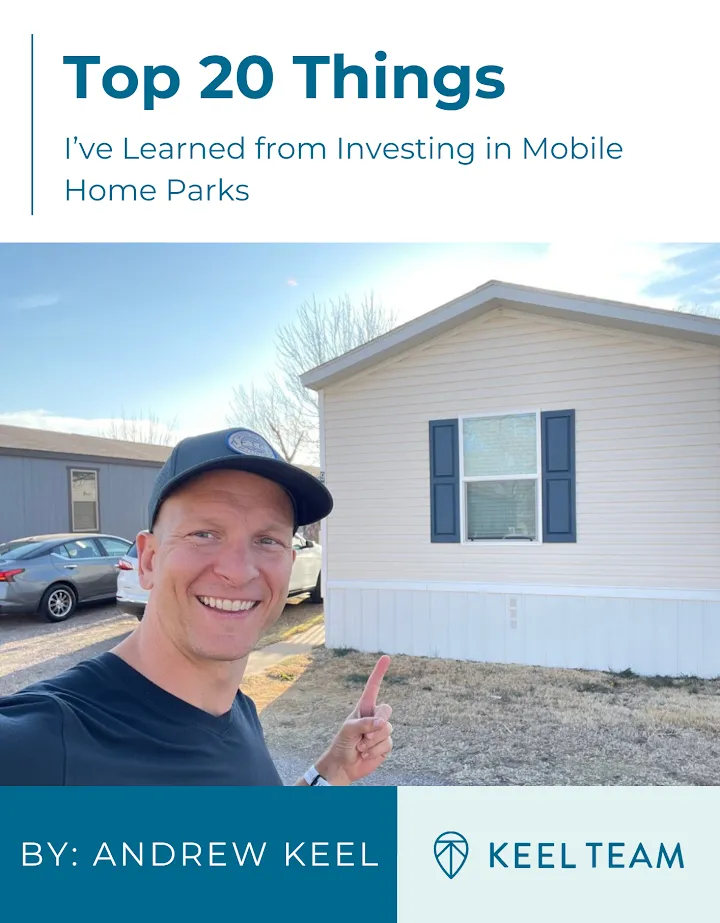
Free Resource: What We’ve Learned from Mobile Home Park Investing
Our free ebook shares 20 hard-won lessons from years of buying, operating, and stabilizing mobile home parks across the Southeast and Midwest. No fluff — just real operator insights.
Why Eagan for Manufactured Housing Investment
Eagan is one of the most job-rich suburbs in the Twin Cities. Despite a high average household income, the city still has essential workers — in distribution, food service, healthcare, and retail — who need affordable housing options. Mobile home parks in Eagan sit at a premium within the Minneapolis-St. Paul metro precisely because of the city’s corporate employment concentration and proximity to MSP airport.
Investors focused on manufactured housing who understand the Minneapolis-St. Paul-Bloomington Metro often identify Eagan as a target market precisely because the fundamentals align: strong employment, limited affordable alternatives, and a resident base with demonstrated demand for well-managed communities.
Local Lot Rent Data and Trends
Mobile home park lot rents in Eagan currently range from approximately $560–$670 per month, depending on park quality, amenity level, and lot size. Rents have appreciated roughly 30% over five years, driven by proximity to high-wage corporate employment.
For context, a manufactured home resident paying $560–$670/month in lot rent faces a total housing cost significantly below the median apartment rent in Eagan, which has risen sharply. This rent gap is the core value proposition for both residents and operators: residents save money; operators benefit from low turnover and high occupancy. Investors should underwrite rent growth conservatively (3–5% annually) while recognizing that well-run parks with deferred maintenance correction often experience above-market rent normalization in the first 12–24 months post-acquisition.
Zoning and Permitting Landscape
Eagan’s zoning ordinance maintains manufactured housing community designations as a permitted use in identified districts. The city has been stable in its approach to existing communities and has not pursued aggressive closure programs. Investors should review the city’s 2040 comprehensive plan for any changes to designated housing types.
As with any mobile home park acquisition, thorough due diligence on zoning conformance, permitted use status, and any conditional use permits is essential. A zoning attorney familiar with Minnesota manufactured housing law should be part of any acquisition team.
Infrastructure: City Water and Sewer
Eagan is fully served by Dakota County Water Resources and the Metropolitan Council Environmental Services (MCES) sewer network. Mobile home parks in the city have city water and sanitary sewer — no rural infrastructure risk.
Municipal water and sewer connectivity is one of the most important due diligence items for any mobile home park investor. Parks on city or county utilities eliminate the operational risk, capital exposure, and regulatory liability associated with private wells and septic systems. In Eagan, this is a key underwriting advantage for parks already connected to the municipal system.
Proximity to Minneapolis-St. Paul-Bloomington Metro Employment Centers
Eagan is immediately south of MSP International Airport (under 5 miles), 15 miles south of downtown Minneapolis, and directly on I-35E and I-494 — two of the busiest corridors in the state. The Bloomington retail and corporate corridor is 5 miles west.
This commute access profile is a major asset for mobile home park operators. Residents in Eagan can reach multiple major employment centers within a reasonable drive, expanding the pool of potential tenants and supporting stable occupancy even through economic cycles.
Related markets in this metro to explore:
Frequently Asked Questions: Mobile Home Park Investing in Eagan, MN
What do mobile home park lots rent for in Eagan, MN?
Lot rents in Eagan typically range from $560 to $670 per month — among the higher end of the Minneapolis-St. Paul Metro, reflecting the city’s strong employment base and airport proximity.
Why is Eagan, MN a strong mobile home park investment market?
Eagan’s dense corporate employment (Thomson Reuters, Blue Cross Blue Shield, Delta cargo) creates demand from essential workers who cannot afford conventional homeownership in Dakota County.
Do Eagan mobile home parks have city water and sewer?
Yes. All established parks in Eagan connect to Dakota County municipal water and MCES regional sewer — a key stability factor for long-term investors.
How does Eagan’s proximity to MSP Airport affect mobile home park demand?
Airport proximity means stable employment for airline, logistics, and hospitality workers. Many seek affordable housing in Eagan specifically because it allows short commutes to the airport without paying market-rate apartment rents.
Additional Resources
- Mobile Home Park Investing in North Carolina
- Mobile Home Park Investing in Tennessee
- What Is a Mobile Home Park? An Investor’s Guide
Ready to Learn More? Download Our Free Ebook
Our free ebook shares 20 hard-won lessons from years of buying, operating, and stabilizing mobile home parks across the Southeast and Midwest. No fluff — just real operator insights.
Data reflects publicly available market research and operator surveys as of 2025–2026. Always conduct independent due diligence before any investment decision.