Why Most Mobile Home Park Operators Fail at Infill — And the System That Fixes It
Andrew Keel
[wpbread]
You closed on a park with 20 vacant lots. You underwrote infill in year one. Two years later, you’ve filled three. Here’s what’s actually going wrong — and how to fix it.
It’s one of the most common disappointments in mobile home park investing: you acquire a park at 70% occupancy, underwrite an aggressive infill plan, and then watch reality systematically dismantle your pro forma. Not because the demand isn’t there. Not because your park isn’t a good asset. But because infilling vacant lots in a manufactured housing community is genuinely, systematically, surprisingly hard — and most operators don’t have a real system for doing it.
After operating 50+ communities, we’ve learned this the hard way. Here’s what’s actually breaking the infill process, and what high-performing operators do differently.
The Math That Motivates You (And Then Kills You)
Let’s start with why operators try so hard to infill in the first place. A single vacant lot in a park with $400/month lot rent represents roughly $57,000 in lost asset value at a 7% cap rate. Multiply that by 20 lots and you’re leaving $1.1 million in potential value sitting in the dirt.
That math is motivating. But here’s the math that often gets ignored:
Installing a new manufactured home — including the home itself, transport, setup, permits, utility connections, and tap fees — can run $130,000 to $160,000 per lot in today’s market. A used home, after sourcing and rehab, typically runs $15,000 to $35,000. Neither scenario is plug-and-play. And if you can’t get your incoming resident financed? None of it matters.
The Financing Gap Is Real — And It’s Getting Worse
The dirty secret of mobile home park infill is that the financing infrastructure for manufactured homes on leased land is broken.
Chattel loans — the primary vehicle for financing a manufactured home on a lot you don’t own — currently cost an average of 4.4 percentage points more per year than a conventional mortgage. They have higher denial rates, shorter terms, less consumer protection, and minimal secondary market support from Fannie Mae or Freddie Mac.
A January 2025 Pew Research report found that 1 in 5 manufactured home borrowers is using risky seller-financed contract arrangements — the kind with minimal consumer protections and often below-market scrutiny. That’s not a healthy financing ecosystem. That’s people doing whatever they have to do to get into a home.
For operators trying to fill lots, this means: the pool of move-in-ready, pre-qualified residents is far smaller than demand would suggest. You can find a great family who wants a home in your park. You can source the home. You can get the permits. And then watch the deal fall apart because no lender will finance a $90,000 chattel loan for someone with a 620 credit score in a park they don’t own.
The Home Supply Problem
Even before you get to financing, you have to find homes. New manufactured homes are backordered — delivery timelines of 6+ months are common. And at $130,000+ installed, most operators can’t afford to speculate on 20 homes sitting on pads while they wait for qualified residents.
Used and repossessed homes are cheaper but the market is fragmented and largely relationship-driven. The operators who source homes efficiently have pre-built pipelines with dealers, lenders (21st Mortgage and Triad Financial both have repo inventories), and relocation companies. Without those relationships, infill becomes a series of expensive, slow, one-off transactions.
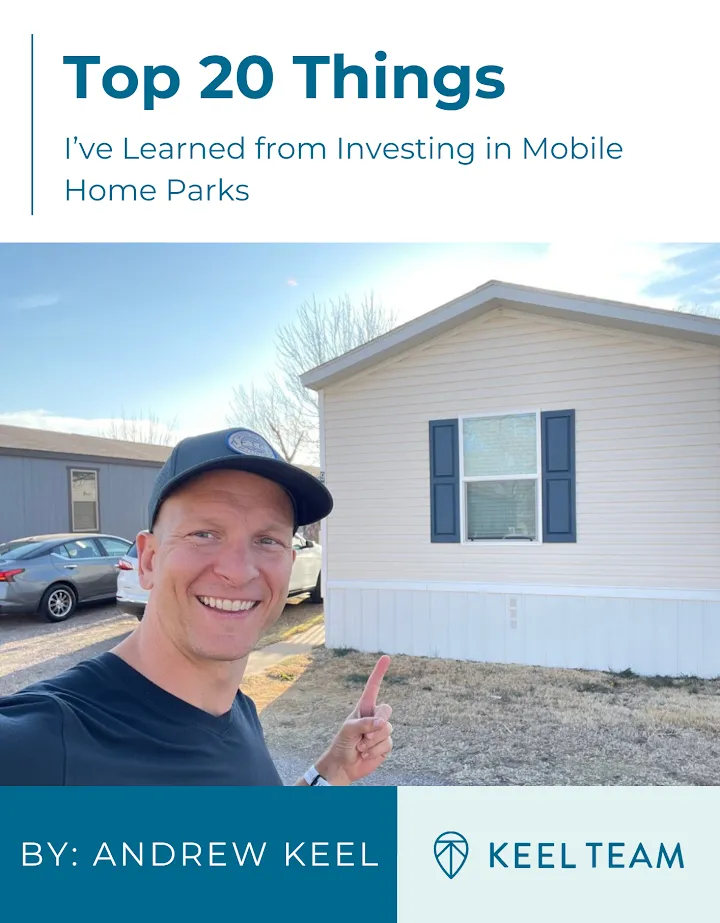
📘 Free eBook: Top 20 Things I’ve Learned from Investing in Mobile Home Parks
Two decades of hard-won lessons distilled into one free guide. Whether you’re evaluating your first deal or your fiftieth, these insights will sharpen your approach.
Local municipalities have not kept up with the manufactured housing market. In many jurisdictions, placing a home on a vacant lot involves a new site plan review (even for a previously occupied lot), tap fees ranging from $5,000 to $25,000 per utility connection, setback requirements that don’t accommodate modern home footprints, and inspections that add weeks to the timeline.
None of this is insurmountable. But without a system — a checklist, a local permitting contact, pre-mapped timelines — each lot is a fresh bureaucratic adventure. Operators who’ve successfully infilled in a market have already navigated all of this and built the shortcuts. New operators are learning the hard way, at $50,000+ per mistake.
What High-Performing Operators Do Differently
The parks that consistently hit 90%+ occupancy treat infill like a production process, not a series of projects. Here’s what that looks like in practice:
A Pre-Built Home Supply Pipeline
Relationships with 2-3 regional dealers who offer priority allocation and dealer-direct pricing. An ongoing relationship with at least one repo lender who calls you first when inventory becomes available in your market. This alone can compress sourcing timelines from months to weeks.
An Embedded or Partnered Financing Solution
The best operators have solved the chattel loan problem. Some offer in-house rent-to-own programs. Others have CDFIs or specialty lenders they refer exclusively and have invested in the relationship so approval rates are better. A few have gotten creative with lease-to-own structures that sidestep the traditional loan process entirely. The mechanism varies — the point is they’ve solved the problem, not accepted it as a constraint.
A Stage-Gated Infill Tracker
Every vacant lot has a status: unserviced, permitted, home sourced, resident identified, financing in-process, installed, leased. Every week, the team reviews the tracker and identifies where deals are stuck. This sounds obvious. Almost nobody actually does it.
When evaluating a park’s infill potential before acquisition, the questions to ask — and the red flags to watch for — are covered in detail in the MHP Due Diligence Playbook. Underwriting infill correctly up front is what separates operators who hit their business plan from those who spend years spinning on vacant pads.
Permit Pre-Work
Before a home is sourced, the permits for that specific lot are already in process. This alone can compress the infill timeline by 60–90 days per lot.
The Bottom Line on Vacant Lots
Vacant lots are a recoverable problem — but only if you treat infill as an operational discipline, not a hope. The operators who’ve cracked it share one trait: they built the system before they needed it, not after three years of sub-10% fill rates and frustrated investors.
If your park has vacant lots and your infill rate is slower than you’d like, the fix is rarely about demand. It’s about process. And process is buildable.
At Keel Team, we’ve invested heavily in the supply, financing, and permitting pieces of our infill pipeline across our communities. It’s not glamorous work. But it’s the difference between an asset that hits its pro forma and one that perpetually underperforms.
Andrew Keel is the founder of Keel Team, a mobile home park investment and management company. Keel Team owns and operates 50+ communities with a focus on operational excellence and long-term community investment.
📋 The MHP Due Diligence Playbook
10 video modules, a 55-page master checklist, and 9 ready-to-use templates that walk you through every step of evaluating a mobile home park deal — from the first site visit to closing day.
Andrew is a passionate commercial real estate investor, husband, father and fitness fanatic. His specialty is in acquiring and operating manufactured housing communities. Visit AndrewKeel.com for more details on Andrew's story.