
Mobile home park investing is often discussed as a niche within real estate, yet it functions fundamentally as a form of commercial real estate. Instead of relying on individual unit interiors for value creation, a mobile home park typically generates income through land use, infrastructure, and long-term tenancy. Understanding how income is generated helps investors better evaluate risk, stability, and potential performance over time.
While every property operates differently, mobile home park income usually comes from a combination of recurring lot rent, additional income sources, and operational efficiencies. These income streams may vary depending on ownership strategy, market conditions, and property configuration.
Mobile Home Parks As Commercial Real Estate
A mobile home park is generally classified as commercial real estate because income depends primarily on the performance of the asset rather than the individual occupants. Investors typically evaluate mobile home parks based on net operating income, expense management, and capitalization rates, similar to other income-producing commercial assets.
Unlike traditional residential rentals, the primary value driver is often the land and infrastructure. Roads, utility systems, and lot layouts form the foundation of income generation. As a result, owners tend to focus on maintaining occupancy, managing expenses, and improving operational efficiency rather than renovating individual homes.
This structure can sometimes lead to more predictable income patterns, although outcomes always depend on management quality and local market dynamics.
Download our FREE eBook on the Top 20 things to know BEFORE investing in mobile home parks!
Lot Rent As The Primary Income Source
What Lot Rent Means
In many mobile home parks, residents own their homes but lease the land beneath them. This payment is known as lot rent and typically represents the main source of income.
Lot rent covers the resident’s right to occupy a designated space and access shared infrastructure such as roads, utility connections, and common areas. Because moving a manufactured home can be expensive and logistically difficult, residents may choose to remain in place for longer periods compared to traditional apartment tenants. This dynamic can contribute to lower turnover in some cases.
Why Lot Rent Can Be Stable
Since the property owner is responsible for land and infrastructure rather than the home itself, maintenance responsibilities may be lower compared to traditional rental housing. Fewer interior repairs and unit turnovers can help reduce operating volatility, although infrastructure maintenance still requires ongoing attention.
Income stability may also depend on maintaining fair market rents and supporting long-term resident satisfaction. Poor management or deferred maintenance can quickly impact occupancy and income performance.
Rental Homes Within A Mobile Home Park
Park-Owned Homes As An Additional Income Stream
Some mobile home parks include homes owned by the operator. In these situations, income comes from both lot rent and home rent. This structure resembles traditional rental housing more closely because the owner assumes responsibility for maintenance, repairs, and leasing.
While rental homes can increase total revenue, they also introduce additional expenses and operational complexity. Maintenance costs, vacancy risk, and capital expenditures may rise accordingly.
Balancing Rental And Tenant-Owned Homes
Many operators prefer a higher percentage of tenant-owned homes because it reduces maintenance exposure. However, rental homes can serve as a transition strategy when acquiring a property or filling vacant lots. Over time, operators may sell homes to residents to shift toward a more land-focused income model.
The appropriate balance often depends on market demand, financing considerations, and operational goals.
Utility Billing And Expense Recovery
Utility Reimbursement Structures
Utilities can represent a significant expense in a mobile home park. Some properties include water, sewer, or trash services within lot rent, while others bill-back residents separately. When utilities are billed back to residents, owners may reduce exposure to rising utility costs.
Common structures may include direct billing, submetering, or ratio utility billing systems. Each approach has different operational requirements and regulatory considerations depending on the local jurisdiction.
Impact On Net Operating Income
Recovering utility costs does not necessarily increase gross income, but it may improve net operating income by aligning expenses more closely with usage. Investors often review utility structures carefully because inefficient billing systems can affect long-term profitability.
Ancillary Income Sources In Mobile Home Parks
In addition to lot rent and home rent, mobile home parks may generate smaller income streams that contribute to overall performance. These sources typically vary by property and market.
Examples may include:
- Late fees or administrative fees
- Pet fees where permitted
- Storage or parking fees
- Laundry facilities in certain communities
- Application or lease processing fees
While ancillary income rarely replaces core revenue sources, it can improve overall income diversification when implemented responsibly.
Vacancy Reduction And Lot Fill Strategies
The Importance Of Occupied Lots
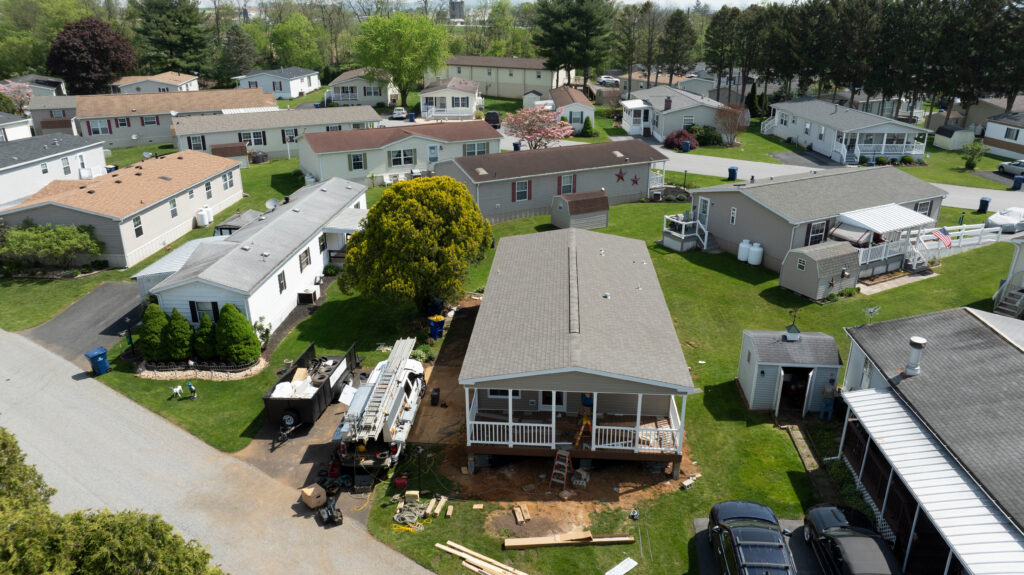
Income generation in a mobile home park often depends heavily on occupied lots. Each vacant lot represents unrealized income because infrastructure expenses still exist regardless of occupancy levels.
Operators may increase income by filling vacant lots through home placements, marketing improvements, or operational upgrades. However, filling lots typically requires capital investment and time before income stabilizes.
Long-Term Value Creation
Increasing occupied lots may improve both income and valuation because commercial real estate values often depend on net operating income. Even modest increases in occupancy can meaningfully affect overall asset performance, although results vary by market conditions and execution.
Expense Management As Part Of Income Generation
Income in commercial real estate is closely tied to expense control. In a mobile home park, managing infrastructure maintenance, utilities, insurance, and administrative costs can significantly influence net income.
Efficient operations do not necessarily mean minimizing spending. Instead, successful operators often focus on preventative maintenance and long-term planning. Addressing infrastructure issues early may help avoid larger costs later, which can support more consistent income over time.
Market Factors That Influence Mobile Home Park Income
Several external factors may influence how income performs in a mobile home park. Local employment trends, housing affordability, and population stability can all affect demand. In markets where affordable housing options remain limited, demand for manufactured housing communities may remain relatively strong.
However, income performance is never guaranteed. Regulatory changes, infrastructure challenges, or economic shifts can affect outcomes. Investors typically evaluate these factors carefully before making decisions.
Conclusion
Mobile home park income is generated through a combination of lot rent, rental homes, utility structures, ancillary income, and operational efficiency. Because the asset functions as commercial real estate, performance often depends more on income management than property appreciation alone.
While mobile home park investing may offer characteristics that some investors find attractive, results always depend on market conditions, management decisions, and execution over time. Understanding how income is generated allows investors to evaluate opportunities more realistically and align expectations with how the asset class actually operates.
Are you looking for MORE information? Book a 1-on-1 consultation with Andrew Keel to discuss:
- A mobile home park deal review
- Due diligence questions
- How to raise capital from investors
- Mistakes to avoid, and more!
Disclaimer:
The information provided is for informational purposes only and is not investment advice or a guarantee of any kind. We do not guarantee profitability. Make investment decisions based on your research and consult registered financial and legal professionals. We are not registered financial or legal professionals and do not provide personalized investment recommendations.