Providence, RI — Mobile Home Park Investments
Providence, Rhode Island — New England’s second-largest city with approximately 190,000 residents — serves as the anchor of the Providence-Warwick metropolitan area and sits at the southern end of the Boston-Providence Amtrak corridor. Home to Brown University, Rhode Island School of Design (RISD), and a major healthcare economy anchored by Lifespan and Care New England health systems, Providence occupies a unique position in the New England investment landscape: a city with genuine university-driven economic vitality and substantial workforce housing demand at price points meaningfully below Boston.
Providence Market Overview
Providence has undergone significant revitalization since the 1990s, driven by its higher education institutions, a thriving arts scene, and growing professional services and healthcare sectors. Brown University’s ongoing expansion, including major investments in life sciences research, is bringing higher-paying employment to the metro area. The Innovation District along the Providence waterfront and the knowledge economy cluster around the universities have attracted young professionals and biotech startups.
Median household income in Providence is approximately $50,000, while median home prices have risen sharply to around $350,000 — a post-pandemic surge that has significantly reduced affordability for working families. For manufactured housing investors, this price appreciation has directly strengthened demand for lot-rent communities throughout the Providence metro area and across Rhode Island’s smaller cities.
Why Providence for Manufactured Housing Investment
Providence offers manufactured housing investors several compelling attributes. First, it is part of the broader Boston-Cambridge-Newton MSA catchment area — benefiting from Boston’s housing spillover effects while offering lower acquisition costs. Second, Providence’s large working-class population (many employed in healthcare, retail, education support, and trades) represents a natural manufactured housing market. Third, Rhode Island’s geography — compact, densely developed, with limited land for new affordable housing construction — supports long-term demand for existing manufactured housing communities.
The Providence-Warwick MSA also includes Cranston, Warwick, Pawtucket, and Johnston — suburban communities with stronger manufactured housing inventory than Providence proper and generally more favorable operating environments for community owners.
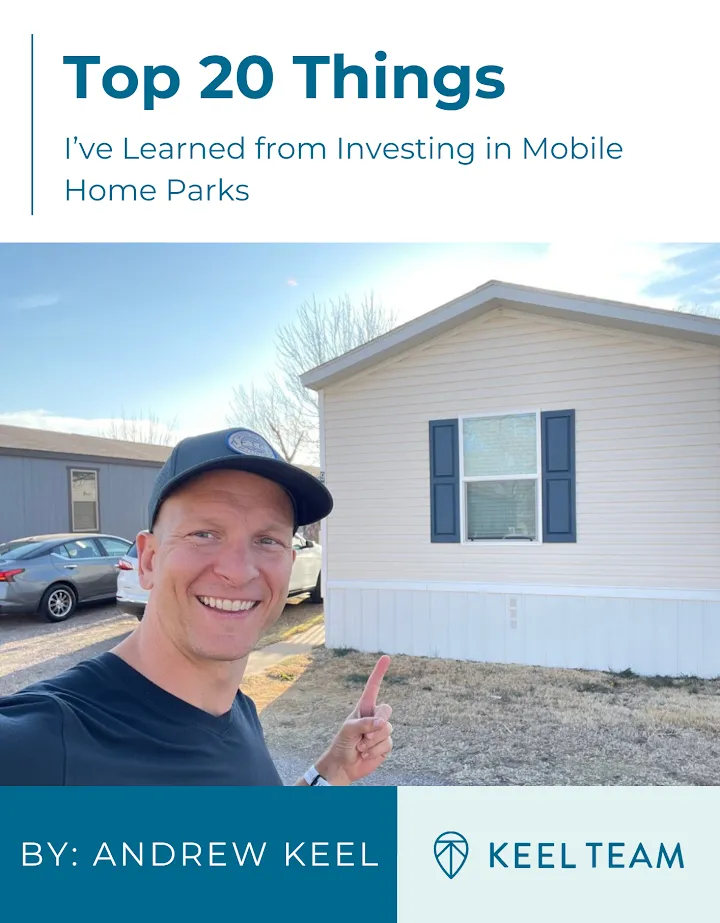
📘 Free Resource: 20 Lessons from Mobile Home Park Investing
Whether you’re evaluating your first community or expanding a portfolio, this guide distills hard-won insights from years in the manufactured housing sector. No fluff — just practical knowledge.
Local Lot Rent Data and Trends
Lot rents in the Providence metro area typically range from $550 to $700 per month, with variation by community age, location, and infrastructure quality. Communities in suburban Warwick, Cranston, Johnston, and North Providence command the higher end of this range given their proximity to Providence employment and better infrastructure profiles. Growth has averaged approximately 3–4% annually over the past five years, with acceleration post-2021 as regional housing costs surged. Rhode Island’s manufactured housing market is relatively compact, with most established communities concentrated in the Providence-Warwick-Cranston corridor.
Zoning and Permitting Landscape
Providence’s zoning is managed through the Department of Planning and Development. Rhode Island state law governs manufactured housing community operations, providing resident protections including closure notice requirements and right-of-first-refusal provisions similar to Massachusetts. Rhode Island has been proactive in affordable housing policy, and manufactured housing communities are recognized as important components of the affordable housing inventory. Permitting processes vary across the metro’s many small municipalities — Johnston, North Providence, Cranston, and Warwick each have their own zoning boards and regulatory processes.
Infrastructure: City Water and City Sewer
Providence is served by the Providence Water Supply Board — one of New England’s major water utilities — which also provides regional water to Cranston, Johnston, North Providence, and other metro communities. Municipal sewer service covers the urban core. In suburban communities, manufactured housing parks may be on private wells or septic systems, making infrastructure diligence essential. Full city water and sewer confirmation is a priority item for any Providence-metro manufactured housing acquisition.
Proximity to Boston and New England Employment Centers
- Brown University — 4,000+ employees on College Hill
- Rhode Island School of Design (RISD) — major arts/education employer
- Lifespan Health System — Rhode Island’s largest private employer, multiple hospitals
- Care New England — second major health system (Women & Infants, Kent Hospital)
- Amtrak/MBTA Service — Providence Station connects to Boston South Station in 45 minutes
- T.F. Green Airport (Providence) — regional air service, airport employment
- Quonset Business Park — 10,000+ manufacturing and distribution jobs, 20 miles south
- Boston, MA — 50 miles north via I-95 or Amtrak
Frequently Asked Questions
Is Rhode Island a good state for manufactured housing investment?
Rhode Island has generally been a stable but limited manufactured housing market. The state’s small size and high development density mean existing communities are irreplaceable, which supports long-term value. Resident protections are meaningful. The main challenge is limited deal flow — there simply aren’t many communities available to acquire. When they do become available, competition can be significant given the scarcity.
How does Providence compare to other New England markets for mobile home parks?
Providence offers a middle ground between Boston’s extreme premiums and the more rural Vermont/New Hampshire markets. Cap rates are typically 5.5%–7.5% depending on community quality and location within the metro. This range reflects Providence’s solid but not spectacular demand fundamentals relative to Boston’s inner core.
What are the strongest submarkets within the Providence metro for manufactured housing?
Cranston, Warwick, Johnston, and North Providence are generally considered the strongest manufactured housing submarkets within the Providence metro. These communities have more suburban character, better infrastructure, and a workforce that relies heavily on Route 2 and Route 295 corridors for employment access. Providence city proper has limited manufactured housing inventory.
How does the Boston-Providence Amtrak corridor affect manufactured housing investment in Providence?
The Amtrak connection gives Providence workers meaningful access to Boston’s employment market — a significant tailwind for housing demand. As Boston housing costs push workers further afield, Providence becomes an increasingly viable commuter community. This dynamic supports manufactured housing demand in the Providence metro beyond what local employment alone would generate.
Related guides: Boston, MA | Fall River, MA | Worcester, MA. Also see our free manufactured housing investment guide.
Want to Learn More About Mobile Home Park Investing?
Get our free guide: Top 20 Things Learned from Mobile Home Park Investing — packed with real-world insights from active operators.