League City, TX — Mobile Home Park Investments
League City, Texas sits at a compelling intersection: a fast-growing Gulf Coast suburb with strong employment anchors, a rising population, and manufactured housing demand that continues to outpace supply. For mobile home park investors studying the greater Houston metro, League City deserves serious attention.
League City Market Overview
With a population exceeding 115,000, League City is one of the fastest-growing communities in Galveston County and the broader Houston-The Woodlands-Sugar Land metro area. The city grew by more than 20% over the past decade, driven by proximity to NASA’s Johnson Space Center, the Texas Medical Center commute corridor, and a highly educated workforce drawn to the Clear Lake area.
Median household incomes in League City average around $105,000 — well above the national median — which reflects its professional demographic base. However, demand for workforce and affordable housing remains acute as home prices have surged past $350,000 on average.
Why League City for Manufactured Housing Investment
League City’s affordability gap makes mobile home parks economically relevant. As single-family home prices remain elevated and apartment rents trend above $1,400/month for a one-bedroom, manufactured housing communities serving the working population — service sector workers, skilled tradespeople, and support staff for aerospace and medical industries — fill a critical need.
The city’s position along I-45 and TX-96 provides direct access to Houston’s employment core, and its location in Galveston County means different regulatory dynamics from Harris County. Investors who understand that nuance can position effectively.
Internal link: Houston, TX Mobile Home Park Investing Guide | Pearland, TX Guide
Local Lot Rent Data and Trends
Lot rents in League City and the Clear Lake corridor have climbed steadily. Current market rents for established manufactured housing communities range from $480–$620 per month for land-lease lots, with newer communities commanding up to $700. The Houston metro as a whole has seen average lot rents rise from approximately $380/month in 2015 to roughly $625/month in 2025 — a 64% increase over a decade. League City mirrors or slightly exceeds metro averages due to its strong income demographics.
Zoning and Permitting Landscape
League City operates under a traditional Texas municipal zoning framework. Manufactured housing communities require specific zoning designation (typically MH or a conditional use permit in residential districts). The city has historically been development-friendly, though infill opportunities within city limits are limited. Investors typically focus on existing parks rather than greenfield development. Galveston County’s unincorporated areas adjacent to League City offer more flexibility for new community development.
Infrastructure: City Water and Sewer
League City is well-served by municipal water and sanitary sewer infrastructure. The city’s utility service area covers most developed portions, and major expansion projects have followed population growth. For mobile home park investors, city water and sewer connections dramatically reduce operational complexity and eliminate concerns about lagoon systems or septic maintenance — a significant value driver.
Proximity to Houston Metro Employment Centers
League City is positioned approximately 30 miles southeast of downtown Houston, with direct I-45 access. Key employment anchors within commute distance include NASA Johnson Space Center (approximately 50,000 employees in the Clear Lake area), the Texas Medical Center (>60,000 employees), Port of Houston operations, and multiple aerospace and defense contractors. This employment diversity creates stable, year-round housing demand across income levels.
Frequently Asked Questions
Are there mobile home parks available for acquisition in League City?
Existing parks do trade periodically in the League City and Clear Lake area. Given the strong rental market fundamentals, these assets tend to sell at compressed cap rates compared to rural Texas markets. Investors focused on value-add opportunities often look at parks with below-market rents and deferred maintenance.
How does League City compare to nearby Pearland for mobile home park investment?
Both cities offer strong suburban Houston fundamentals. League City benefits from NASA/aerospace employment and Galveston County’s distinct regulatory environment. Pearland sits in Brazoria County with slightly different growth dynamics. Both are strong markets, though League City has historically seen faster population growth rates.
What is the typical community size for mobile home parks in League City?
Most existing parks in the area range from 50–150 spaces. Larger developments have been harder to permit within city limits in recent years. Value-add investors often look for 70–100 space communities with room to increase occupancy and push rents toward market.
Does the risk of hurricanes affect mobile home park investment in League City?
Coastal Texas hurricane risk is a real consideration. Galveston County has flood-prone areas, and investors should conduct thorough flood zone analysis (FEMA flood maps) before acquisition. Properties on higher ground with proper infrastructure can still be excellent investments, but due diligence on elevation and historical flood records is essential.
Ready to Learn More About Mobile Home Park Investing?
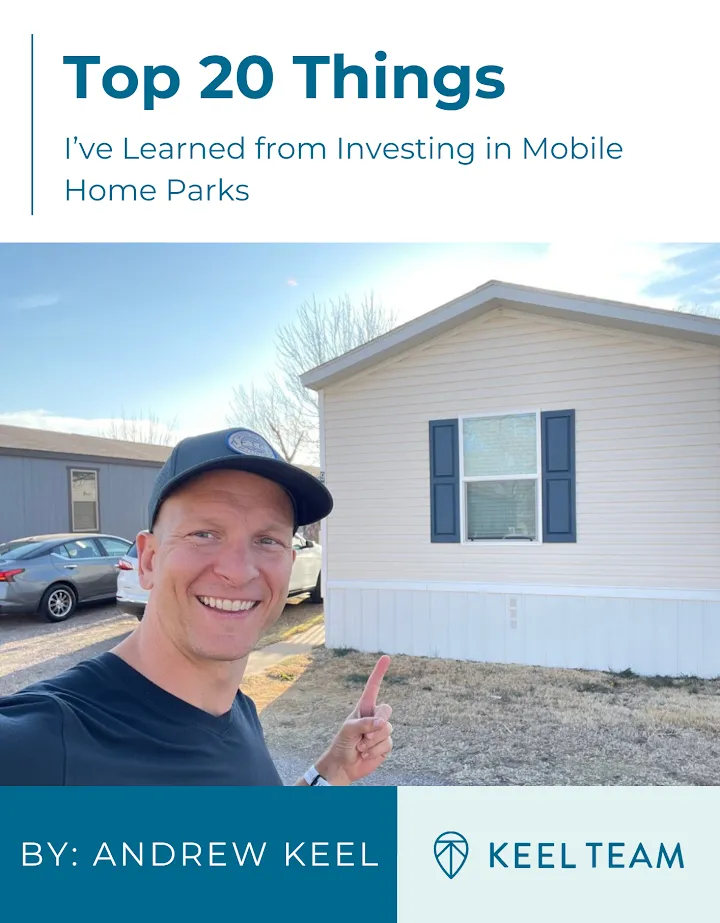
Download our free ebook: Top 20 Things Learned from Mobile Home Park Investing
