
Germantown, WI — Mobile Home Park Investments
Germantown is a Washington County village located northwest of Milwaukee along the US-41/45 corridor — one of Wisconsin’s most active commercial and industrial axes. With a population approaching 20,500 and a strong manufacturing and distribution employment base, Germantown offers mobile home park investors a working-class suburban market with solid fundamentals and relatively lower land costs than Waukesha County alternatives.
This guide covers the Germantown, Wisconsin manufactured housing investment landscape: market demographics, economic drivers, lot rents, zoning, utilities, and how the village connects to the broader Milwaukee metro economy.
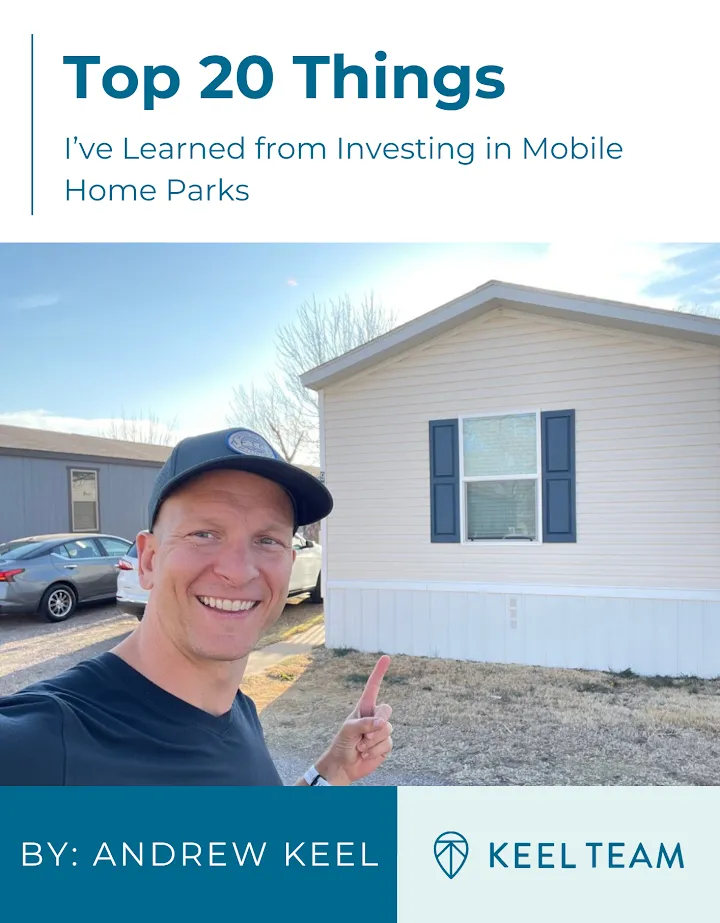
📘 Free Resource: Top 20 Things Learned from Mobile Home Park Investing
Before you evaluate any manufactured housing community, equip yourself with real operator knowledge. Andrew Keel distills years of mobile home park acquisitions into 20 practical lessons you won’t find in a textbook.
Germantown Market Overview
Germantown sits at the intersection of Washington and Waukesha counties, approximately 20 miles northwest of downtown Milwaukee via US-41/45. The village encompasses a mix of suburban residential neighborhoods, agricultural land, and significant commercial/industrial development along the Pilgrim Road and County Line Road corridors.
The population of roughly 20,500 includes a significant share of manufacturing and skilled trades workers, many employed at facilities in the US-41 corridor or commuting south to Milwaukee metro employers. Median household income runs approximately $78,000, and the housing market has been active — but single-family homes regularly exceed $280,000, maintaining demand for affordable housing alternatives.
Why Germantown for Manufactured Housing Investment
Germantown’s combination of industrial employment density and suburban land availability makes it attractive for mobile home park investors. The US-41/45 corridor hosts dozens of manufacturing and logistics operations — from specialty manufacturing to distribution centers — generating a stable base of blue-collar workers who are prime manufactured housing residents.
Washington County as a whole has seen strong employment growth over the past decade, with the Germantown area specifically benefiting from northward expansion of Milwaukee metro industrial development. This employment growth supports consistent lot rent growth and low vacancy in existing parks. The Wisconsin manufactured housing investment overview provides additional context on state-level market dynamics.
Local Lot Rent Data and Trends
Lot rents in Germantown range from approximately $360 to $450 per month as of 2025. This range is slightly below the Milwaukee County average due to Germantown’s position in the lower-cost Washington County market, but occupancy rates in local parks tend to be high given the area’s employment density and affordability gap.
Nearby market comparables include Menomonee Falls (which shares the Washington/Waukesha County border), Brookfield to the south, and West Bend to the north — all of which show similar lot rent trends with annual increases averaging 3–4.5% over the past five years.
Zoning and Permitting Landscape
Germantown is governed by village zoning codes administered through the Village Board and Plan Commission. Manufactured housing communities in Germantown typically require specific zoning district designations or conditional use permits. The village has maintained a relatively predictable regulatory environment for existing parks, though new community development would face careful review.
Investors acquiring existing parks should review zoning compliance, any outstanding code enforcement actions, and infrastructure permits with the village’s Building and Zoning Department prior to closing.
Infrastructure: City Water and Sewer
Germantown operates its own municipal water and sanitary sewer systems serving the developed portions of the village. Many established manufactured housing communities in Germantown are connected to these systems, which simplifies operations and eliminates the regulatory risk associated with private wells or on-site septic.
Investors should confirm utility connection status for any specific park — given Germantown’s mix of developed and rural areas, some properties may still rely on well/septic infrastructure. City-connected parks command higher valuations and are preferred targets in the Milwaukee MSA sub-market.
Proximity to Milwaukee MSA Employment Centers
Germantown residents can access Milwaukee’s core employment within 25–35 minutes via US-41/45 or I-894. More locally, the village sits near major employers including: Actuant Corporation, the Pilgrim Road industrial park, and numerous precision manufacturing operations along County Line Road. Menomonee Falls directly to the south hosts large employers including Kohl’s Corporation headquarters, and shared employment corridors benefit Germantown workers.
The village also has easy access to West Bend (20 minutes north) and the growing healthcare employment at Froedtert Health and its affiliated clinics in the northern Milwaukee suburbs.
Frequently Asked Questions: Germantown Mobile Home Park Investing
Q: Is Germantown part of Milwaukee County?
A: No. Germantown is in Washington County, which is part of the Milwaukee-Waukesha-West Allis Metropolitan Statistical Area. Washington County generally has lower property taxes and land costs than Milwaukee County while still benefiting from metro employment access.
Q: What types of manufactured housing residents are typical in Germantown?
A: Germantown parks tend to attract manufacturing workers, tradespeople, and service industry employees who work along the US-41/45 corridor. These residents value the combination of affordable monthly costs and proximity to employment — a profile that supports stable, long-term occupancy.
Q: How does Germantown compare to West Bend for park investing?
A: Germantown is more urbanized and employment-dense than West Bend, with slightly higher lot rents but also a larger pool of potential tenants. West Bend has more rural character and lower acquisition costs but can show more tenant volatility.
Q: Are there growth trends in Germantown that affect mobile home park demand?
A: Yes. Germantown has seen steady population and employment growth over the past 20 years, driven by northward expansion of Milwaukee metro commercial development. This growth maintains housing demand pressure that keeps manufactured housing communities at high occupancy.
📘 Free Resource: Top 20 Things Learned from Mobile Home Park Investing
Before you evaluate any manufactured housing community, equip yourself with real operator knowledge. Andrew Keel distills years of mobile home park acquisitions into 20 practical lessons you won’t find in a textbook.
