
Gainesville, GA — Mobile Home Park Investments
Gainesville, Georgia — the Hall County seat and the self-proclaimed “Poultry Capital of the World” — is a city of approximately 45,000 residents that anchors a broader metro area of over 200,000. Located about 50 miles northeast of Atlanta on the southern shore of Lake Lanier, Gainesville has built a diversified economy around poultry processing, healthcare, higher education, and manufacturing. For mobile home park investors, it represents one of the most compelling markets in north Georgia: a large, stable workforce with below-median incomes, a constrained housing supply, and an established manufactured housing culture that dates back decades.
Gainesville Market Overview
Hall County’s population has grown by over 30% since 2010, with Gainesville serving as the urban core of that expansion. The city’s economy is anchored by major poultry processors including Wayne-Sanderson Farms and Fieldale Farms, which together employ thousands of workers in processing, logistics, and support roles. Northeast Georgia Medical Center is the region’s largest healthcare employer. Brenau University and the University of North Georgia Gainesville Campus contribute an educated workforce and stable institutional demand. Median household income in Hall County hovers around $62,000 — below the Atlanta metro average — creating persistent demand for affordable manufactured housing as a primary housing option rather than a last resort.
Why Gainesville for Manufactured Housing Investment
Gainesville’s manufactured housing market is deep and historically significant. The workforce serving the poultry industry has relied on mobile home parks for affordable housing for generations, and that pattern continues today. The combination of steady employment, moderate incomes, and limited affordable housing alternatives creates occupancy stability that many larger metro markets cannot match. Gainesville-area parks frequently operate near 95%+ occupancy. The city’s ongoing growth — driven by both domestic migration and a large immigrant workforce — sustains demand even as some older residents transition out of the market.
📚 Free Investor Resource
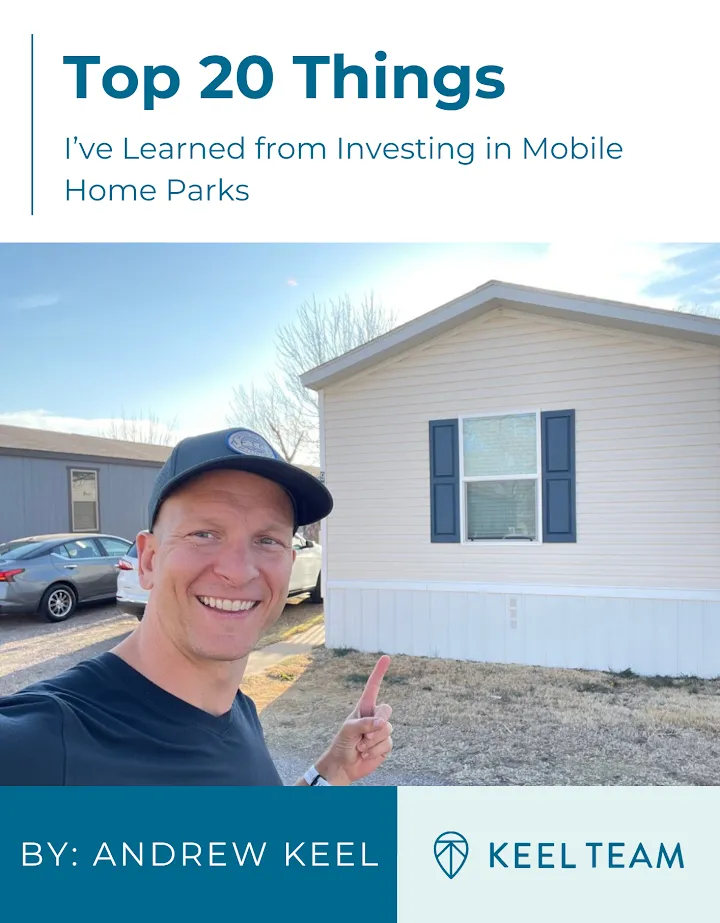
Download our free guide: Top 20 Things We’ve Learned from Mobile Home Park Investing — practical lessons from years of acquisitions, operations, and due diligence in the Southeast and beyond.
Local Lot Rent Data and Trends
Lot rents in Gainesville have risen steadily but remain below Atlanta suburban levels, preserving the affordability gap that drives demand. In 2015, average lot rents in quality communities were approximately $310–$330 per month. By 2025, market-rate lots are achieving $490–$525 per month. The growth represents an approximately 57% increase over a decade, driven by rising construction costs, limited new supply, and apartment rent appreciation that has made lot rents even more competitive. Cap rates for well-stabilized Gainesville parks typically range from 6.0% to 8.0%, making them attractive on a yield basis relative to Atlanta close-in suburbs.
Zoning and Permitting Landscape
Gainesville’s planning and zoning department regulates properties within city limits, while Hall County’s Planning & Development department governs unincorporated areas. Both jurisdictions have existing mobile home park zoning classifications, and established communities are protected as permitted uses. New park development faces significant hurdles given land costs and zoning policies that favor commercial and residential subdivision uses along growth corridors. Investors evaluating Gainesville assets should pay close attention to any active code compliance actions, lot density limitations, and setback requirements that could affect expansion or redevelopment potential.
Infrastructure — City Water and Sewer
The City of Gainesville and Hall County both provide municipal water and sewer service to developed areas, including most established manufactured housing communities in the immediate Gainesville vicinity. Properties in outlying Hall County communities may rely on private wells or septic, which requires additional infrastructure assessment during due diligence. City utility connectivity is a strong positive indicator for financing and long-term community quality. Investors should obtain actual utility bills and confirm account holder status as part of acquisition due diligence.
Proximity to Atlanta MSA Employment Centers
Gainesville sits at the northern edge of the Atlanta combined statistical area and functions as a self-contained employment market rather than a pure commuter suburb. The city’s major employers are locally based, which insulates park residents from Atlanta commute burdens. For residents who do commute south, the I-985 corridor connects Gainesville to Buford, Suwanee, and eventually I-85 — placing downtown Atlanta approximately 60–70 minutes away in off-peak conditions. The University of Georgia in Athens is about 45 minutes east, providing additional employment and cultural connections. This economic self-sufficiency makes Gainesville manufactured housing demand less volatile than markets entirely dependent on one regional employer or commuter pattern.
Nearby guides: Buford, GA, Suwanee, GA, Cumming, GA. See the Atlanta MSA guide and Georgia state overview. Blog: what to look for in a mobile home park, due diligence guide, cap rates explained.
Frequently Asked Questions — Gainesville, GA
How active is the mobile home park investment market in Gainesville?
Gainesville has one of the more active manufactured housing markets in north Georgia. The combination of strong occupancy fundamentals and a large existing park inventory means deals do come to market, though many trade off-market through direct seller relationships. Patient investors who build local relationships tend to source the best opportunities in this market.
What is the impact of the poultry industry on park occupancy?
Poultry processing is largely recession-resistant — demand for affordable protein remains stable through economic cycles. This characteristic transfers to manufactured housing demand in Gainesville: parks serving poultry workers tend to maintain high occupancy regardless of broader economic conditions. The trade-off is that this demographic is price-sensitive and may resist significant rent increases without corresponding income growth.
Are there environmental considerations specific to Gainesville?
Lake Lanier is a major water supply reservoir, and Hall County has established stormwater and environmental regulations that apply to properties within certain watershed zones. Investors should conduct environmental assessments for any property near lake tributaries or in flood-prone areas. The county planning department can provide flood zone mapping information for specific parcels.
What cap rates are realistic for Gainesville mobile home park acquisitions?
Given the market’s solid fundamentals but smaller city profile, stabilized cap rates typically range from 6.0% to 8.0%. Value-add communities with below-market rents or deferred capital improvements can generate higher initial yields with upside as rents are brought to market. Markets with higher cap rates than Atlanta suburbs reflect size and liquidity differences rather than weaker fundamentals.
🌟 Ready to Learn More About Mobile Home Park Investing?
Our free guide shares the top 20 lessons we’ve learned from buying, operating, and growing a portfolio of manufactured housing communities. It’s the clearest starting point we know of for serious real estate investors.
