Investors exploring the affordable housing sector often compare two common approaches: buying shares in a publicly traded real estate investment trust (REIT) or participating in a private mobile home park syndication. Both offer exposure to a demand-heavy asset class, yet they operate differently, attract different investor profiles, and create different expectations. While neither option guarantees specific results, many investors seem to lean toward private mobile home park syndications because they often prefer the control, transparency, and structure these offerings may provide.
This article outlines several reasons behind that preference, while keeping in mind that every investment strategy carries risk and requires proper due diligence. For more, see our how passive mobile home park investing works.
Understanding the Two Investment Paths
REIT Exposure
A publicly traded real estate investment trust can give investors a liquid, stock-like way to gain exposure to mobile home communities. These companies usually own large portfolios of communities across multiple states. They come with professional management, corporate reporting, and exchange-traded liquidity.
Private Mobile Home Park Syndication Exposure
A private mobile home park syndication typically involves a sponsor acquiring one or more mobile home communities and inviting passive investors to participate in the ownership. These offerings usually operate under exemptions such as Regulation D. Investors receive direct interest in the underlying property or partnership, depending on the structure.
Both options may create opportunities, but the reasons many investors prefer private mobile home park syndications revolve around several core advantages that REITs sometimes do not offer.
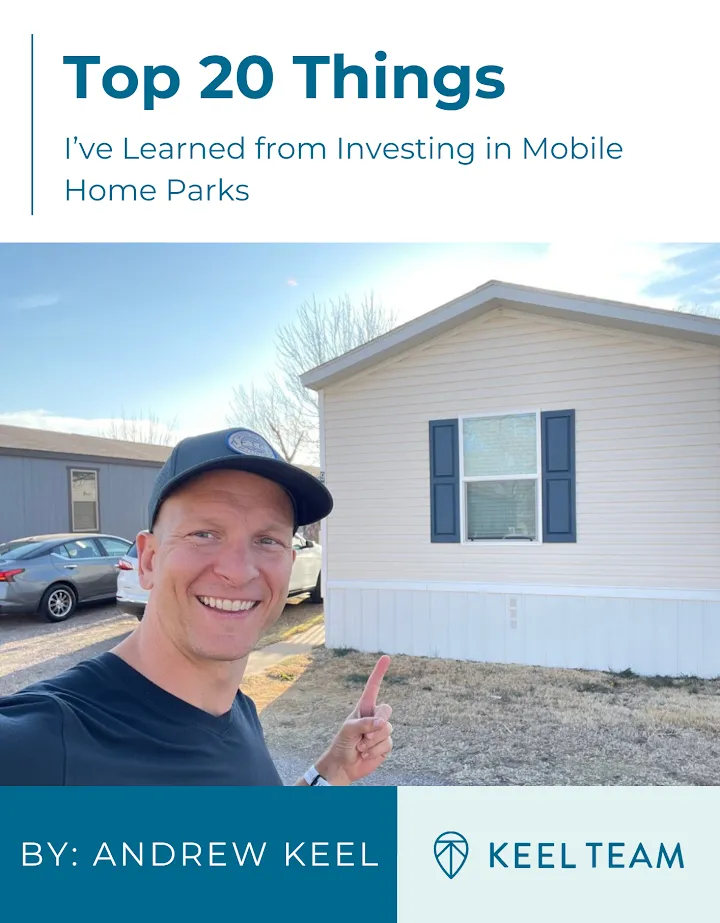
Download our FREE eBook on the Top 20 things to know BEFORE investing in mobile home parks!
Direct Ownership Exposure May Appeal to Investors
Many investors appreciate that a private mobile home park syndication may give them ownership participation in a specific property rather than exposure to a large corporate portfolio. This distinction can matter for several reasons.
More Ability to Evaluate a Single Asset
When investors participate in a private mobile home park syndication, they often review detailed information about one property (or a clearly identified group of properties). They may examine:
- Utility systems
- Occupancy trends
- Home inventory mix
- Market rents
- Local demand drivers
- Expense history
This level of insight may help investors decide whether the specific mobile home community matches their risk tolerance.
A REIT, on the other hand, usually pools many properties into one corporate structure. Investors buy into the entire portfolio rather than one community. The individual performance of each community may not be as visible, which some investors consider a drawback.
Potential for More Targeted Strategies
Some private mobile home park operators focus on value-add opportunities, infill, utility upgrades, or operational optimizations. Investors who want exposure to that narrower strategy may feel that a private mobile home park syndication lets them align more closely with the operator’s plan.
REITs often operate at a national scale, which means their strategies sometimes prioritize stability and long-term portfolio growth rather than individual value-add moments.
Financial Structure Differences Attract Certain Investors
There are structural differences between REITs and private mobile home park syndications that many investors consider important.
Potential Income Distribution Preferences
Private mobile home park syndications often use preferred returns or structured distribution waterfalls. While these returns are never guaranteed, some investors appreciate the way syndications outline the order of distributions. This structure may help investors understand where they stand in the hierarchy. For more, see our the case for mobile home park investments. For more, see our mobile home park syndication structure.
REITs, meanwhile, pay dividends based on overall portfolio performance and board approvals. The dividend level could fluctuate based on corporate decisions, market conditions, or overall earnings, which may feel less predictable for some investors.
Tax Treatment May Differ
Private mobile home park syndications often pass through depreciation to investors. Because mobile home communities typically contain significant depreciation components, some investors appreciate the tax-efficient nature of these pass-throughs. However, actual outcomes may vary widely by deal and investor profile.
REIT dividends, by contrast, often include portions treated as ordinary income. Investors sometimes view this as less tax-advantageous, although personal circumstances vary.
Opportunity for Capital Event Participation
Many private mobile home park syndications involve refinancing, disposition, or recapitalization events. Investors sometimes prefer this potential upside participation. Yet every deal functions differently, and no event is guaranteed.
A REIT usually reinvests capital across its entire portfolio or distributes dividends according to internal policy. Investors do not participate directly in individual asset events.

Some Investors Prefer the Operational Transparency of Syndications
Operational clarity is another area where private mobile home park syndications often stand out. Sponsors typically share regular reporting, financial updates, and project-level details. Investors may receive insight into:
- Occupancy changes
- Rent collections
- Infill progress
- Capital expenditures
- Operational improvements
- On-the-ground challenges
Because mobile home community operations can significantly influence performance, this visibility can help investors feel more connected to the asset.
In contrast, REIT financials are presented in aggregate form. They provide corporate-level reporting designed for a broad shareholder base. While this reporting is structured and audited, it may not offer investors a clear view into what is happening inside any specific mobile home community.
Potential for Stronger Alignment With Operators
Direct Access to the Syndicator
Investors often value the opportunity to speak directly with the mobile home park operator or investor relations team. They can ask questions, understand the reasoning behind decisions, and stay informed about changes.
REITs, due to their size and regulatory constraints, rarely offer that level of direct interaction.
Incentives May Be More Closely Aligned
Private mobile home park syndicators usually earn performance-based compensation. This may create a sense of alignment. The better the property performs, the more the sponsor may earn. While this structure is common, every offering has unique terms. Investors still need to examine them carefully.
REITs, however, typically pay their executives through salary and corporate incentives. While these may link to long-term performance, they are less tied to individual property results.
Flexibility Appeals to Certain Investor Profiles
Private mobile home park syndications often involve a fixed business plan with a clear path for operational improvements, revenue growth, or value-creation opportunities. Some investors prefer this type of focused plan.
Possibility of Value-Add Participation
A syndication may include:
- Infill of vacant lots
- Utility upgrades
- Home renovation plans
- Community repositioning
- Operational system improvements
These value-add efforts can influence both income and long-term valuations. Investors who want exposure to these activities sometimes feel that private mobile home park syndications offer more targeted opportunities than REITs.
Less Sensitivity to Public Market Fluctuations
Another point investors often raise is the disconnect between real estate fundamentals and stock market pricing. A REIT trades like a stock, which means share prices may rise or fall due to broad market sentiment rather than the actual performance of mobile home communities.
Private mobile home park syndications are not priced daily by market conditions. Although this means they are illiquid, some investors prefer the focus on underlying property performance rather than market volatility.
Final Thoughts
Both private mobile home park syndications and mobile home park REITs offer exposure to an asset class supported by ongoing demand for affordable housing. Neither path is universally better, and each carries its own risks and responsibilities. However, many investors appear to prefer private mobile home park syndications because they appreciate direct ownership exposure, tax-advantaged structures, operational transparency, and the alignment that often exists between sponsors and investors.
Investors should review each opportunity carefully, evaluate the track record of the operator, and consider their own financial situation before deciding which approach fits their goals. When approached thoughtfully, both strategies may serve as useful ways to participate in mobile home community investing. For more, see our mobile home park investing guide.
Are you looking for MORE information? Book a 1-on-1 consultation with Andrew Keel to discuss:
- A mobile home park deal review
- Due diligence questions
- How to raise capital from investors
- Mistakes to avoid, and more!
2026 Market Update: Why Private Syndications Are Gaining Ground
The manufactured housing sector has continued to attract significant institutional attention in 2026. Publicly traded mobile home park REITs — including Sun Communities, Equity LifeStyle Properties, and UDR — saw stock price volatility in the first quarter of 2026 that largely tracked broader equity market swings, not underlying property performance. This decoupling between actual asset fundamentals and share price has led many long-term investors to look more closely at private alternatives.
Meanwhile, cap rate compression at the institutional level has pushed more smaller and mid-size mobile home communities into the hands of private operators. For passive investors, this creates an opportunity: private mobile home park syndications in the 70–200 lot range are often acquired at more favorable entry valuations than what large REITs can access at scale. Combined with the tax pass-through advantages of direct ownership, the case for private syndications has strengthened heading into the second half of 2026.
Frequently Asked Questions
What is the main difference between a mobile home park REIT and a private syndication?
A mobile home park REIT is a publicly traded company that you invest in by buying shares on a stock exchange — similar to buying stock. Your returns depend on the company’s overall portfolio performance and dividend policy. A private mobile home park syndication involves direct ownership participation in a specific property or small portfolio, typically structured as a limited partnership or LLC. The syndication is illiquid but often provides more tax advantages, operational transparency, and direct alignment with the sponsor.
Are private mobile home park syndications available to all investors?
Most private mobile home park syndications are offered under Regulation D exemptions (Reg D 506(b) or 506(c)). Under 506(b), offerings are limited to investors the sponsor has a pre-existing relationship with and are restricted to 35 non-accredited investors alongside unlimited accredited investors. Under 506(c), all investors must be verified accredited investors. Accredited investor status generally requires a net worth over $1 million (excluding primary residence) or income over $200,000 individually ($300,000 jointly) in each of the last two years.
How are returns typically structured in a mobile home park syndication?
Most mobile home park syndications use a preferred return structure — commonly 6–8% annually — that passive investors receive before the general partner earns profit distributions. After the preferred return is met, profits are split according to the deal’s waterfall structure, often 70/30 or 80/20 in favor of the limited partners. Returns are typically generated through a combination of ongoing cash distributions from operations and a back-end equity split upon refinance or sale. Structures vary significantly by deal and sponsor, so reviewing the Private Placement Memorandum carefully is essential.
What are the main risks of investing in a mobile home park syndication?
Private mobile home park syndications are illiquid — your capital is typically locked up for the duration of the business plan, which may be 5–10 years. Other risks include operator execution risk, interest rate risk on the underlying debt, local regulatory changes (especially around utility billing), occupancy volatility, and unexpected capital expenditures related to infrastructure. There is no guarantee of returns, and investors can lose capital. Thorough sponsor vetting and deal-level due diligence are critical before committing.
How do I evaluate a mobile home park syndication sponsor?
Key factors to evaluate include: the sponsor’s track record (number of parks acquired and successfully exited), their operational capabilities (do they self-manage or third-party manage?), their communication cadence and transparency with investors, alignment of compensation structure (are they heavily back-end loaded?), and references from prior investors. A sponsor who has navigated a full market cycle — including periods of rising interest rates or occupancy challenges — is significantly more valuable than one who has only operated in favorable conditions.
Download our FREE eBook on the Top 20 things to know BEFORE investing in mobile home parks!
Disclaimer:
The information provided is for informational purposes only and is not investment advice or a guarantee of any kind. We do not guarantee profitability. Make investment decisions based on your research and consult registered financial and legal professionals. We are not registered financial or legal professionals and do not provide personalized investment recommendations. For more, see our invest in mobile home parks the right way.