

An on-site visit is one of the most critical parts of due diligence when acquiring a mobile home park. It allows you to verify seller-provided information, uncover issues that rarely show up in underwriting, and assess the property’s true condition and operational potential.
While no mobile home park is perfect, the goal of an on-site visit is to identify risks that materially impact your pro forma. Infrastructure, occupancy accuracy, zoning compliance, and future capital requirements should be your primary focus.
Below are the key areas experienced mobile home park investors prioritize during on-site due diligence.
1. Verify Occupancy and Rent Roll Accuracy
Start by confirming that the rent roll matches reality.
Walk every lot in the mobile home park and compare what you see on the ground against the seller’s records. Look for clear signs of occupancy such as vehicles, maintained yards, utility usage, and personal belongings. Be cautious of homes listed as occupied with no power, boarded windows, or obvious abandonment.
Misrepresented occupancy is one of the most common issues in mobile home park acquisitions and can significantly inflate reported income.
2. Inspect Utility Infrastructure Thoroughly
Utility infrastructure is often the largest source of unexpected capital expenditure in a mobile home park.
Water
- Determine whether the mobile home park uses well water or public water.
- Look for leaks, pressure issues, or unusually green patches indicating underground failures.
Sewer
- Identify whether the mobile home park uses municipal sewer, septic tanks, or a lagoon.
- Inspect septic tanks and leach fields.
- Consider sewer line camera scoping, especially in older mobile home parks.
Electrical
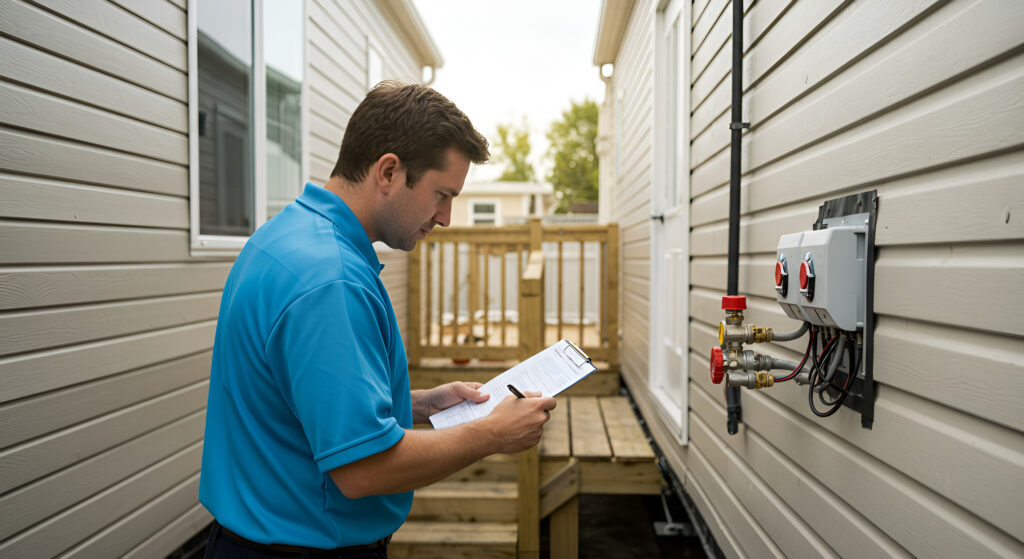
- Inspect pedestals, transformers, and grounding throughout the mobile home park.
- Note outdated equipment or safety issues that may require remediation.
Deferred maintenance in utilities can quickly turn into six-figure repairs, making this one of the most important inspection categories.
Download our FREE eBook on the Top 20 things to know BEFORE investing in mobile home parks!
3. Assess Home Conditions and Lot Layout
Evaluate both park-owned homes (POHs) and tenant-owned homes within the mobile home park.
For park-owned homes:
- Inspect interior and exterior condition.
- Note habitability issues, hoarding, or deferred maintenance.
- Confirm whether the seller holds proper titles.
For vacant lots in the mobile home park:
- Measure each lot.
- Determine what size homes will fit based on layout and setbacks.
- Confirm utilities present on each lot (water, sewer, electric).
Understanding infill potential is critical to underwriting upside.
4. Meet with Local Zoning Officials
An on-site visit to the mobile home park is the ideal time to meet directly with the local zoning department.
Key items to review:
- Setback requirements and density rules applicable to the mobile home park
- Zoning confirmation and permitted use
- Process and requirements for moving new or used homes in or out of the mobile home park
Request a zoning letter whenever possible. Zoning clarity protects your long-term business plan and infill strategy.
5. Visit the County or City Treasurer
Stop by the local treasurer’s office to obtain:
- A list of all mobile homes located in the mobile home park
- Ownership status of each home
- Any delinquent mobile home taxes tied to the mobile home park
This helps confirm park-owned home counts, ownership accuracy, and potential liabilities that may not appear in seller documentation.
6. Meet with the Property Tax Assessor
Property taxes are often the largest line item on a mobile home park P&L and are difficult to appeal post-closing.
During your visit:
- Discuss the current assessed value of the mobile home park
- Ask for a ballpark estimate of reassessment post-sale
- Understand local assessment practices for mobile home parks
This conversation can materially affect your underwriting assumptions.
7. Talk to Residents and On-Site Management
When appropriate, speak discreetly with a handful of residents in the mobile home park to understand:
- Utility outages
- Flooding issues
- Pest problems
- Management responsiveness
Also meet with the on-site manager of the mobile home park to discuss:
- Day-to-day operations
- Problem tenants
- Maintenance history
- Recurring costs
These conversations often reveal issues not captured in reports.
8. Evaluate Overall Mobile Home Park Condition and Curb Appeal
Walk and drive the entire mobile home park, ideally more than once and at different times of day.
Assess:
- Roads, drainage, and lighting throughout the mobile home park
- Landscaping and signage
- Abandoned vehicles or trash
- Overall pride of ownership
Poor curb appeal often signals deeper operational or cultural issues within a mobile home park.
9. Build an Estimated CapEx Budget
Use your on-site findings to create a realistic capital expenditure budget for the mobile home park, including:
General Mobile Home Park CapEx
- Roads
- Signage
- Fencing
- Tree trimming and landscaping
Occupancy-Related CapEx
- Rehabbing vacant park-owned homes
- Infill of vacant lots within the mobile home park
- Utility connections and setup costs
This budget should directly feed your pro forma.
10. Prepare a Post-Inspection Issue List for the Seller
Document items discovered at the mobile home park that were not known prior to going under contract and determine how to address them.
Common examples include:
- Electrical pedestals without proper grounding
- Clogged or damaged sewer lines
- Park-owned homes without titles
- Infrastructure repairs identified within the mobile home park
Decide whether to pursue repair credits or price reductions, keeping ROI, leverage, and cash-to-close in mind.
Final Thoughts
An on-site due diligence visit to a mobile home park should never be rushed. A quick drive-through is not enough.
Spend the time to walk the mobile home park, verify assumptions, and identify risks that could materially impact returns. No mobile home park is perfect, but disciplined on-site diligence allows you to price risk correctly and avoid surprises after closing.
Are you looking for MORE information? Book a 1-on-1 consultation with Andrew Keel to discuss:
- A mobile home park deal review
- Due diligence questions
- How to raise capital from investors
- Mistakes to avoid, and more!
Disclaimer:
The information provided is for informational purposes only and is not investment advice or a guarantee of any kind. We do not guarantee profitability. Make investment decisions based on your research and consult registered financial and legal professionals. We are not registered financial or legal professionals and do not provide personalized investment recommendations.