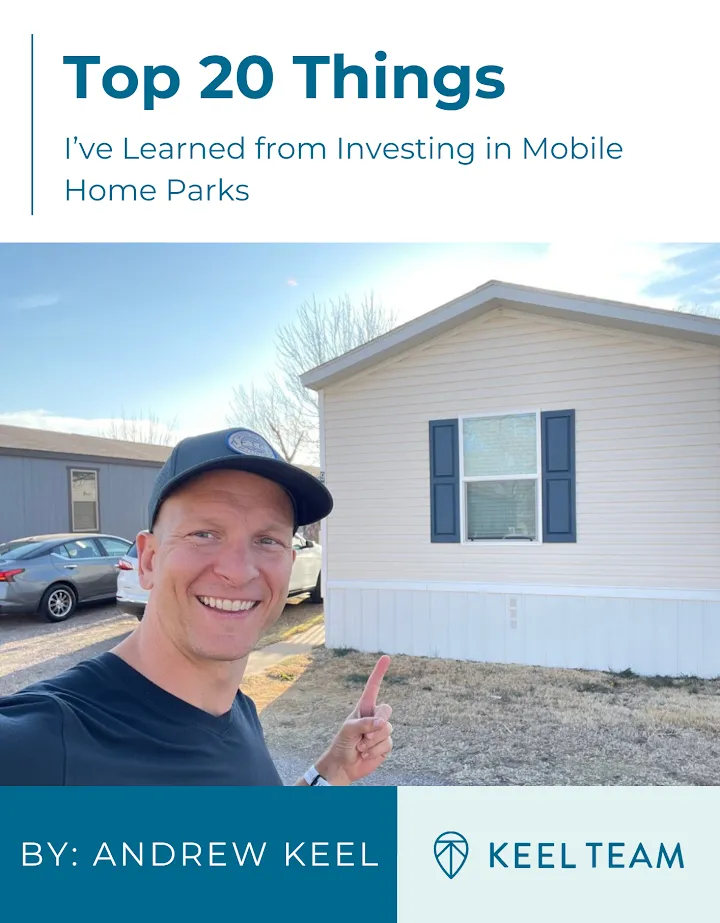
Mobile home parks and self-storage facilities are two of the more talked-about niches in commercial real estate, and passive investors researching alternatives to apartments or office buildings often find themselves comparing the two. Both have attracted attention for their relatively simple operating models and their resilience through different economic cycles. Yet they are quite different businesses underneath the surface.
This article offers an educational comparison of mobile home park investing and self-storage investing. The purpose is to help you understand how the two asset classes differ so you can think more clearly about which characteristics matter most to you as a student of real estate.
Want to learn more?
If you’re interested in learning more about how mobile home park investing works, our team is always glad to answer questions and share what we’ve learned. Reach out to start a conversation.
The demand behind each asset class comes from different places. A mobile home park provides something fundamental: housing. Residents live in the community, and for many households a mobile home park represents one of the most affordable paths to homeownership or stable residence. That connection to an essential need is a defining feature of the asset class.
Self-storage, by contrast, provides space for belongings rather than people. Demand tends to be driven by life events often summarized as the “four Ds” — divorce, dislocation, downsizing, and death — along with general accumulation of possessions and small-business needs. Storage is useful, but it is a discretionary service in a way that housing generally is not.
The nature of the tenancy
Tenancy looks very different across the two. In many mobile home parks, residents own their homes and rent only the land, or lot, beneath them. Moving a manufactured home is expensive and disruptive, which tends to make residency stable and turnover comparatively low. This dynamic is one reason mobile home park operators often emphasize long resident tenure.
Self-storage tenancy is typically month-to-month and far more transient. Customers can rent a unit for a few weeks or several years, and they can leave with relatively little friction. This flexibility is convenient for customers but means occupancy can move more quickly in both directions, requiring active marketing to keep units filled.
Operational differences
Both asset classes are often described as management-light compared with apartments, but the operational realities differ. A mobile home park where residents own their homes involves maintaining common infrastructure such as roads, water and sewer lines, and shared amenities, while the residents maintain their own homes. This can keep the operator’s maintenance footprint focused on the land and utilities rather than on individual dwellings.
Self-storage facilities require ongoing marketing, unit turnover, security, and customer acquisition, since the short-term nature of the leases means there is constant churn to manage. Many facilities rely heavily on online marketing and dynamic pricing. The physical maintenance can be modest, but the customer-acquisition engine rarely rests.
Supply and competition
Supply dynamics are a meaningful point of contrast. New mobile home parks are rarely built. Zoning restrictions, community opposition, and the economics of development mean the number of mobile home park communities has been relatively flat or declining for decades, even as demand for affordable housing persists. That constrained supply is central to why many investors find the asset class interesting.
Self-storage, on the other hand, can be built more readily where zoning allows, and periods of strong demand have historically prompted waves of new development. New supply in a given market can pressure occupancy and pricing at existing facilities, so location and local supply conditions matter a great deal.
Want to learn more?
We enjoy helping people understand the mobile home park asset class. If you’d like to explore the topic further, get in touch and we’ll help you learn more.
Core need: A mobile home park provides housing, an essential need; self-storage provides space for possessions, a more discretionary service.
Tenant stickiness: Resident-owned homes make mobile home park tenancy relatively stable; storage tenancy is typically month-to-month and more transient.
New supply: Very few new mobile home parks are developed, while self-storage can be built more readily where permitted.
Operational focus: Mobile home park operators focus on land, utilities, and community infrastructure; storage operators focus on marketing and continuous customer turnover.
Revenue driver: Lot rent underpins mobile home park income; unit rental fees underpin storage income.
Risk considerations for each
No asset class is without risk, and understanding the specific risks of each is part of a thoughtful comparison. Mobile home park risks can include aging infrastructure, regulatory changes affecting affordable housing, and the capital needed to fill vacant lots. Because the homes are hard to move, though, occupancy in a well-run mobile home park tends to be relatively durable.
Self-storage risks often center on new competing supply, sensitivity to local economic conditions, and the constant need to replace departing customers. Because leases are short, revenue can adjust quickly, which cuts both ways depending on market conditions.
Which lens matters most to you
Comparing mobile home park investing and self-storage investing is less about declaring a winner and more about understanding which characteristics align with what you value. If durable, housing-based demand and long resident tenure appeal to you, the mobile home park asset class has features worth studying. If you are drawn to a flexible, service-oriented model with faster-moving occupancy, self-storage may hold your interest.
Many experienced investors ultimately conclude that the operator matters as much as the asset class. A skilled operator with a clear plan and disciplined execution can navigate the challenges of either business, while a weak operator can struggle in a favorable one. As you compare the two, weigh not only the asset characteristics but also the quality and transparency of the people running the investment.
Continuing your education
Both mobile home parks and self-storage reward investors who take the time to understand how the underlying business actually works. If the mobile home park asset class interests you, keep studying the fundamentals: how lot rent economics function, how operators create value, and how risks are managed over a hold period. That foundation will serve you well no matter which niches you ultimately choose to explore.
Want to learn more?
If you’d like to keep learning about mobile home park investing, download our free educational eBook, The Passive Investor’s Guide to Mobile Home Park Investing. And if you have questions about the asset class, reach out any time—we’re always happy to help people learn more.
This article is for educational and informational purposes only. It is not investment, tax, or legal advice, and it is not an offer to sell or a solicitation of an offer to buy any security. Any such offer is made only through official offering documents to qualified investors. All investments carry risk, including the potential loss of principal. Consult your own advisors before investing.
Andrew Keel
Andrew is a passionate commercial real estate investor, husband, father and fitness fanatic. His specialty is in acquiring and operating manufactured housing communities. Visit AndrewKeel.com for more details on Andrew's story.