



St. Louis, MO
Jefferson County, PA
Youngstown, OH
Chicago, IL
Memphis, TN
Southern GA
Angola, IN
Ft. Wayne, IN
Western Iowa
NE Nebraska
SE Iowa
Warsaw, IN
Southeast, MI
Saegertown, PA
Vermillion, SD
Illinois – 5 Park Portfolio
Minnesota – 2 Park Portfolio
Ludington, MI
Columbia, TN
Interested in learning more about Passive Mobile Home Park Investing?
Interested in learning more about Passive Mobile Home Park Investing?

 Andrew Keel
When the economy starts showing cracks — rising unemployment, tightening credit, declining consumer confidence — most real estate asset classes feel the pressure. Apartment vacancy rises. Office buildings sit empty. Retail centers bleed tenants. But mobile home parks tend to behave differently, and understanding why matters to anyone evaluating where to put capital when economic headwinds pick up.
This post breaks down how mobile home parks perform during a recession, what historical data actually shows, and why operators and investors continue to view this asset class as one of the most recession-resistant in real estate.
The core driver of mobile home park resilience is simple: people always need somewhere to live, and during a recession, affordability becomes the dominant filter.
Mobile home parks serve working-class households living at or near their financial limits in good times. In a downturn, two things happen simultaneously: households that were renting apartments or buying starter homes get squeezed out of those options, and demand for affordable alternatives — like mobile home park lot rentals — increases.
This is the counter-cyclical demand dynamic that makes mobile home parks uniquely interesting. When unemployment rises, more people need affordable housing, not less. The pool of potential residents actually expands during recessions, not contracts.
Compare this to Class A apartments, which depend on professional-class renters with stable, above-median incomes. During a downturn, that renter cohort shrinks and vacancy climbs. Mobile home parks operate in a fundamentally different demand environment.
Historical performance data supports this thesis. During the 2008–2009 financial crisis — one of the worst recessions in modern U.S. history — mobile home park occupancy rates held remarkably steady compared to other commercial real estate sectors.
A few structural reasons stand out:
Operators who were active through 2008 consistently report that their mobile home park portfolios outperformed other real estate holdings — not because residents were immune to the downturn, but because the product was simply too affordable and too necessary to abandon.
A common misconception is that mobile home parks are “last resort” housing — a place people end up when all else fails. The reality is more nuanced.
Many mobile home park residents are long-term, stable community members who have chosen affordable homeownership as a deliberate lifestyle choice, not because they had no other options. They own their homes, maintain their lots, and build equity at a price point that works for their income.
That said, the affordability positioning does mean that during a recession, mobile home parks benefit from more household demand, not less. Families who lose homes to foreclosure, renters priced out of rising markets, and workers forced into lower-paying jobs all need affordable housing options — and mobile home parks are often at the top of that list.
This is why occupancy tends to stay high even when broader economic conditions deteriorate.
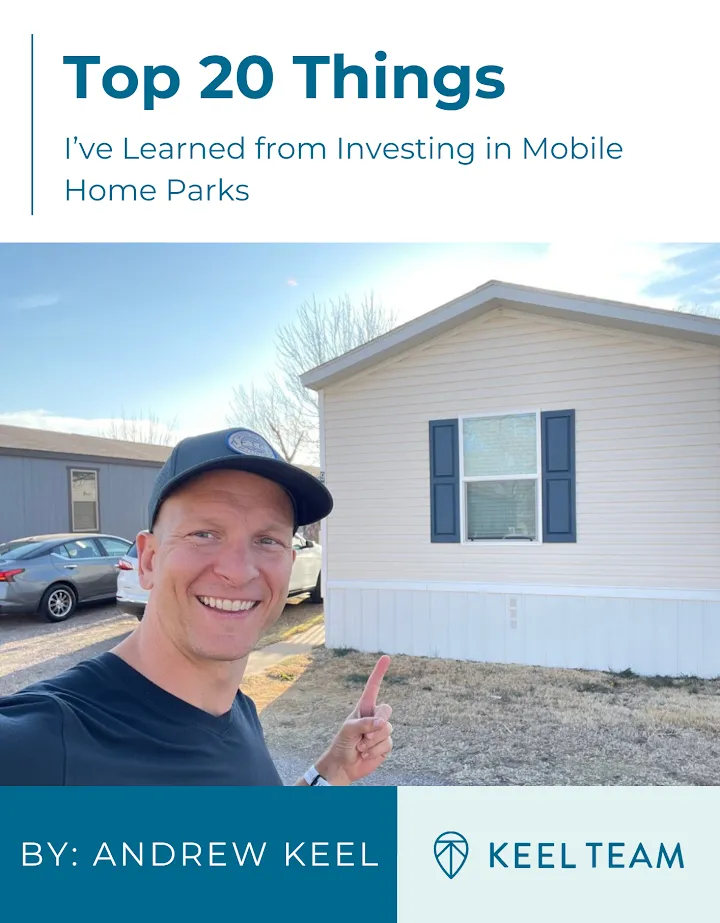
📘 Free eBook: Top 20 Things I’ve Learned from Investing in Mobile Home Parks
After years of acquiring and operating mobile home parks across the Southeast, we’ve distilled our biggest lessons into one practical, no-fluff resource. Download it and shortcut your learning curve.
One of the most practical questions operators ask when evaluating recession risk is: what happens to rent collections?
The answer depends on the market and operator practices, but experienced mobile home park operators generally report that collections hold better than comparable multifamily properties for several reasons:
None of this means mobile home parks are immune to collection issues during a severe downturn. But the structural protections — resident home ownership, low rent burdens, and the sticky nature of manufactured housing — create a meaningful buffer that most other asset classes lack. For more, see our mobile home park syndication explained.
Valuation in mobile home parks is primarily a function of net operating income (NOI) and cap rate. Understanding mobile home park investments at this level clarifies why values tend to hold reasonably well during recessions.
If occupancy stays high and collections hold, NOI stays stable. And because mobile home parks have become an increasingly recognized institutional asset class, cap rate compression has been a persistent trend over the past decade — meaning valuations have generally held firm even as economic conditions fluctuated.
The primary valuation risks in a recession are:
Well-run mobile home parks with tenant-owned homes and high occupancy entering a downturn are well-positioned to weather valuation pressure. Operators who fill vacant lots proactively before a downturn hits are in the strongest position — any remaining vacancy gets absorbed more easily when affordable housing demand spikes.
Experienced mobile home park operators do not just wait and hope their assets perform during a recession. They take deliberate steps to protect performance:
This is why understanding lot rent dynamics and local market fundamentals matters not just at acquisition, but as an ongoing operational discipline throughout a hold period.
Mobile home parks are not immune to economic downturns. No real estate asset is. But the structural characteristics of this asset class — affordable, necessity-based housing with sticky residents, constrained supply, low rent-to-income ratios, and demand that often increases when economic conditions worsen — make mobile home parks among the most resilient commercial real estate investments available.
For investors evaluating where to allocate capital in an uncertain economic environment, mobile home parks have consistently demonstrated that they perform differently than most alternatives. That is not marketing language — it is a function of who lives there, why they stay, and what they are paying.
If you are serious about understanding how mobile home park investments hold up through economic cycles, start with the fundamentals of how these assets are evaluated, underwritten, and operated. Our mobile home park investments overview is a good place to begin. For more, see our complete guide to mobile home park investing. For more, see our how to invest in mobile home parks.
📘 Want to Go Deeper? Get Our Free eBook
Top 20 Things I’ve Learned from Investing in Mobile Home Parks — a practical guide covering everything from due diligence to operations to what we wish we had known before our first acquisition. No fluff, just hard-won lessons.
Have questions about mobile home park investing? Reach out here — we are happy to talk through the fundamentals with anyone who is genuinely curious about this asset class.
View The Previous or Next Post