Wake Forest, NC — Mobile Home Park Investments
Part of our comprehensive Mobile Home Park Investing Guide
Wake Forest is one of the fastest-growing cities in North Carolina and one of the most compelling stories in the entire Raleigh-Durham-Chapel Hill MSA. From a population of roughly 12,000 in 2000, Wake Forest has grown to nearly 50,000 residents today — a staggering 300% increase in 25 years. This growth trajectory creates both opportunity and complexity for Raleigh-area mobile home park investors: intense demand for affordable housing, rising land values, and a rapidly evolving regulatory landscape.
Wake Forest Market Overview
Wake Forest sits 18 miles north of Raleigh on US-1 and Capital Boulevard, directly in the path of Raleigh’s expanding suburban sprawl. The town has attracted significant residential development across all price points, but median home values — now exceeding $420,000 — have created a substantial affordability gap for working-class households. Median household income is approximately $90,000, but the workforce serving Wake Forest’s commercial corridors, construction industry, and service sector earns considerably less.
Major employers with significant presence near Wake Forest include WakeMed Health, Wake County Public Schools, and the large commercial and retail corridor along Capital Boulevard/US-1. The Research Triangle Park complex is accessible in 40–50 minutes, drawing professional workers and creating ripple effects throughout the housing market.
Why Wake Forest for Manufactured Housing Investment
Wake Forest’s explosive growth creates a textbook affordable housing demand scenario. Home prices have far outpaced wage growth for the service and blue-collar workforce that makes the town function. Mobile home parks in and around Wake Forest serve this population directly — providing housing at $400–$550/month versus apartments at $1,500–$2,000/month or homes at $400,000+.
The investment challenge in Wake Forest is land value. As the town has grown, park land values have appreciated substantially, and some operators are evaluating exits — creating acquisition opportunities. Parks that can be acquired and operated through the current growth cycle have strong fundamental tailwinds. See also the guides for Raleigh, Durham, and Cary, and the North Carolina mobile home park investing guide.
📘 Free Guide: 20 Lessons from Mobile Home Park Investing
Want to shortcut your learning curve? This free resource covers the top 20 insights from years of buying and operating mobile home parks across the Southeast and Midwest — written for serious investors.
Local Lot Rent Data and Trends
Lot rents in the Wake Forest area range from approximately $400 to $560 per month — reflecting the town’s rapid appreciation and proximity to Raleigh’s premium housing market. Parks along Capital Boulevard and US-1 command the highest rents; properties in older sections of town or adjacent unincorporated Wake County areas are at the lower end. Annual rent growth is running 7–10% in this corridor, one of the strongest in the state.
Zoning and Permitting Landscape
Wake Forest has an active planning department managing its rapid growth, and manufactured housing communities operate under the town’s Unified Development Ordinance with specific standards for park size, setbacks, and utilities. Existing parks with established operations generally have strong legal standing. New park development within Wake Forest’s ETJ (extraterritorial jurisdiction) faces more scrutiny as the town tries to manage its growth character. Wake County’s zoning applies to properties outside Wake Forest’s jurisdiction. Investors should carefully verify zoning status and long-term land use designations for any acquisition target in this market.
Infrastructure: City Water and Sewer
Wake Forest Public Utilities manages an expanding water and sewer system serving the town and its growth areas. Given the pace of development, utility extensions have generally kept up with growth corridors. Most established parks within or near Wake Forest’s urban growth boundary are on city utilities. Parks in more rural Wake County areas may be on well/septic — verify through Wake County Environmental Services during due diligence.
Proximity to Raleigh-Durham MSA Employment
Wake Forest residents can reach Raleigh’s Capital Blvd employment corridor in 20–30 minutes, and the broader Research Triangle — Raleigh, Durham, Chapel Hill, Research Triangle Park — within 40–60 minutes. Wake County’s major healthcare, government, and technology employers are accessible from Wake Forest, making it a practical base for a broad cross-section of the workforce. Compare with Raleigh and adjacent markets Durham and Cary.
📚 Want the complete picture? Read our Mobile Home Park Investing: The Complete Guide for everything you need to know about investing in manufactured housing communities.
Frequently Asked Questions
Is Wake Forest still a good market for mobile home park investing given its rapid growth?
Yes — rapid growth is precisely what drives affordable housing demand. The faster Wake Forest grows, the wider the gap between average home prices and working-class affordability, which sustains demand for manufactured housing. The key is careful underwriting of land value and zoning risk alongside the strong operational fundamentals.
What’s the biggest challenge in acquiring Wake Forest mobile home parks?
Competition. Wake Forest parks are known to operators throughout the Triangle, and when they come to market, they attract attention quickly. Direct owner outreach and long-term relationship building are essential for sourcing off-market deals before they hit brokers.
Are Wake Forest parks at risk of redevelopment?
Parks on commercially valuable land — particularly along Capital Boulevard — face meaningful long-term redevelopment risk as the town grows. Parks on less commercially strategic locations have better long-term staying power. Investors should model both the operating scenario and the land exit scenario in their underwriting.
How does Wake Forest compare to Cary or Apex for mobile home park investment?
Wake Forest has more park inventory than Cary or Apex, which are more fully built-out. The growth dynamic in Wake Forest is also faster, creating stronger demand tailwinds. All three are strong Triangle-area markets with different risk/return profiles.
Want the Full Playbook?
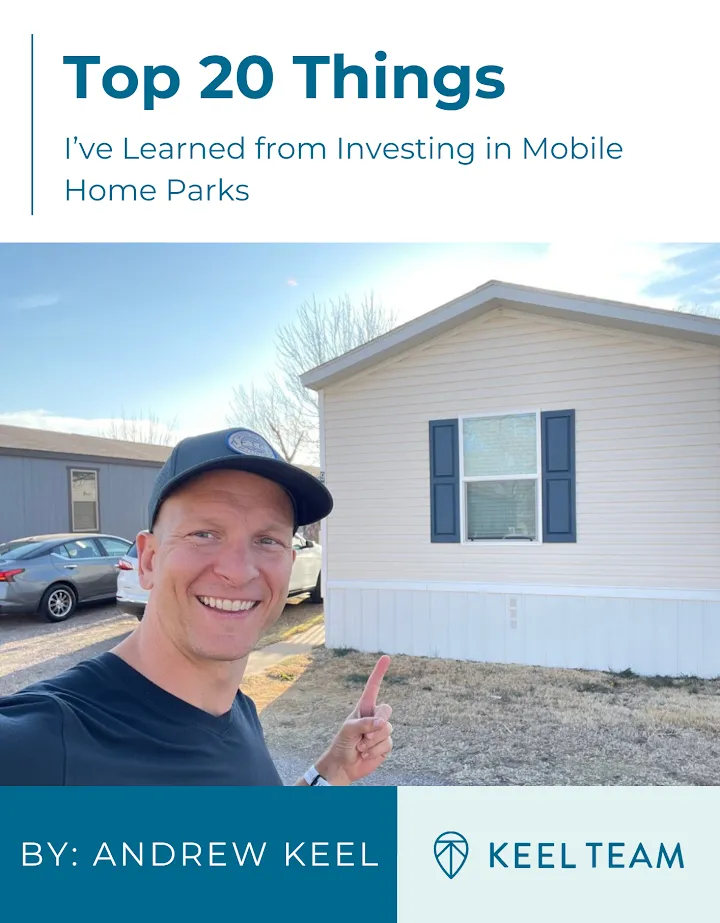
Download our free ebook — Top 20 Things Learned from Mobile Home Park Investing — covering deal sourcing, due diligence, operations, and more.
Related Markets: Raleigh, NC | Durham, NC | Cary, NC | Chapel Hill, NC | North Carolina Mobile Home Park Investing Guide