Sun Prairie, WI — Mobile Home Park Investments
Sun Prairie is one of Wisconsin’s fastest-growing cities, positioned directly east of Madison in Dane County along Highway 151. With a population now exceeding 40,000 — up from just over 20,000 in 2000 — Sun Prairie has transformed from a small satellite community into a significant Madison MSA suburb with its own employment base, retail infrastructure, and growing workforce housing demand.
This guide examines mobile home park investing in Sun Prairie, Wisconsin — covering demographics, economic anchors, lot rent data, zoning, utilities, and how Sun Prairie fits within the broader Madison MSA investment landscape.
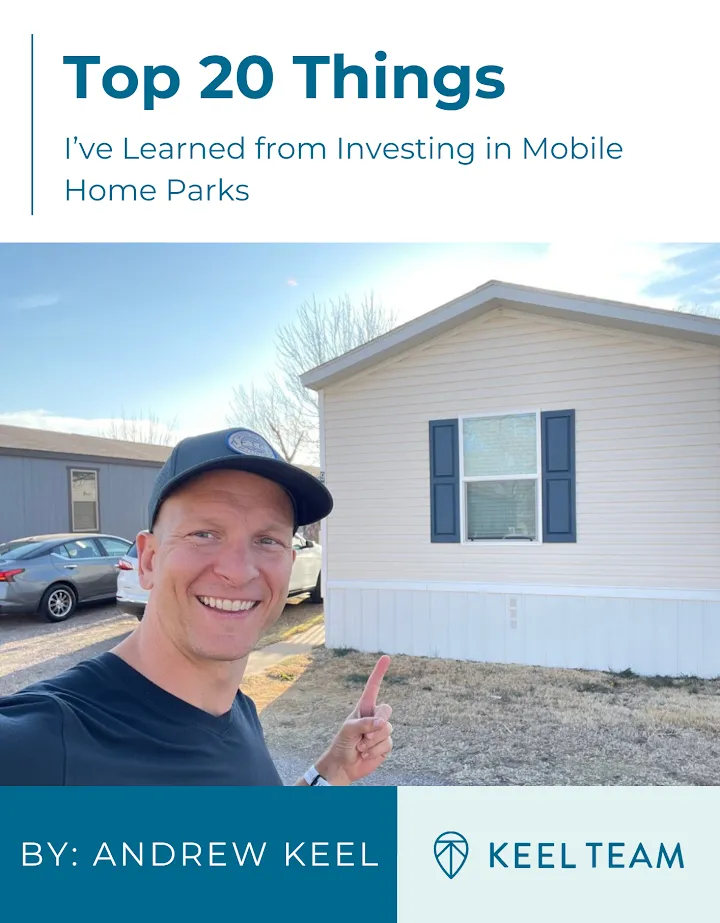
📘 Free Resource: Top 20 Things Learned from Mobile Home Park Investing
Before you evaluate any manufactured housing community, equip yourself with real operator knowledge. Andrew Keel distills years of mobile home park acquisitions into 20 practical lessons you won’t find in a textbook.
Sun Prairie Market Overview
Sun Prairie’s explosive growth over the past two decades reflects the broader Madison MSA expansion: as housing costs in Madison proper have escalated, residents and employers have pushed eastward along the Highway 151 corridor into Sun Prairie and Dane County’s eastern suburbs. The city’s population has doubled since 2000, making it one of the fastest-growing municipalities in Wisconsin — a title that brings both opportunity and challenge for affordable housing supply.
Median household income in Sun Prairie runs approximately $80,000, reflecting the mix of state government workers, university-connected professionals, insurance industry employees, and retail and service workers who call the city home. Median home values have risen sharply — now regularly exceeding $340,000 — creating a significant affordability gap for working-class and younger households entering the housing market.
Why Sun Prairie for Manufactured Housing Investment
Sun Prairie’s rapid growth combined with a constrained affordable housing supply makes it an attractive target for mobile home park investors. The city has grown primarily through single-family and mid-density residential development — both of which are priced above what a significant share of the local workforce can afford. Manufactured housing communities serve the essential housing need for the service workers, tradespeople, and government employees who work in Sun Prairie and the Madison metro but cannot afford conventional homeownership.
American Family Insurance, headquartered in Sun Prairie (the company occupies a major campus east of Madison), employs thousands and draws associated service sector jobs that need affordable housing nearby. The Wisconsin mobile home park investing guide provides state-level context for understanding Madison MSA dynamics.
Local Lot Rent Data and Trends
Lot rents in Sun Prairie range from approximately $420 to $520 per month as of 2025. The Madison MSA commands a premium over the Milwaukee MSA outer ring markets, driven by Madison’s strong economy anchored by the University of Wisconsin, state government, and a growing technology sector.
Sun Prairie specifically has seen strong lot rent growth — averaging 4–6% annually over the past five years — fueled by the city’s explosive population growth and the inability of conventional housing supply to keep pace. The nearby Madison market sets the ceiling, with Sun Prairie parks trading at slight discounts to in-city Madison parks while offering comparable operational profiles.
Zoning and Permitting Landscape
Sun Prairie operates under City of Sun Prairie zoning ordinances, which have been actively updated to accommodate rapid growth. Manufactured housing communities require appropriate zoning district classification, and the city’s Plan Commission reviews all new development and expansion proposals.
The challenge in Sun Prairie is that rapid growth creates pressure to redevelop older, lower-density parcels — including manufactured housing communities — for higher-density uses. Investors should carefully review zoning stability for any target park and assess whether long-term operations are protected or at risk of rezoning pressure. Well-located parks with strong community support and compliant operations are most protected in this environment.
Infrastructure: City Water and Sewer
Sun Prairie is fully served by municipal water and sanitary sewer systems managed by the City of Sun Prairie Utilities Commission. The water system draws from groundwater sources with treatment meeting state and federal standards. Sanitary sewer flows to the Madison Metropolitan Sewerage District for regional treatment.
The city’s utility infrastructure has been actively expanded to serve Sun Prairie’s growth areas, and parks within the city’s service area benefit from professional utility management. Investors in Sun Prairie parks should confirm connection status and review any utility capacity constraints related to the city’s rapid expansion.
Proximity to Madison MSA Employment Centers
Sun Prairie’s proximity to Madison’s employment core is its defining investment characteristic. American Family Insurance’s headquarters campus employs 4,000+ people directly in Sun Prairie. Downtown Madison — home to state government, the University of Wisconsin, and a dense healthcare and professional services sector — is 12–15 miles west via Highway 151.
Major Madison MSA employers within commuting range include: Epic Systems (Verona), the University of Wisconsin–Madison, UW Health, WPS Group, and the state government complex. Park residents in Sun Prairie can access this employment universe at a significant housing cost discount relative to Madison neighborhoods — a compelling value proposition that drives stable occupancy. Nearby manufactured housing markets include Madison, Fitchburg, and Middleton.
Frequently Asked Questions: Sun Prairie Mobile Home Park Investing
Q: Is Sun Prairie’s growth a positive or negative for mobile home park investors?
A: Primarily positive. Rapid growth maintains demand for affordable housing and supports lot rent growth. The risk is redevelopment pressure — rapidly growing cities sometimes rezone manufactured housing land for higher-density uses. Investors should assess zoning stability carefully.
Q: What is the American Family Insurance campus’s significance for park tenants?
A: AmFam’s campus employs thousands and generates significant ancillary employment (food service, maintenance, retail, healthcare) that is accessible to manufactured housing residents who can’t afford to live near Madison’s core. This employment anchor stabilizes park occupancy.
Q: How does Sun Prairie compare to Madison for park acquisition pricing?
A: Sun Prairie parks typically trade at moderate discounts to in-city Madison parks — lower per-lot prices that reflect the suburb vs. city dynamic — while offering comparable operational profiles and similar lot rent trajectories. This discount can represent favorable risk-adjusted returns.
Q: Are there manufactured housing communities in Sun Prairie today?
A: Yes. Sun Prairie has established manufactured housing communities that serve the workforce housing demand generated by the city’s employment base and Madison proximity. These are typically well-occupied given the city’s affordability gap.
📘 Free Resource: Top 20 Things Learned from Mobile Home Park Investing
Before you evaluate any manufactured housing community, equip yourself with real operator knowledge. Andrew Keel distills years of mobile home park acquisitions into 20 practical lessons you won’t find in a textbook.
