St. Charles, MO — Mobile Home Park Investments
St. Charles, Missouri is a historic river city of approximately 73,000 residents situated on the Missouri River, 20 miles west of downtown St. Louis. As the seat of St. Charles County — Missouri’s fastest-growing county — St. Charles combines a strong employment base, a vibrant historic district, and sustained population growth that creates durable demand for manufactured housing communities throughout the area.
St. Charles Market Overview
St. Charles was Missouri’s first state capital and retains a robust tourism and retail economy centered on its historic Main Street district. Modern economic drivers include a manufacturing corridor along I-70, a growing healthcare sector anchored by SSM Health St. Joseph Hospital, and a strong retail trade area that serves much of western St. Charles County. The city’s location at the convergence of I-70, I-64, and Highway 94 makes it a natural distribution and logistics hub for the St. Louis metro.
Median home prices in St. Charles have risen to the $275,000 to $350,000 range, driven by the county’s sustained growth. While more affordable than the outer St. Louis suburbs in some west county areas, these prices still represent significant cost burdens for service workers, manufacturing employees, and retirees — creating natural demand for manufactured housing alternatives.
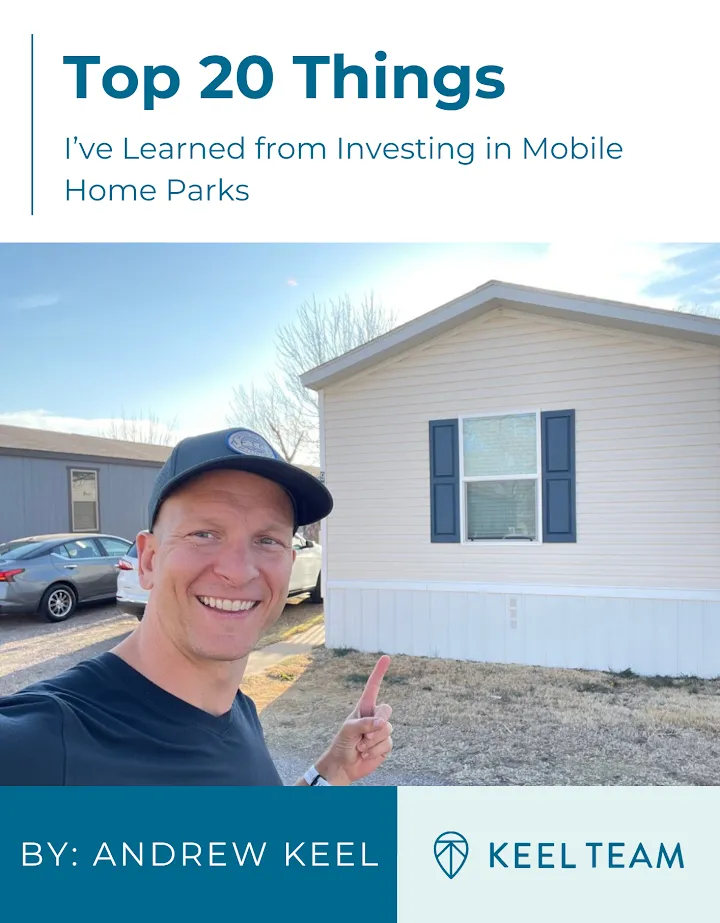
Free Resource: Top 20 Lessons from Mobile Home Park Investing
Before entering any new market, arm yourself with knowledge from operators who have done it. Andrew Keel’s free ebook covers 20 hard-won lessons from real mobile home park acquisitions across the country — covering everything from due diligence pitfalls to utility infrastructure surprises.
Why St. Charles for Manufactured Housing Investment
St. Charles offers manufactured housing investors a stable, working-class and middle-income employment base that sustains consistent occupancy. The manufacturing corridor along I-70 employs thousands of production workers, healthcare sector jobs at SSM Health and supporting clinics employ healthcare aides and support staff, and the retail trade area supports thousands of service workers — all of whom benefit from manufactured housing’s combination of home ownership and cost-effective lot rents.
St. Charles County’s long-term growth trajectory provides an additional tailwind: as the county continues to attract corporate relocation and residential development, the demand for attainable housing at all price points grows with the population. Manufactured housing communities in well-located corridors of St. Charles City and County are positioned to benefit from this growth dynamic.
Local Lot Rent Data and Trends
Lot rents in St. Charles and the surrounding county area range from $425 to $550 per month as of mid-2025, reflecting modest but consistent growth from the $360 to $460 range in 2020. Parks on city utilities with professional management and good access to transportation corridors achieve the upper range. Missouri’s lower cost of living compared to national averages means that even at $550 per month, manufactured housing offers significant value relative to apartment alternatives in the market.
Zoning and Permitting Landscape
St. Charles City and St. Charles County have developed comprehensive land use plans that restrict new manufactured housing community development in established suburban and growth areas. Existing parks are generally non-conforming uses with grandfathered rights, providing operators with effective supply protection. The city government maintains reasonable relationships with existing park operators who maintain their properties to local standards.
Infrastructure: City Water and Sewer
St. Charles is served by Missouri American Water and a municipal sewer system operated by the City of St. Charles. Public water and sewer service is available throughout the developed areas of the city and in many parts of the surrounding county. As with all Midwest markets, investors should verify utility connections before acquisition and understand the scope of any utility infrastructure on the property.
Proximity to St. Louis Employment Centers
- St. Charles Manufacturing Corridor: I-70 frontage — industrial, manufacturing, logistics
- SSM Health St. Joseph Hospital: St. Charles — healthcare employment anchor
- O’Fallon Corporate Corridor: 8 miles west — MasterCard, T-Mobile technology campuses
- St. Louis Lambert Airport: 15 miles east — airlines, logistics, cargo
- Downtown St. Louis: 20 miles east — financial services, government, healthcare
Related markets: O’Fallon, MO, St. Peters, MO, Wentzville, MO.
Frequently Asked Questions: St. Charles, MO Mobile Home Park Investing
Does St. Charles have an active manufactured housing market?
Yes. St. Charles City and the broader county have an established inventory of mobile home parks serving working-class and retirement households. The market is not dominated by institutional buyers, making direct-to-seller acquisition strategies viable for experienced operators.
What’s the demographic profile of mobile home park residents in St. Charles?
The resident mix typically includes manufacturing and distribution workers, healthcare support staff, retirees on fixed incomes, and young families seeking affordable home ownership. St. Charles’s diverse economy ensures this demand base is multi-sector and not overly dependent on any single employer.
Are there flood risk considerations for parks in this area?
Yes. St. Charles is located on the Missouri River, and portions of the city and county lie in FEMA-designated floodplains. Due diligence on any park acquisition must include a thorough review of FEMA flood maps, current flood insurance requirements, and the property’s historical flood experience. Well-located parks on elevated ground outside flood zones carry no unusual flood risk.
How does Missouri tax policy affect park ownership?
Missouri’s relatively low property tax rates compared to coastal states are a positive for park ownership economics. Real estate taxes on manufactured housing communities in St. Charles County are generally manageable as a percentage of NOI, contributing to favorable operating margins compared to higher-tax jurisdictions.
Free Resource: Top 20 Lessons from Mobile Home Park Investing
Before entering any new market, arm yourself with knowledge from operators who have done it. Andrew Keel’s free ebook covers 20 hard-won lessons from real mobile home park acquisitions across the country — covering everything from due diligence pitfalls to utility infrastructure surprises.