Phoenix, AZ — Mobile Home Park Investments
Phoenix, Arizona is one of the fastest-growing major cities in the United States — the fifth-largest city in the country with 1.6 million residents and a metro area exceeding 5.2 million people. For manufactured housing investors, Phoenix represents a high-growth, high-demand market where population pressure, rising conventional housing costs, and a warm climate have converged to create sustained demand for affordable housing options.
Phoenix Market Overview
The Phoenix-Mesa-Scottsdale Metropolitan Statistical Area is one of the most dynamic economies in the Sun Belt. From 2010 to 2025, the metro added over 1.5 million residents — growth driven by domestic migration from higher-cost states like California, New York, and Illinois. Phoenix’s population grew at roughly twice the national average rate during this period, driven by a combination of job creation, climate appeal, and substantially lower cost of living than coastal metros.
Phoenix’s economy has diversified significantly over the past two decades. Technology, semiconductor manufacturing, financial services, healthcare, and logistics now complement the traditional real estate and tourism sectors. TSMC’s $40 billion semiconductor fabrication facility investment in north Phoenix represents one of the largest industrial investments in US history and is expected to create thousands of high-wage jobs with broad supply-chain employment ripple effects.
Why Phoenix for Manufactured Housing Investment
Phoenix is one of the nation’s strongest markets for manufactured housing investment for several compounding reasons:
Severe affordability gap: Phoenix median home prices exceeded $400,000 by 2025 — a level many working families cannot reach. Manufactured housing fills a critical gap in the housing supply, particularly for service-sector workers, retirees on fixed incomes, and families making $40,000–$70,000 per year.
Warm climate and outdoor living: Arizona’s climate makes outdoor amenities like carports, patio areas, and community spaces particularly valuable in manufactured housing communities — features that differentiate well-managed parks and support resident retention.
Sun Belt migration: Phoenix continues to absorb large numbers of residents from higher-cost states, many of whom have sold high-value homes and seek affordable housing in a lower-tax environment — creating demand across multiple manufactured housing price points.
📘 Free Investor Resource
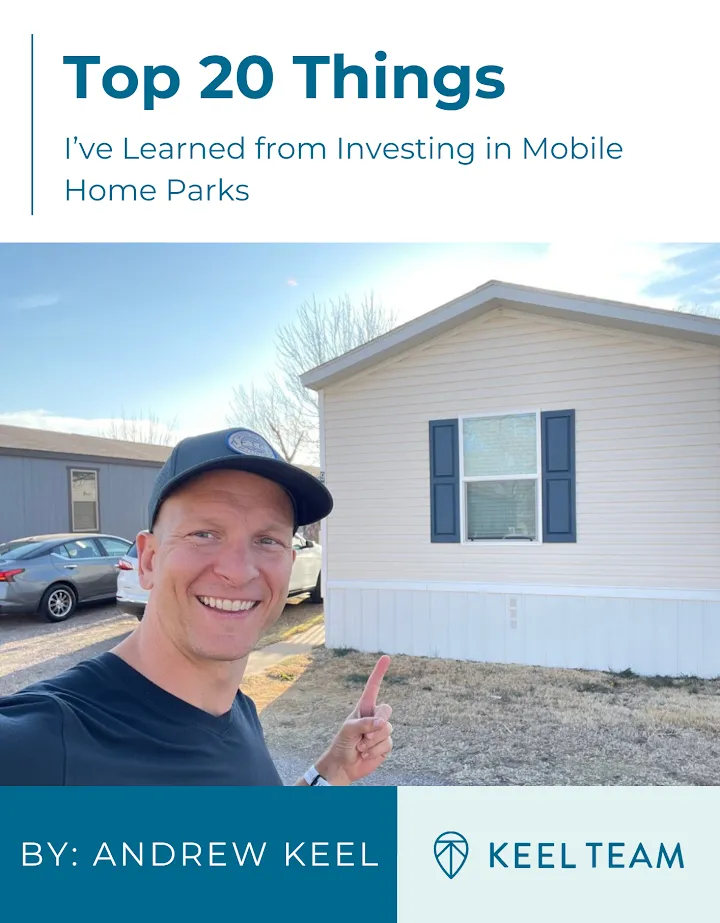
Download our free ebook: Top 20 Things Learned from Mobile Home Park Investing — hard-won lessons from real deals across the country.
Local Lot Rent Data and Trends
Manufactured home park lot rents in the Phoenix metro have increased dramatically over the past decade. In 2015, average lot rents in Phoenix-area communities ranged from $350 to $450 per month. By 2025, that range had climbed to approximately $700–$950 per month for well-located parks, with newer or amenity-rich communities occasionally exceeding $1,000 per month.
This rent growth has been driven by three factors: land value appreciation in the Phoenix basin, strong occupancy across most markets (85–95%+ in well-managed parks), and significant demand from residents who cannot afford conventional apartments, which now average $1,500–$1,900 per month across the metro.
Zoning and Permitting Landscape
Arizona has historically been more permissive toward manufactured housing than many states, and Phoenix and the surrounding municipalities have established zoning classifications that specifically accommodate manufactured housing communities. However, increasing land values have made rezoning existing park sites for higher-density uses an ongoing concern for residents and operators.
Arizona state law provides manufactured housing communities with certain operating frameworks, and the Arizona Department of Housing oversees licensing and regulation. Investors should familiarize themselves with Arizona’s mobile home park landlord-tenant statutes before acquisition.
Infrastructure: Water and Sewer
Phoenix is served by one of the most sophisticated municipal water systems in the arid West, drawing from multiple sources including the Colorado River (via the Central Arizona Project), Salt River Project reservoirs, and groundwater aquifers. Municipal water and sewer service is generally available to established manufactured housing communities throughout Phoenix, though older parks may have aging infrastructure requiring capital investment.
Proximity to Employment Centers
Phoenix’s employment geography is sprawling. Major employment nodes include:
- Downtown Phoenix — Government, healthcare (Dignity Health, Banner Health), and legal/financial services
- Airport and Sky Harbor area — Aviation, logistics, distribution (Amazon, FedEx)
- TSMC North Phoenix campus — Semiconductor manufacturing, thousands of construction and operational jobs
- Intel Chandler campus — Major technology manufacturing employer in the southeast valley
- State Farm campus (Tempe) — 8,000+ employees in financial services
- Mayo Clinic (Scottsdale) — World-class healthcare employment anchor
Frequently Asked Questions: Mobile Home Park Investing in Phoenix, AZ
How competitive is the Phoenix manufactured housing investment market?
Extremely competitive. Phoenix is one of the most actively traded manufactured housing markets in the country. Institutional operators, REITs, and sophisticated regional buyers all actively pursue Phoenix-area parks. Cap rates have compressed significantly, with stabilized parks often trading at 4.5–6% cap rates depending on location, lot count, and infrastructure quality.
Are there active manufactured housing communities in Phoenix proper?
Yes. Despite the urban density of Phoenix, numerous manufactured housing communities operate within city limits, particularly in west and south Phoenix, as well as along major corridors including 35th Avenue, Van Buren Street, and other arterials. Many are well-established communities with long operating histories.
What is the regulatory environment for park closures in Arizona?
Arizona law requires manufactured housing park owners to provide residents with advance notice before closure, and there are relocation assistance provisions that apply in certain closure scenarios. This is an important factor in underwriting community value and evaluating exit strategies.
How does Phoenix’s heat affect manufactured housing communities?
Heat is a significant operational consideration. Parks in Phoenix need robust carport coverage, functional HVAC systems in all units, and shaded community spaces. Well-managed communities that address heat-related resident needs tend to have lower turnover and higher satisfaction scores — both of which support long-term investment performance.
📘 Free Investor Resource
Download our free ebook: Top 20 Things Learned from Mobile Home Park Investing — hard-won lessons from real deals across the country.
Phoenix is the anchor city of the Phoenix-Mesa-Scottsdale Metropolitan Statistical Area. Explore related guides: Mesa, AZ, Scottsdale, AZ, Chandler, AZ, and Tempe, AZ.