Kenosha, WI — Mobile Home Park Investments
Part of our comprehensive Mobile Home Park Investing Guide
Kenosha, WI Mobile Home Park Market Overview
Kenosha occupies a unique geographic position in the Midwest: situated on the western shore of Lake Michigan, it straddles the Chicago and Milwaukee metropolitan areas, lying just 35 miles south of Milwaukee and 60 miles north of downtown Chicago. With a population of approximately 100,000, Kenosha is Wisconsin’s fourth-largest city and one of its most dynamic economic growth stories of the past decade.
Kenosha’s position in the Chicago-Milwaukee I-94 corridor gives it access to two major metropolitan labor markets simultaneously. Residents can commute to both cities, and major employers from both metros have established operations in Kenosha, creating an unusually broad employment base for a city its size.
📘 Free Investor Education
Before you underwrite a Wisconsin mobile home park deal, read our team’s key lessons from years of acquisitions across the Midwest and Southeast.
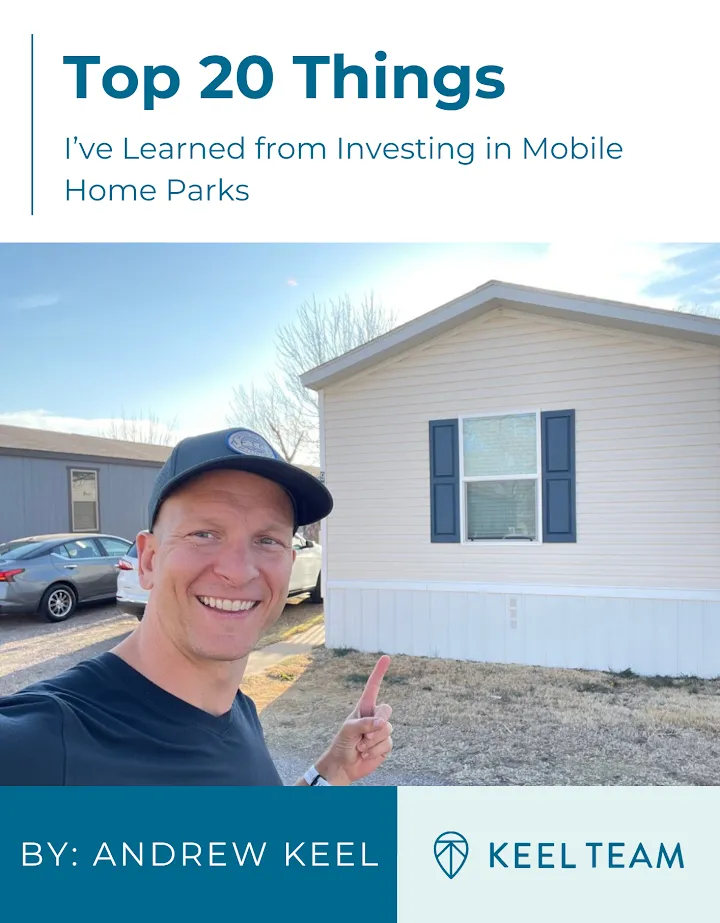
Download: Top 20 Things Learned from Mobile Home Park Investing →Why Kenosha for Mobile Home Park Investing?
- Dual Metro Access: Kenosha residents can commute to both Chicago and Milwaukee job markets. Amazon’s fulfillment center, Uline’s massive North American headquarters, and Snap-on Tools all anchor major Kenosha employment. This dual-market access provides an employment safety net that single-market cities lack.
- Amazon and E-Commerce Logistics: Kenosha has become a key node in the Chicago-area e-commerce logistics network. Multiple large fulfillment and distribution centers have opened in the past five years, creating thousands of stable working-class jobs that directly support mobile home park tenant demand.
- Uline Headquarters Effect: Uline’s 1,000+ acre campus in Pleasant Prairie (adjacent to Kenosha) employs thousands and has catalyzed significant supporting commercial and residential development, adding housing demand pressure.
- Chicago Affordability Escape Valve: Kenosha’s housing costs are dramatically lower than suburban Chicago (median home price ~$280,000 vs. $380,000+ in Lake County, IL). This price differential has driven sustained population growth as Chicago metro residents seek affordable living with preserved city access via Metra rail.
Lot Rents and Cap Rates
- Lot Rents: $400–$480/month for well-maintained communities in Kenosha city and Pleasant Prairie; older parks or communities on the city fringe may be $340–$400/month with upside potential.
- Cap Rates: Kenosha typically offers better going-in yields than Milwaukee or Madison. Stabilized assets trade at 6.5–8.5%; value-add deals may offer 8.5–10%+ going-in.
- Occupancy: Strong employment base and housing demand support 88–95% occupancy in well-run communities. The I-94 corridor’s logistics boom is a consistent occupancy tailwind.
Wisconsin Regulatory Environment
Wisconsin’s manufactured housing regulations are governed by Chapter 66 of the Wisconsin Statutes and the Wisconsin Department of Safety and Professional Services. Key points for Kenosha operators:
- Eviction Process: Wisconsin requires a 5-day notice for non-payment of rent before filing for eviction (small claims). The process through Kenosha County Circuit Court typically takes 4–8 weeks for non-contested cases.
- Rent Control: Wisconsin has no statewide rent control, and state law (Wis. Stat. §66.1015) prohibits local municipalities from enacting rent control ordinances — a landlord-friendly feature.
- Park Closure Notice: Wisconsin requires 180 days’ advance notice before closing a manufactured housing community, providing residents with meaningful transition time.
- Infrastructure: Most of Kenosha city and Pleasant Prairie are served by City of Kenosha Water Utility and sewer. Always verify connectivity at the community level.
📚 Want the complete picture? Read our Mobile Home Park Investing: The Complete Guide for everything you need to know about investing in manufactured housing communities.
Frequently Asked Questions
How does Kenosha’s market compare to Racine for mobile home park investing?
Kenosha and Racine are adjacent markets on the Lake Michigan shoreline, 10 miles apart. Kenosha has recently outperformed Racine on employment growth thanks to Amazon and the logistics boom. Both offer similar cap rates (6.5–8.5%) but Kenosha’s job growth trajectory gives it a slight edge for new acquisitions in the near term.
Is Kenosha safe from economic downturns given its industrial base?
Kenosha’s diversified employment — logistics, manufacturing, healthcare, and service sectors across two metro markets — provides better recession resilience than single-industry towns. E-commerce logistics, in particular, has proven relatively recession-resistant and has grown through economic downturns. No market is immune, but Kenosha’s employment diversity is a positive factor.
What’s the minimum park size to target in Kenosha?
In a market like Kenosha — with competitive buyer interest from both Chicago and Milwaukee investors — targeting 70+ lots gives you the scale for operational efficiency, better debt financing terms, and adequate coverage of professional management costs. Communities under 40 lots are harder to finance and to manage profitably at market management fees.
See also: Wisconsin State Guide | Milwaukee | Racine
📘 Go Deeper on Midwest Market Investing
Midwest markets like Kenosha have unique dynamics — cold-climate maintenance costs, logistics employment, and Chicago metro spillover effects. Our free guide helps you navigate all of it.
Read: Top 20 Things Learned from Mobile Home Park Investing →