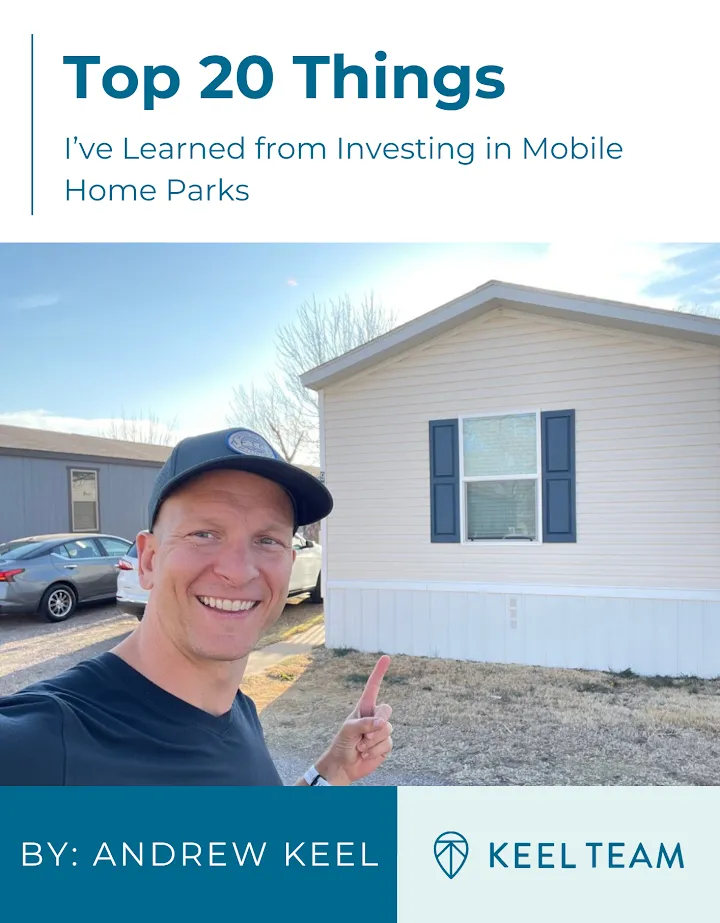

Howard, WI — Mobile Home Park Investments
Howard, Wisconsin is the Green Bay MSA’s fastest-growing community, a village that has absorbed a significant share of northeast Wisconsin’s residential expansion over the past decade and shows no signs of slowing. Located northwest of Green Bay proper in Brown County, Howard offers new residential development, strong school district performance, and access to the broader Green Bay employment base — a combination that has driven 28% population growth since 2010 and created sustained demand for all housing types, including manufactured housing communities.
Howard Market Overview
Howard’s population has grown from approximately 16,600 in 2010 to around 21,300 today, making it one of the fastest-growing communities in Wisconsin’s Fox Valley corridor. The growth is driven by new residential development — Howard has permitted more housing units per capita than almost any other Brown County community in the past decade. The village’s economy is primarily residential-service oriented, with major employment coming from the broader Green Bay metro’s manufacturing, healthcare, and logistics sectors accessible via Hwy 29 and I-43.
Median household income in Howard is approximately $74,000, reflecting a mix of manufacturing workers, healthcare professionals, and young families who have chosen Howard for its newer housing stock and school district. The village continues to attract families from Green Bay’s urban core and older suburbs who want more modern infrastructure at competitive price points.
Why Howard for Manufactured Housing Investment
Howard’s rapid growth creates manufactured housing demand from two directions. First, the general housing cost escalation that accompanies rapid growth (median home prices now over $300,000) prices out a segment of the workforce that wants to live in Howard for its schools and community amenities. Second, the service workforce that supports Howard’s expanding residential base — construction workers, retail employees, school staff, healthcare aides — earns wages that make manufactured housing a practical choice. Well-run parks in Howard benefit from strong occupancy driven by both dynamics.
The village’s growth orientation means infrastructure is modern and expanding, reducing the regulatory and infrastructure risk that affects older, declining markets. Building manufactured housing in a growing suburb generally produces better long-term outcomes than trying to stabilize parks in stagnant markets.
Local Lot Rent Data and Trends
Howard lot rents have tracked the broader Green Bay MSA upward trend but with slightly stronger momentum given the village’s growth profile. Starting at approximately $240/month in 2015, Howard-area parks are now achieving $410–420/month in 2025 — about 70–75% growth over the decade. The trajectory reflects genuine demand pressure: Howard’s population growth has not been matched by manufactured housing supply growth, creating favorable occupancy conditions for existing operators. Value-add investors who can bring below-market rents to current levels have an opportunity to capture significant NOI improvement relatively quickly.
Zoning and Permitting Landscape
Howard Village has an active planning and zoning department managing one of Wisconsin’s most dynamic residential growth corridors. The village has been proactive about infrastructure investment to support growth and generally takes a pragmatic approach to housing diversity, including manufactured housing. Permit timelines for home placements are typically 3–6 weeks for routine work. The village’s growth orientation means it welcomes investment that improves housing stock quality — operators bringing in newer, HUD-code homes find a cooperative permitting environment.
Infrastructure: City Water and Sewer
Howard is served by municipal water and sewer throughout the village, with active system expansion to support new development. The village’s infrastructure is newer than many Green Bay-area communities, reflecting its rapid development history. Parks within Howard’s municipal boundaries are connected to city systems. The newness of much of Howard’s infrastructure means lower deferred maintenance risk for utility connections compared to older communities in the metro. Investors should still verify connection details and main sizes during due diligence.
Proximity to Green Bay MSA Employment Centers
Howard’s position northwest of Green Bay places it on the primary growth corridor for the metro. Hwy 29 and the Oneida Nation corridor provide access to Green Bay’s employment base in 15–25 minutes. Ashwaubenon’s commercial/entertainment hub is 15 minutes southeast. De Pere’s manufacturing corridor is 20–25 minutes south. The I-43 interchange near Howard provides access to the Fox Cities (Appleton) employment corridor approximately 40 minutes south, expanding the practical employment access for Howard residents. Green Bay’s largest employers — Bellin Health, Schneider National, KI Furniture, and the paper industry — are all within reasonable commute distance.
See also: Green Bay, WI | Suamico, WI | Ashwaubenon, WI | Wisconsin Guide
Frequently Asked Questions
- What makes Howard attractive compared to other Green Bay suburbs?
- Howard’s newer infrastructure, strong school district (Howard-Suamico School District), and continued growth trajectory make it the Green Bay MSA’s most dynamic market. New residential development continues at a high rate, indicating sustained long-term demand.
- Are there manufactured housing communities in Howard currently?
- Yes, Howard has established manufactured housing communities that have benefited from the village’s growth. These parks tend to be well-occupied due to strong demand. New park development would require identifying undeveloped land in an area where residential competition for land is fierce.
- What financing options are available for Howard park acquisitions?
- Standard manufactured housing community financing applies: CMBS lenders, Fannie Mae’s MH Advantage program, community bank portfolio loans, and seller financing. Howard’s strong market fundamentals make institutional financing more accessible than in slower-growth markets. Target parks with 70+ lots for the best financing terms.
- How does Howard’s growth affect long-term park valuations?
- Positively. Growing communities with strong employment access and school districts have demonstrated better long-term rent and value appreciation than static or declining markets. Howard’s growth trajectory supports an investment thesis with both strong current yield and meaningful appreciation potential.
Internal links: Green Bay, WI | Suamico, WI | De Pere, WI | Wisconsin Guide
