
Elgin, SC — Mobile Home Park Investments
Elgin, South Carolina is a small but growing community at the northeastern edge of the Columbia metropolitan area, straddling the Kershaw-Richland County border along US-1 and SC-97. With a population of approximately 2,500–3,000 and a location that puts residents within 30–40 minutes of both Columbia’s employment core and the Camden submarket, Elgin occupies an interesting niche: affordable suburban fringe pricing with above-average employment market accessibility. For manufactured housing investors looking beyond the obvious Columbia MSA plays, Elgin offers the kind of off-market, family-owned community opportunities that are increasingly scarce in more competitive submarkets.
Elgin Market Overview
Elgin’s community has expanded meaningfully as Columbia’s suburban growth pushed northeast along the US-1 corridor. The town is small and largely residential in character, but the surrounding trade area — encompassing portions of Richland County’s northeast quadrant and Kershaw County’s western edge — draws from a workforce that commutes to Columbia, Fort Jackson, Camden, and the I-20 distribution belt. The area’s housing stock is a mix of rural residential, manufactured homes on individual lots, and small manufactured housing communities that serve the workforce-income households attracted by relatively affordable land and access to Richland and Kershaw County school systems.
Income demographics in the Elgin area reflect the rural-suburban fringe character: median household income runs approximately $45,000–$55,000, with significant representation from manufacturing, construction, government, and logistics employment sectors. This income profile creates a durable manufactured housing demand base that conventional apartment development — concentrated closer to Columbia proper — does not serve effectively.
Why Elgin for Manufactured Housing Investment
Elgin’s investment case rests on location efficiency and off-market opportunity. The community’s position between Columbia and Camden means tenants can access both employment markets, effectively doubling the relevant job base compared to a more isolated rural market. Communities here are typically smaller, older, and family-owned — conditions that favor direct-to-owner acquisition strategies and create opportunities for operational improvement post-acquisition.
The town’s gradual growth trajectory also provides modest organic lot rent upside as the surrounding market appreciates. Unlike a stagnant or declining rural market, Elgin benefits from its connection to Columbia’s broader growth story while retaining the below-market acquisition pricing of a secondary community.
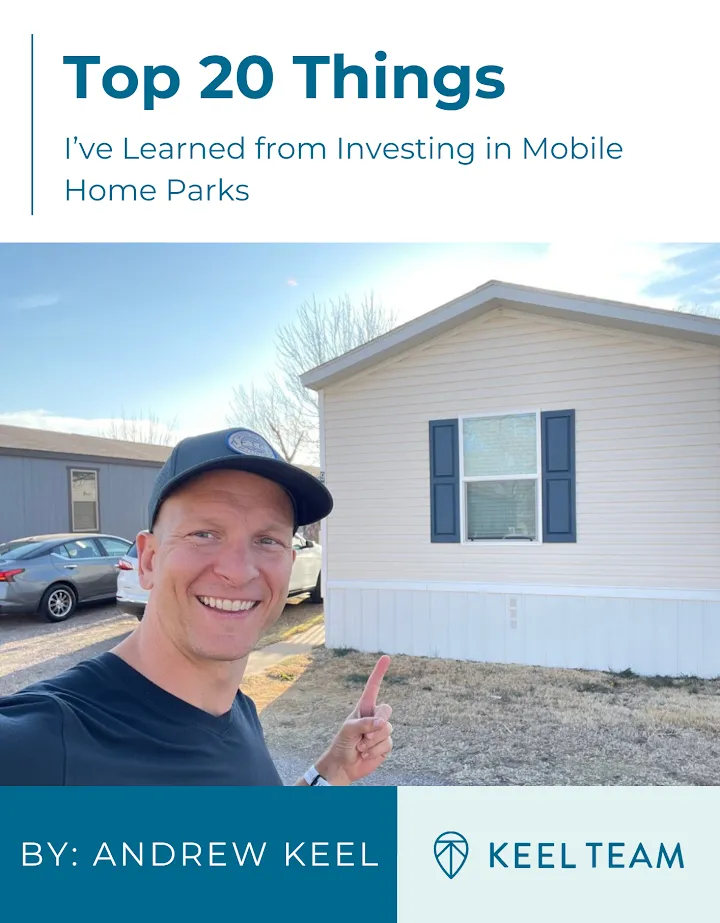
📘 Free Resource: Top 20 Things Learned From Mobile Home Park Investing
Download our free ebook and learn the key lessons from years of acquiring and operating mobile home parks across the Southeast and Midwest — including what separates winning markets from ones to avoid.
Local Lot Rent Data and Trends
Lot rents in Elgin-area mobile home parks have moved from approximately $265/month in 2015 to $330–$355/month in 2025 — a roughly 30% increase from a low base. This trajectory is consistent with Kershaw County’s general housing market appreciation, though it lags the Columbia-adjacent MSA communities significantly in absolute terms. The upside case for new operators is meaningful: a community charging $340/month average lot rent in a market where Columbia suburbs are at $420–$450+ has substantial pricing power available through gradual, value-justified rent increases tied to infrastructure and management improvement.
Zoning and Permitting Landscape
Elgin straddles two county jurisdictions. Richland County’s portion is governed by county zoning ordinances that are well-established and protective of existing manufactured housing communities. Kershaw County’s regulations, covering the eastern portion of the Elgin community, are more permissive in rural residential areas but require verification at the parcel level. Elgin itself is a small municipality with limited regulatory infrastructure — most land use matters are handled at the county level. Replacement home permitting is generally straightforward through either county.
Infrastructure: City Water and City Sewer
Infrastructure is the key due diligence variable in Elgin. Communities within the Elgin municipal service area may have town water connections, but many properties in the broader community rely on Richland or Kershaw county utility infrastructure — or private wells and septic systems. Given the area’s rural fringe character, private utility systems are more common here than in Columbia proper, and investors should evaluate utility infrastructure with particular care. Budget for utility upgrade capital on any community with aging well or septic infrastructure, and verify current compliance with DHEC standards.
Proximity to Columbia MSA Employment Centers
Elgin residents can reach Fort Jackson in approximately 30 minutes via I-20, downtown Columbia in 35–40 minutes, and Camden in 20–25 minutes via US-1. The I-20 distribution belt between Columbia and Camden provides logistics and manufacturing employment that is accessible without a Columbia-urban commute. Richland County school district access is available to Elgin residents on the Richland County side of the community boundary, which is a meaningful amenity for families.
Related pages: Columbia, SC | Camden, SC | Blythewood, SC | South Carolina guide
Frequently Asked Questions
What’s the minimum community size worth considering in Elgin?
Given the smaller market and lower absolute rents, we’d suggest a minimum of 50–60 lots for operational viability. Below that threshold, the fixed cost overhead of professional management and maintenance becomes difficult to absorb on the income generated. Smaller communities can work for local owner-operators with low overhead but represent challenges for outside investors.
Is Elgin on any institutional investor’s radar?
No — which is precisely the opportunity. Markets of this size and character are below the threshold for institutional manufactured housing platforms, meaning competition for acquisitions comes exclusively from local and regional buyers. That’s a meaningful competitive advantage for investors willing to work the off-market channel.
What value-add strategies work best in Elgin-type markets?
The most effective strategies are: infrastructure investment (road paving, utility upgrades, electrical pedestal replacement) paired with modest rent increases, transitioning park-owned homes to tenant-owned, and improving management systems and community standards to reduce turnover and attract more stable tenants.
How do Elgin markets handle economic downturns?
Rural-fringe manufactured housing communities tend to show resilient occupancy during downturns, as tenants have fewer alternative housing options and lower mobility than urban renters. The key risk is employment market concentration — if a major local employer closes, it can meaningfully impact occupancy. Diversified employment access (as Elgin has with both Columbia and Camden markets) mitigates this risk.
📘 Free Resource: Top 20 Things Learned From Mobile Home Park Investing
Download our free ebook and learn the key lessons from years of acquiring and operating mobile home parks across the Southeast and Midwest — including what separates winning markets from ones to avoid.
