Cleveland, Ohio — Mobile Home Park Investments
Cleveland, Ohio is a study in contrasts: a rust belt city in sustained revitalization, anchored by one of the world’s foremost medical complexes and a diversifying economy, yet still grappling with population loss and affordable housing pressures. For mobile home park investors, the Cleveland-Elyria metropolitan statistical area — home to 2.1 million residents — represents a market where strong employment anchors, stable workforce demand, and historically low lot rents create compelling value-add opportunities.
Cleveland Market Overview
Cuyahoga County anchors the Cleveland metro, with the City of Cleveland serving as the county seat and regional economic hub. Cleveland’s population has declined from its 1950 peak of 900,000 to roughly 370,000 today, but the metro as a whole has remained stable, sustained by suburban growth in communities like Strongsville, Parma, and Lakewood.
The city’s economic foundation rests on healthcare and life sciences. Cleveland Clinic, with 70,000+ employees globally and 26,000 locally, is the metro’s single largest employer. University Hospitals, MetroHealth Medical Center, and the Cleveland VA Medical Center add tens of thousands more healthcare jobs. Beyond healthcare: KeyCorp, Progressive Insurance, Sherwin-Williams, and Parker Hannifin maintain major presences, collectively employing tens of thousands. This employment base supports consistent workforce housing demand.
📘 Free Investor Resource
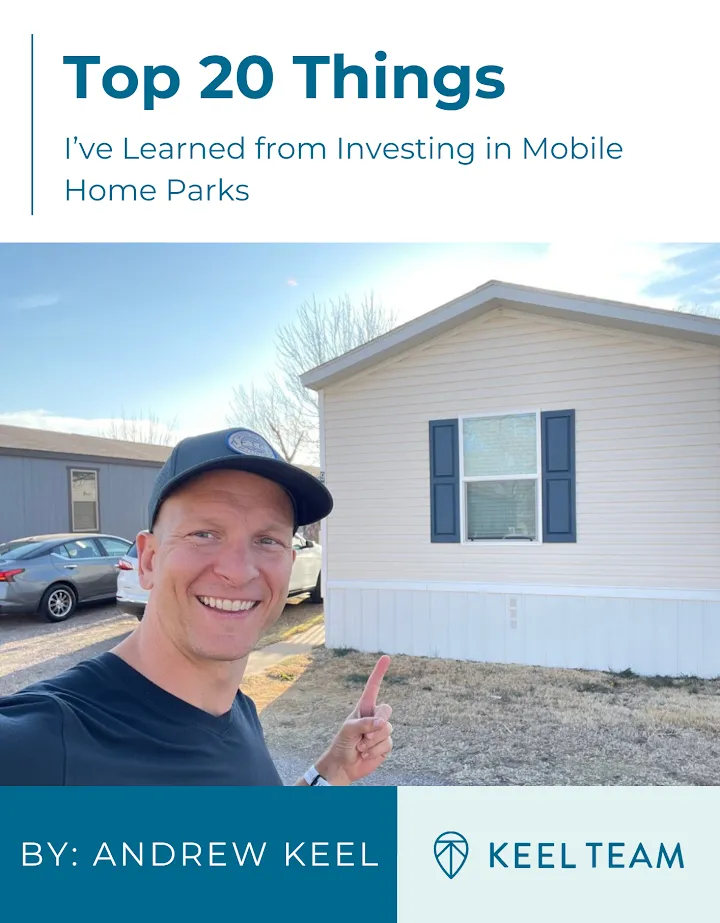
Download our free guide: Top 20 Things I’ve Learned from Mobile Home Park Investing — real lessons from deals in the field, no fluff.
Why Cleveland for Manufactured Housing Investment
Cleveland’s manufactured housing market offers a different value proposition than high-growth Sunbelt markets: stability over appreciation. Key investment advantages include historically below-market lot rents (significant upside through normalization), a large workforce population priced out of homeownership, and Ohio’s landlord-friendly regulatory environment — no state rent control, straightforward manufactured home community statutes under Ohio Revised Code Chapter 3733.
The metro’s suburban ring — particularly Cuyahoga, Summit, and Lorain counties — contains a significant inventory of manufactured communities, many owned by aging operators who haven’t actively managed rents or infrastructure. These represent classic value-add targets. Access to major I-90, I-71, and I-480 corridors ensures residents can reach employment centers throughout the metro.
Local Lot Rent Data and Trends
Lot rents in the Cleveland metro have risen from approximately $265/month in 2015 to $390–$415/month in well-operated 2025 communities. Value-add parks with legacy owners may still show rents in the $280–$340 range — below market by 20–30% — representing immediate upside for active operators. Communities on city utilities in established suburban locations (Parma, Strongsville) command the upper end of this range. Urban Cleveland communities trend lower due to neighborhood demographics.
Zoning and Permitting Landscape
Cleveland’s zoning code includes manufactured home community districts that govern existing operations. Ohio’s statewide preemption statute limits the ability of municipalities to apply zoning that effectively prohibits manufactured housing, providing some regulatory protection for existing communities. New community entitlements in Cuyahoga County’s built-out suburban ring are difficult to obtain, reinforcing the value of existing permitted communities. Buyers should verify zoning compliance, utility permits, and any outstanding municipal code violations during due diligence.
Infrastructure: City Water and Sewer
Cleveland Water and the Northeast Ohio Regional Sewer District (NEORSD) provide comprehensive utility coverage across Cuyahoga County and much of the broader metro. For mobile home park investors, city water and sewer connectivity is a fundamental underwriting criterion. Communities within the NEORSD service area benefit from one of the most extensive regional sewer systems in the Midwest, eliminating private septic and lagoon risks that represent significant capital liability.
Proximity to Metro Employment Centers
Cleveland’s healthcare corridor — anchored by Cleveland Clinic’s main campus on Euclid Avenue and University Hospitals’ campus adjacent to Case Western Reserve University — employs tens of thousands within the city. The suburb-to-city commute is supported by regional transit (Greater Cleveland RTA) and I-90, I-71, and I-480. Suburban employers including Progressive Insurance (Mayfield Village), Hyland Software (Westlake), and Nordson (Westlake) provide additional suburban employment anchors accessible from manufactured communities throughout Cuyahoga County.
FAQ: Mobile Home Park Investing in Cleveland, Ohio
Q: Is Cleveland a good market for mobile home park investing?
A: Yes, with the right submarket selection. The Cleveland metro’s large workforce population, below-market lot rents, and stable employment anchors create genuine value-add opportunities. Focus on suburban Cuyahoga, Summit, and Lorain County communities with city utilities over urban Cleveland locations.
Q: What cap rates are typical in the Cleveland metro?
A: Stabilized suburban Cleveland communities typically trade at 7–9.5% cap rates — above national averages — reflecting the Midwest value profile. Below-market rent communities may offer 9–12% going-in yields with upside through rent normalization.
Q: Does Ohio have rent control for manufactured home communities?
A: No. Ohio has no state or local rent control. Lot rent increases are governed by Ohio Revised Code Chapter 3733, which requires a 60-day written notice prior to rent changes.
Q: What should I prioritize when evaluating Cleveland-area mobile home parks?
A: City water and sewer (NEORSD coverage), suburban location with below-market rents, 85%+ occupancy, and proximity to I-90/I-71/I-480 employment corridors.
📘 Want More Investing Insights?
Get our free ebook: Top 20 Things I’ve Learned from Mobile Home Park Investing — straight from investors who’ve been in the field.
Related: Akron, OH | Parma, OH | Strongsville, OH