
Mobile home park investing often attracts attention for its income stability and long-term demand drivers. However, returns in this asset class rarely come from appreciation alone. Instead, value is commonly created through operational improvements. One strategy that investors frequently encounter is infill. While it may sound straightforward, infill strategies can materially influence both performance and risk when executed thoughtfully. For more, see our why mobile home park investments outperform.
This article explains what infill strategies are, why they matter in mobile home park investing, and how investors may evaluate them within a broader investment thesis. While no strategy guarantees success, understanding infill can help investors better assess opportunities and expectations.
What Is an Infill Strategy in a Mobile Home Park?
Defining Infill in Simple Terms
Infill generally refers to placing new manufactured homes onto existing vacant lots within a mobile home park. These lots are already entitled, meaning utilities, zoning, and infrastructure are typically in place or partially in place.
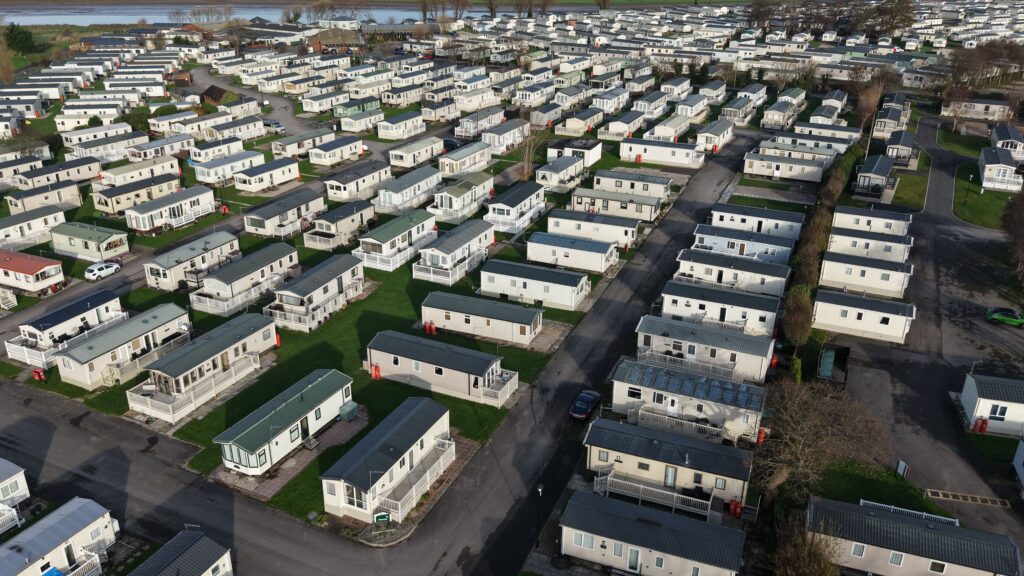
In many cases, a mobile home park may appear full at first glance but still contain vacant pads. These vacancies may result from older homes being removed, long-term underinvestment, or stalled expansion plans. An infill strategy aims to convert these vacant pads into income-producing sites.
Why Infill Differs from Expansion
Although infill and expansion are sometimes grouped together, they are not the same. Expansion involves developing new lots from raw land, which often requires zoning approvals, infrastructure installation, and longer timelines. In contrast, infill usually works within the existing footprint of a mobile home park.
As a result, infill may involve fewer unknowns, although it still carries execution risk.
Download our FREE eBook on the Top 20 things to know BEFORE investing in mobile home parks!
Why Infill Strategies Can Be Important in Mobile Home Park Investing
Increasing Revenue Potential Without Acquiring New Land
One reason infill strategies often attract attention is their potential efficiency. When a vacant pad becomes occupied, lot rent revenue may increase without the need to acquire additional land. This can improve the income profile of a mobile home park if executed as planned.
In theory, higher occupied lot counts may support stronger net operating income. Over time, this could influence valuation, depending on market conditions and operating performance.
Improving Operating Leverage
Mobile home parks often have fixed or semi-fixed expenses, such as insurance, management overhead, and certain utility costs. As occupancy increases, these costs may be spread across more paying residents.
Consequently, infill may improve operating leverage. However, this outcome depends on expense discipline and actual performance, not assumptions alone.
Supporting Long-Term Stabilization
Infill strategies may also play a role in stabilizing a mobile home park. A community with fewer vacant lots can sometimes appear more established and cohesive. This may influence resident retention and long-term demand, although results can vary by market and management approach.
Common Infill Approaches in Mobile Home Park Investing
Operator-Owned Home Programs
One infill approach involves the operator purchasing and placing homes, then renting them to residents. This model may accelerate occupancy, but it can also increase operational complexity.
Operator-owned homes typically require higher capital investment and ongoing maintenance. As a result, this strategy may introduce additional risk alongside potential upside.
Tenant-Owned Home Placements
Another approach involves facilitating tenant-owned homes. In this case, residents purchase their own homes and pay lot rent to the mobile home park owner.
This model may reduce capital requirements and operational burden. However, it can take longer to execute and may depend on local demand, financing availability, and home supply.
Hybrid Strategies
Some operators use a mix of operator-owned and tenant-owned homes. This flexibility may allow infill to progress while balancing capital deployment and risk. Still, execution quality often determines outcomes more than strategy selection alone.
Key Factors That Influence Infill Success
Market Demand and Affordability
Infill strategies tend to rely on sustained demand for affordable housing. Local wage levels, competing housing options, and demographic trends can all influence absorption rates.
Even in strong markets, demand assumptions should be evaluated carefully. Slower-than-expected absorption can delay cash flow improvements and impact returns.
Infrastructure and Utility Capacity
Although infill pads often have existing infrastructure, this does not guarantee readiness. Utility lines, electrical capacity, and sewer connections may require upgrades.
As a result, infrastructure assessments are typically a critical part of due diligence. Unexpected costs in this area can materially affect project economics.
Local Regulations and Permitting
While infill may face fewer regulatory hurdles than expansion, it is rarely exempt from oversight. Local rules may govern home age, installation standards, and inspections.
Regulatory delays or changes can influence timelines. Therefore, infill projections often benefit from conservative scheduling assumptions.
How Infill Can Affect Valuation Over Time
Relationship Between Occupancy and Net Operating Income
Valuation in mobile home park investing commonly ties to net operating income rather than comparable sales alone. As infill increases occupied lots, net operating income may increase if expenses remain controlled.
However, valuation outcomes depend on stabilized performance, not transitional results. Temporary income gains may not translate into long-term value if they rely on unsustainable assumptions.
Cap Rate Sensitivity and Execution Risk
Even when infill succeeds operationally, broader market factors still matter. Cap rates, interest rates, and buyer sentiment can influence exit pricing.
As a result, infill strategies should not be viewed in isolation. They operate within a broader economic and capital market context.
Risks and Challenges Associated With Infill Strategies
Capital Intensity and Timing Risk
Infill often requires upfront capital before revenue materializes. Home purchases, installations, and site work can create a lag between investment and income.
If absorption slows or costs increase, returns may be delayed. Therefore, timing risk plays a meaningful role in infill-driven business plans.
Management Execution
Infill adds operational complexity. Coordinating deliveries, installations, inspections, and resident onboarding requires experience and systems.
Poor execution can erode expected benefits. For this reason, operator track record often matters when evaluating infill-heavy mobile home park investments.
Financing Considerations
Some lenders may underwrite infill conservatively, particularly when occupancy is low at acquisition. Loan terms, reserves, and covenants can influence how aggressively infill proceeds.
Financing structure may therefore affect both pace and flexibility.
How Passive Investors Might Evaluate Infill Plans
Reviewing Assumptions Rather Than Projections
When evaluating an infill strategy, passive investors often benefit from focusing on assumptions instead of headline returns. Key questions may include: For more, see our passive mobile home park investment strategies.
- How quickly are homes expected to be placed?
- What absorption rate is assumed?
- How sensitive are returns to delays?
These considerations can provide insight into downside scenarios.
Understanding the Operator’s Role
Infill strategies tend to be operator-driven. Therefore, investors may consider how much discretion the operator has and how decisions align with investor interests.
Clear communication and reporting may help manage expectations as infill progresses. For more, see our learn how mobile home park syndication works.
When Infill Strategies May Be Less Appropriate
Fully Stabilized Mobile Home Parks
In already stabilized mobile home parks, infill opportunities may be limited. In these cases, returns may rely more on rent growth and expense management than on occupancy gains.
Markets with Weak Demand Signals
Infill may be less compelling in markets with declining populations or limited affordability advantages. Even if pads are available, demand may not materialize as expected.
As always, market context matters.
Why Infill Remains a Core Consideration in Mobile Home Park Investing
Infill strategies often receive attention because they represent a tangible way to create value within an existing mobile home park. By converting vacant pads into income-producing sites, operators may enhance cash flow, improve efficiency, and support long-term stabilization.
However, infill is not inherently low risk, nor is it universally applicable. Outcomes depend on execution, market dynamics, capital structure, and timing. As a result, infill strategies may be best evaluated as one component of a broader investment approach rather than a standalone solution. For more, see our mobile home park investing guide.
For investors exploring mobile home park investing, understanding infill can provide valuable context. While no strategy guarantees results, informed evaluation may lead to more realistic expectations and better-aligned decisions over time.
Are you looking for MORE information? Book a 1-on-1 consultation with Andrew Keel to discuss:
- A mobile home park deal review
- Due diligence questions
- How to raise capital from investors
- Mistakes to avoid, and more!
Disclaimer:
The information provided is for informational purposes only and is not investment advice or a guarantee of any kind. We do not guarantee profitability. Make investment decisions based on your research and consult registered financial and legal professionals. We are not registered financial or legal professionals and do not provide personalized investment recommendations. For more, see our invest in mobile home parks the right way.