Passive investors continue to explore alternatives to traditional real estate and public markets. In recent years, mobile home park investing has gained attention as an asset class that may offer a combination of income potential, operational stability, and long-term demand drivers. While no investment guarantees performance, several structural characteristics help explain why passive investors increasingly consider mobile home park investments as part of a diversified portfolio.
This article explains the factors contributing to this shift and outlines why many investors view mobile home park investing as a potentially compelling option within private real estate.
Understanding Passive Mobile Home Park Investing
Passive mobile home park investing typically involves investing capital into a professionally managed real estate syndication or fund. In this structure, the sponsor or operator manages acquisition, operations, financing, and execution of the business plan. Meanwhile, passive investors contribute capital and receive a proportional share of potential income and appreciation. For more, see our mobile home park syndication structure.
This approach allows investors to participate in real estate ownership without managing tenants, maintenance, or daily operations. As a result, investors who want exposure to real estate but prefer a hands-off role often explore this model.
Importantly, passive investors rely heavily on the operator’s experience and execution. Therefore, operator selection and due diligence remain critical components of the investment decision.
Download our FREE eBook on the Top 20 things to know BEFORE investing in mobile home parks!
Supply Constraints And Long-Term Demand Drivers
One reason mobile home park investing has drawn attention is the imbalance between supply and demand in affordable housing. In many regions, new mobile home park development remains limited due to zoning restrictions, community resistance, and rising land costs. As a result, existing mobile home park communities often face limited competition from new supply.
At the same time, demand for affordable housing continues to grow. Rising home prices and higher interest rates have made traditional homeownership less accessible for many households. Mobile home park communities can provide a lower-cost housing option compared to single-family homes or apartments in many markets.
Because of this dynamic, some investors believe mobile home park investments may benefit from relatively consistent occupancy levels over time. However, outcomes still depend on local market conditions, management quality, and broader economic trends.
Income Characteristics That Appeal To Passive Investors
Passive investors often prioritize investments that may produce regular income distributions. Mobile home park investing has historically attracted attention because many residents own their homes and rent only the land beneath them. This structure can influence operational costs and tenant turnover patterns.
When residents own their homes, moving becomes more expensive and less frequent compared to traditional rental housing. As a result, turnover costs and vacancy risk may be lower in certain situations. Lower turnover can support more predictable operating expenses, which some investors view as favorable for income stability.
That said, income levels can vary significantly depending on acquisition price, financing terms, operational execution, and market conditions. Investors should evaluate projected returns cautiously rather than assuming consistency across all mobile home park investments.
Lower Capital Expenditure Relative To Other Asset Classes
Another factor attracting passive investors is the potential for lower capital expenditure requirements compared to some other real estate sectors. In many mobile home park communities, residents maintain their own homes, which can reduce the owner’s responsibility for interior repairs and upgrades.
As a result, capital improvements may focus more on infrastructure, utilities, and common areas rather than individual housing units. Some investors believe this structure may help reduce unexpected maintenance expenses over time.
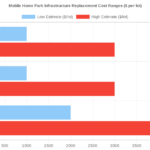
However, infrastructure risks still exist. Older mobile home park communities may require utility upgrades, road repairs, or compliance improvements. Therefore, thorough due diligence remains essential before investing.
Tax Considerations And Depreciation Benefits
Tax efficiency often plays a role in passive investment decisions. Real estate investments, including mobile home park investing, may provide depreciation benefits that offset a portion of taxable income generated by the property.
Through strategies such as cost segregation studies, certain components of a mobile home park can sometimes be depreciated over shorter timeframes. This may create paper losses that offset income for some investors, depending on individual tax circumstances.
Tax outcomes vary widely based on investor profile, income level, and current tax law. Investors should always consult qualified tax professionals before relying on projected tax advantages.
Diversification Beyond Traditional Assets
Many passive investors seek diversification beyond stocks and bonds. Private real estate, including mobile home park investing, often behaves differently from public markets because valuations depend more on income performance and local housing demand than daily market sentiment.
As a result, some investors view mobile home park investments as a way to diversify income sources and reduce overall portfolio correlation with equity markets. While diversification does not eliminate risk, it may help balance exposure across different asset types.
Additionally, mobile home park investments often operate on multi-year business plans. This longer time horizon can encourage investors to focus on operational performance rather than short-term price fluctuations.

Professional Management And Scalability
Passive investors frequently value the ability to invest alongside experienced operators. Professional management teams typically handle tenant relations, maintenance coordination, financial reporting, and long-term planning. This structure allows investors to benefit from scale and operational expertise that would be difficult to replicate individually.
As portfolios grow, operators may achieve efficiencies in purchasing, maintenance, and financing. These efficiencies may support improved operations, although results depend heavily on execution and market conditions.
For passive investors, transparency and communication from the operator remain key factors in maintaining confidence throughout the investment lifecycle.
Why Institutional Interest Has Increased
In recent years, larger institutional investors have shown increased interest in mobile home park investing. Some market participants believe this reflects recognition of the asset class’s income characteristics and supply constraints.
Institutional participation can bring additional capital and operational professionalism to the sector. At the same time, increased competition for acquisitions may influence pricing and returns going forward. Passive investors should remain aware that past performance in any asset class does not guarantee future outcomes.
Key Considerations Before Investing
Although mobile home park investing offers characteristics that appeal to many passive investors, it is not without risk. Investors should carefully evaluate several factors before committing capital: For more, see our explore passive mobile home park investing.
Operator Experience And Track Record
The operator’s ability to execute the business plan often plays a significant role in investment outcomes.
Market Selection
Local employment trends, population growth, and housing supply influence long-term performance.
Financing Structure
Debt terms, interest rate exposure, and refinance assumptions can materially affect returns.
Business Plan Assumptions
Investors should review rent growth projections, expense assumptions, and timelines with a critical perspective.
Taking time to understand these variables helps passive investors make more informed decisions.
Conclusion
Mobile home park investing has gained attention among passive investors for several reasons, including potential income generation, supply constraints, tax considerations, and diversification benefits. While these characteristics may make the asset class attractive, outcomes depend on market conditions, operator execution, and individual investment goals. For more, see our why mobile home park investments outperform.
For many passive investors, mobile home park investing represents one component of a broader long-term strategy rather than a standalone solution. Careful due diligence, realistic expectations, and alignment with experienced operators remain essential when evaluating any private real estate investment. For more, see our everything you need to know about mobile home park investing.
Are you looking for MORE information? Book a 1-on-1 consultation with Andrew Keel to discuss:
- A mobile home park deal review
- Due diligence questions
- How to raise capital from investors
- Mistakes to avoid, and more!
Disclaimer:
The information provided is for informational purposes only and is not investment advice or a guarantee of any kind. We do not guarantee profitability. Make investment decisions based on your research and consult registered financial and legal professionals. We are not registered financial or legal professionals and do not provide personalized investment recommendations. For more, see our invest in mobile home parks the right way.