Mobile home park investing often draws attention because demand for affordable housing continues to persist across many regions. However, demand alone does not tell the full story. One of the defining characteristics of the mobile home park asset class is the limited supply of existing properties and the difficulty of creating new ones. Understanding these supply constraints helps explain why many investors view mobile home parks as structurally different from other real estate sectors. For more, see our our in-depth mobile home park investing guide.
This article explains the key factors that contribute to mobile home park supply constraints, why they exist, and how they may influence long-term investment considerations. Nothing here should be viewed as a guarantee of outcomes, but rather as an educational framework for understanding the dynamics at play.
What Supply Constraints Mean In Mobile Home Park Investing
Supply constraints refer to structural, regulatory, and economic factors that limit the number of mobile home parks available in the market. Unlike apartments or single-family housing, mobile home parks rarely see meaningful new development.
As a result, the total number of mobile home parks in the United States has remained relatively flat or declined in many markets over time. While individual outcomes vary by location, this limited supply often shapes competition, pricing, and long-term planning for operators and investors.
Zoning And Land Use Restrictions
Local Zoning Challenges
Zoning represents one of the most significant barriers to new mobile home park development. Many municipalities restrict or prohibit mobile home parks through zoning ordinances.
Local governments often prioritize other land uses, such as retail, industrial, or higher-density residential projects. Even when zoning technically allows mobile home parks, approval processes can remain lengthy and uncertain.
Political Resistance And Community Pushback
In addition, community opposition frequently complicates zoning approvals. Residents sometimes raise concerns about density, traffic, or property values, regardless of whether those concerns are supported by data.
As a result, developers may face prolonged hearings, additional conditions, or outright denials. Over time, these dynamics have made new mobile home park development less attractive compared to other real estate options.
Download our FREE eBook on the Top 20 things to know BEFORE investing in mobile home parks!
Scarcity Of Suitable Land
Location Requirements
Mobile home parks require large, contiguous parcels of land, often near employment centers and infrastructure. However, land that meets these criteria has become increasingly scarce.
As urban and suburban areas expand, land prices tend to rise. Developers often find it more financially viable to pursue alternative uses that generate higher immediate returns.
Infrastructure Considerations
In addition, land suitable for mobile home parks must support utility connections, road access, and drainage. Parcels that already meet these requirements are limited, and retrofitting undeveloped land can add significant cost and complexity.
High Development Costs Relative To Returns
Cost Structure Of New Development
Although mobile home parks may appear simple on the surface, development costs can be substantial. Developers must account for land acquisition, site preparation, utility installation, road construction, and permitting.
At the same time, mobile home park income typically grows gradually. Rent levels often remain tied to workforce affordability rather than rapid appreciation. For more, see our why mobile home parks outperform other asset classes.
Risk And Capital Allocation
Because of this imbalance, many developers allocate capital toward projects with shorter timelines or higher projected margins. Even when demand exists, the risk-adjusted returns may not justify new mobile home park construction.
Infrastructure And Utility Barriers
Utility System Complexity
Utilities present another significant constraint. Mobile home parks rely on water, sewer, electric, and sometimes gas infrastructure. Installing these systems from scratch can be expensive and time-consuming.
In some jurisdictions, developers must meet modern infrastructure standards that older mobile home parks were not originally subject to. This difference can further discourage new development.
Municipal Capacity Limitations
Additionally, municipalities may lack the capacity or willingness to extend utility services to new mobile home park developments. In such cases, developers may need to install private systems, which introduces additional regulatory oversight and operational responsibility.
Financing Limitations For New Mobile Home Parks
Lender Hesitation
Financing new mobile home park construction can be challenging. Many lenders prefer stabilized assets with operating history rather than ground-up development.
Mobile home parks also carry a stigma in some financial circles, which can limit lender participation or increase borrowing costs.
Equity Requirements
As a result, developers may need to contribute higher levels of equity, making projects less attractive compared to other real estate investments. This financing friction further restricts new supply.
Declining Number Of Existing Mobile Home Parks
Redevelopment Pressure
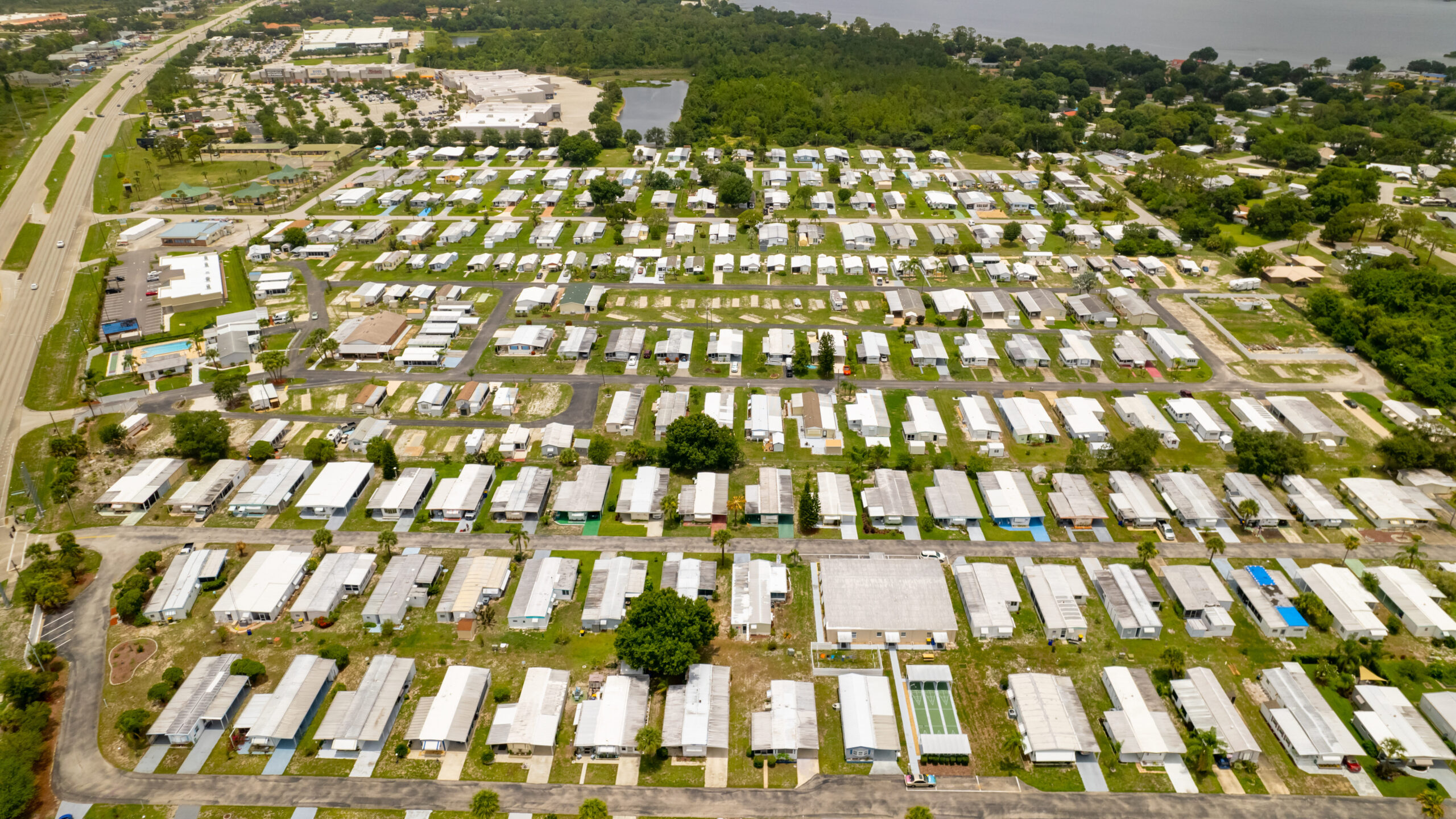
While new mobile home park construction remains limited, existing mobile home parks sometimes disappear. Owners may sell land for redevelopment into higher-value uses such as retail or multifamily housing.
In growing markets, land values alone can exceed the value of continued mobile home park operations. Over time, this trend has reduced the overall number of mobile home parks in certain regions.
Regulatory And Compliance Costs
In addition, aging infrastructure and increasing regulatory requirements may push some owners to exit rather than reinvest. When closures occur, replacement supply rarely enters the market.
Barriers To Resident Relocation
Permanence Of Mobile Homes
Unlike apartments, mobile homes are often difficult and costly to relocate. This reality makes closures more disruptive and politically sensitive.
Local governments may hesitate to approve new mobile home park developments while simultaneously allowing existing ones to close. However, this tension does not always result in net new supply.
Impact On Housing Availability
Because residents cannot easily relocate, closures can reduce affordable housing availability without a clear path to replacement. This dynamic further reinforces long-term supply constraints. For more, see our how passive mobile home park investing works.
How Supply Constraints May Influence Investment Dynamics
Competition For Existing Mobile Home Parks
Limited supply often leads to increased competition for existing mobile home parks. Buyers may focus heavily on operational improvements rather than expansion through new development.
However, competition levels vary by market, asset quality, and economic conditions. Investors should evaluate each opportunity independently.
Long-Term Planning Considerations
Supply constraints may also influence long-term planning. Operators often prioritize maintenance, compliance, and gradual improvements to preserve asset longevity.
At the same time, regulatory environments can change. Investors should remain cautious and avoid assuming that supply constraints alone will drive performance.
Risks And Uncertainties To Keep In Mind
While supply constraints play an important role, they do not eliminate risk. Economic downturns, regulatory changes, and shifts in housing preferences can all impact mobile home park performance.
Additionally, not all markets experience the same constraints. Some rural areas may allow new development, while certain urban markets may impose stricter limits.
As with any investment, outcomes depend on execution, location, and broader economic factors.
Final Thoughts On Mobile Home Park Supply Constraints
Mobile home park supply constraints result from a combination of zoning restrictions, land scarcity, development costs, infrastructure challenges, and financing limitations. Together, these factors help explain why new mobile home parks remain rare and why existing properties often attract investor interest. For more, see our how mobile home park syndications work.
However, supply constraints alone do not guarantee stability or returns. Investors should approach each opportunity with careful due diligence, conservative assumptions, and a clear understanding of local market conditions.
By understanding how supply dynamics work, investors can better assess whether a specific mobile home park aligns with their long-term objectives and risk tolerance.
Are you looking for MORE information? Book a 1-on-1 consultation with Andrew Keel to discuss:
- A mobile home park deal review
- Due diligence questions
- How to raise capital from investors
- Mistakes to avoid, and more!
Disclaimer:
The information provided is for informational purposes only and is not investment advice or a guarantee of any kind. We do not guarantee profitability. Make investment decisions based on your research and consult registered financial and legal professionals. We are not registered financial or legal professionals and do not provide personalized investment recommendations. For more, see our steps to invest in mobile home parks.