Investing passively in a mobile home park syndication can appear straightforward on the surface. An operator finds a property, raises capital, and manages the asset while investors participate financially. However, evaluating whether a specific mobile home park syndication aligns with your goals requires more than reviewing projected returns.
As a passive investor, your role is not to operate the asset, but you are still responsible for assessing the structure, assumptions, and people behind the investment. This article outlines a practical framework to help you evaluate a mobile home park syndication thoughtfully, without relying on guarantees or overly optimistic projections. For more, see our passive investing in mobile home parks.
Understanding What A Mobile Home Park Syndication Is
Before evaluating a deal, it helps to understand the structure you are assessing.
What A Syndication Typically Involves
A mobile home park syndication is generally a pooled investment where multiple passive investors contribute capital to acquire and operate a mobile home park. The operator, often referred to as the general partner or sponsor, manages the day-to-day operations and strategic decisions. Passive investors typically participate through an ownership interest and receive distributions based on the operating performance and eventual sale or refinance of the property. For more, see our mobile home park syndication explained.
While structures vary, most syndications share similar components: an operating agreement, a private placement memorandum, financial projections, and a defined business plan.
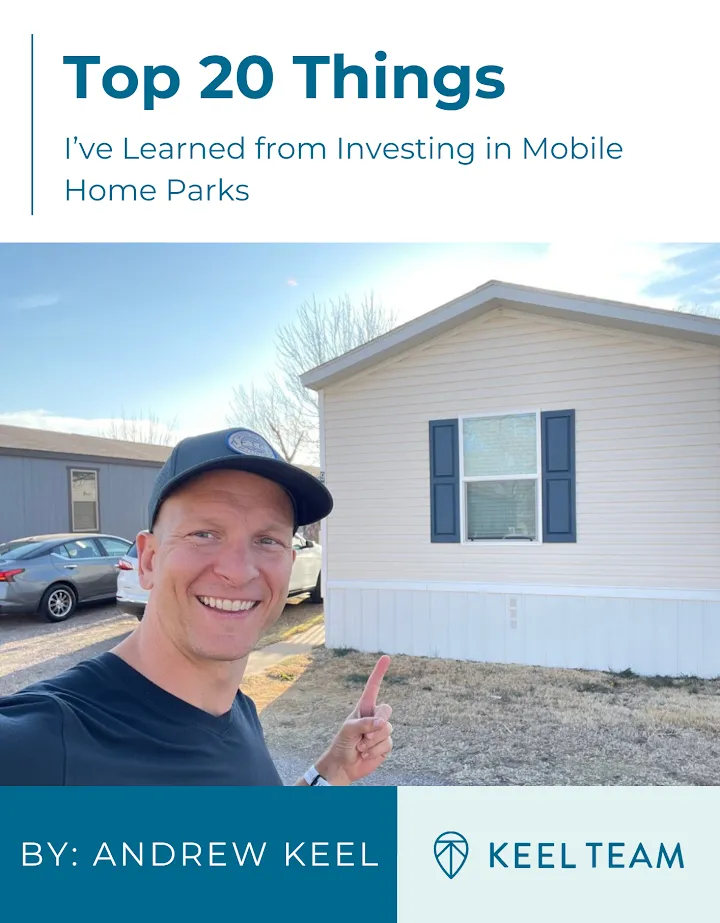
Download our FREE eBook on the Top 20 things to know BEFORE investing in mobile home parks!
Why Structure Matters For Passive Investors
The structure determines how cash flow is distributed, how decisions are made, and how risk is shared. As a passive investor, you may have limited control once invested, which makes upfront evaluation especially important.
Evaluating The Operator And Management Team
One of the most important factors in any syndication is the operator.
Track Record And Relevant Experience
Past performance does not guarantee future results, but experience can provide context. When reviewing an operator, consider their history with mobile home park investments specifically. Operating a mobile home park involves different challenges than other real estate asset types, including infrastructure maintenance, tenant management, and regulatory considerations.
You may want to review:
- The number of mobile home parks previously acquired or managed
- Length of ownership and exit outcomes
- Experience navigating market downturns or operational issues
Alignment Of Interests
Alignment matters because incentives influence decision-making. Many syndications structure compensation so that the operator benefits when the property performs well over time. Reviewing how the operator participates financially in the deal can help you understand whether their interests may align with long-term performance rather than short-term fees.
Reviewing The Business Plan In Detail
A mobile home park syndication typically includes a written business plan outlining how the operator intends to improve or stabilize the property.
Revenue Assumptions
Revenue growth assumptions deserve careful attention. These often include rent adjustments, occupancy improvements, or utility bill-back strategies. While these strategies can be common in the asset class, assumptions should remain realistic for the local market.
Ask whether the plan accounts for:
- Current tenant income levels
- Local rent comparables
- Timing required to implement changes
Expense And Capital Expenditure Planning
Expenses in a mobile home park can differ from other residential assets. Infrastructure such as roads, water lines, and sewer systems may require periodic capital investment. Reviewing how the operator budgets for ongoing maintenance and larger capital expenditures can provide insight into the durability of projected cash flow. For more, see our how mobile home park investments stack up.
Analyzing Financial Projections Carefully
Financial projections provide a roadmap, not a promise.
Understanding Cash Flow Projections
Projected distributions often rely on assumptions about stabilized occupancy and operating efficiency. As a passive investor, it may help to focus less on best-case scenarios and more on whether the projections appear conservative relative to current operations.
Consider whether the projections:
- Allow for vacancy and bad debt
- Include reserves for repairs and replacements
- Assume gradual improvements rather than immediate results
Evaluating Exit Assumptions
Most syndications include an expected hold period and exit strategy. Exit assumptions may involve selling the property at a certain capitalization rate or refinancing after operational improvements. Because market conditions change, these assumptions should be viewed as estimates rather than outcomes.
Understanding The Capital Stack And Investor Returns
How capital is structured influences both risk and return.
Equity Structure And Preferred Returns
Many mobile home park syndications include a preferred return structure, where passive investors may receive distributions before the operator participates in profit sharing. While preferred returns can align incentives, they are not guaranteed payments.
Reviewing how returns are calculated and distributed can help clarify expectations.
Fees And Compensation Transparency
Operators typically receive compensation for acquisition, asset management, and disposition. Fees alone are not inherently negative, but transparency matters. Understanding what fees exist and when they are paid can help you assess how capital flows throughout the life of the investment.
Assessing Market Fundamentals
Even strong operators rely on market conditions.
Local Demand And Economic Drivers
Mobile home park performance often depends on local employment, population stability, and affordable housing demand. Evaluating whether the surrounding market supports long-term occupancy can provide context beyond the property itself.
You may want to review:
- Local employment trends
- Population growth or decline
- Availability of comparable affordable housing
Regulatory and Zoning Considerations
Mobile home parks operate within specific regulatory frameworks that can vary by municipality and state. Zoning restrictions, rent regulations, or infrastructure requirements may affect long-term operations. Understanding whether the operator has accounted for these factors can reduce surprises later.

Reviewing Legal And Offering Documents
Legal documents provide important disclosures and details.
What To Look For In Offering Materials
The private placement memorandum and operating agreement outline risks, rights, and responsibilities. While these documents can be dense, they often highlight potential downsides and structural details that may not appear in marketing summaries.
You may consider reviewing:
- Voting rights and major decision thresholds
- Distribution waterfalls
- Circumstances that could delay or suspend distributions
Evaluating Risk In A Realistic Way
All investments involve risk, including mobile home park syndications.
Common Risk Factors To Consider
Risks may include operational underperformance, higher-than-expected expenses, financing challenges, or market shifts. A thoughtful evaluation does not eliminate risk, but it may help you decide whether the risk profile aligns with your overall portfolio.
Diversification And Position Sizing
Rather than viewing any single syndication as a standalone solution, many passive investors evaluate how a deal fits within their broader investment strategy. Position sizing and diversification may help manage exposure across assets and markets. For more, see our the complete guide to investing in mobile home parks.
Asking The Right Questions Before Investing
Asking informed questions can clarify assumptions and expectations.
Questions That Often Provide Insight
While each investor’s priorities differ, common questions may include:
- How conservative are the underwriting assumptions?
- How does the operator communicate during challenging periods?
- What contingency plans exist if projections are not met?
The quality of responses can be as informative as the answers themselves.
Final Thoughts On Evaluating A Mobile Home Park Syndication
Evaluating a mobile home park syndication as a passive investor involves balancing opportunity with uncertainty. No framework can guarantee outcomes, but a structured approach may help you assess whether a particular investment aligns with your risk tolerance, time horizon, and financial goals.
By focusing on the operator, the business plan, financial assumptions, and market context, you can place yourself in a better position to make informed decisions. As with any investment, taking time to review details and ask questions can be an important part of the process.
Are you looking for MORE information? Book a 1-on-1 consultation with Andrew Keel to discuss:
- A mobile home park deal review
- Due diligence questions
- How to raise capital from investors
- Mistakes to avoid, and more!
Disclaimer:
The information provided is for informational purposes only and is not investment advice or a guarantee of any kind. We do not guarantee profitability. Make investment decisions based on your research and consult registered financial and legal professionals. We are not registered financial or legal professionals and do not provide personalized investment recommendations. For more, see our start investing in mobile home parks.